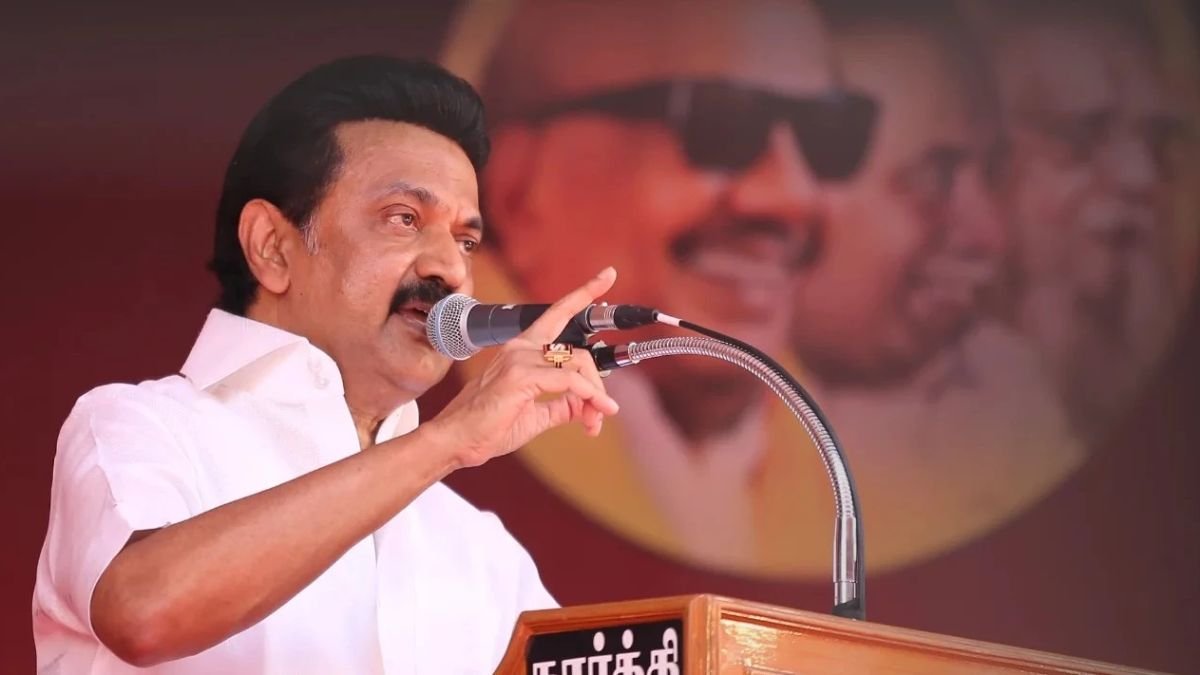
Tamil Nadu’s 2026 Assembly elections have officially entered their campaign phase, with Chief Minister M. K. Stalin filing his nomination from his traditional stronghold of Kolathur in Chennai, even as TVK chief Vijay formally launched his electoral debut from Perambur and Trichy East. The day’s events, bracketed by the DMK’s manifesto‑style pitch and the arrival of a star‑ledger rival, injected fresh energy into a contest already framed as a four‑cornered battle across the state.
Stalin’s bid for a fourth‑time Kolathur win
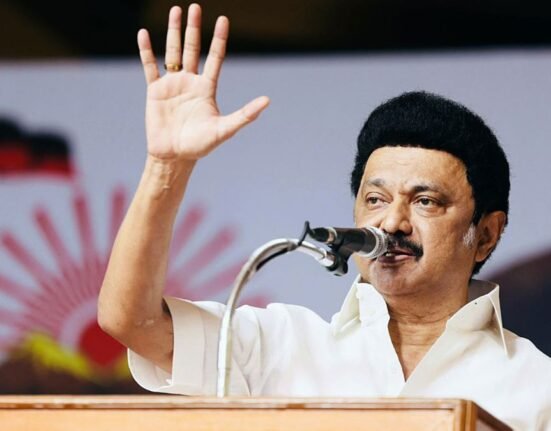
Stalin submitted his nomination papers from Kolathur yesterday, the seat he has represented for three consecutive terms since 2011, describing the filing as the start of the campaign for what he hopes will be a fourth consecutive victory. Addressing supporters outside the nomination centre, he declared full confidence that the people would “hand him a spectacular victory for the fourth time in a row” in the constituency, reinforcing his identity as a Chennai‑centric leader at the heart of the DMK‑led alliance.
Kolathur is likely to see a three‑way contest, with the AIADMK fielding P. Santakrishnan and TVK nominating V. S. Babu, setting the stage for a direct electoral test between the incumbent CM and the forces challenging his dominance in the capital belt. For Stalin, the focus remains on leveraging the DMK’s record on welfare schemes particularly for women, youth and farmers amplified by the party’s recently unveiled election manifesto, which he has branded as a “superstar” in the state’s freebie‑heavy political milieu.
Vijay’s formal entry on the ballot
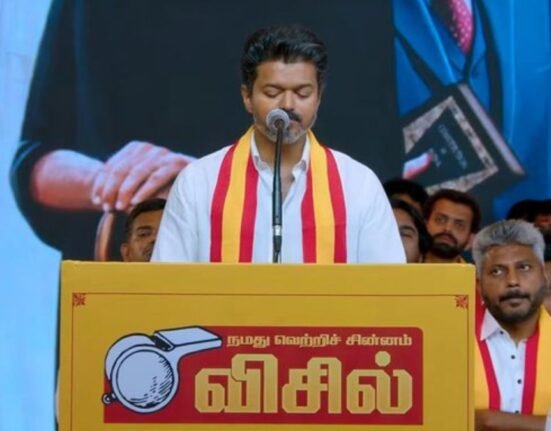
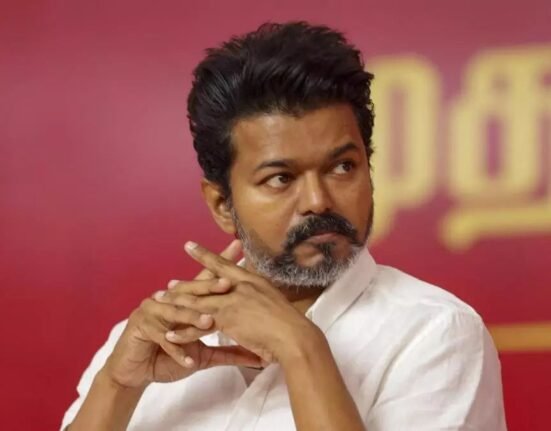
On the same day, Tamilaga Vettri Kazhagam founder C. Joseph Vijay filed his nomination from Perambur, marking his first‑time electoral entry under the party’s distinctive whistle symbol. As announced earlier, Vijay is also contesting from Trichy East, attempting to anchor TVK’s presence in both Chennai and central Tamil Nadu even as the party fights all 234 Assembly seats as a standalone front.
Vijay’s campaign, built around the “whistle‑revolution” narrative, positions him as a break from the dynastic and caste‑centric equations that dominate the state’s politics, though the breadth of his two‑seat gamble will be thoroughly tested in April 23’s single‑phase poll.
Manifesto‑style politics meets star power
The coincidence of Stalin’s Kolathur filing and Vijay’s formal debut also highlights the contrast between party‑centric manifesto‑driven politics and the individual‑centric, brand‑driven challenge posed by TVK. While the DMK is banking on welfare‑centric promises, including enhanced women‑centred cash transfers and youth‑focused schemes, Vijay is banking on the mobilisation of his fan base, aspirational youth voters and sections disillusioned with established parties.
As nominations begin to trickle in across districts, Tamil Nadu’s 2026 elections are shaping up as a contest of legacy, ideology and spectacle, with Stalin seeking to extend his decade‑long hold on power and Vijay attempting to convert cinema‑fueled popularity into a durable political presence. Whether the “superstar” manifesto or the “whistle‑revolution” claim will dominate the final verdict in April will depend not just on the arithmetic of caste coalitions, but on how voters weigh performance, promises and the pull of celebrity politics.
-Samuthiran