


Every year on March 8, countries across the world mark International Women’s Day, a day associated with the achievements, struggles and historical movements led by women. While today it is widely known as a day dedicated to women’s rights and progress, its origins lie in labour protests, political movements and revolutionary events that unfolded more than a century ago.
The history of International Women’s Day is closely connected to the early twentieth century, when industrialisation, urbanisation and political change brought large numbers of women into the workforce and into public life. Factory workers, political activists and suffrage campaigners played key roles in shaping a movement that would eventually lead to the establishment of March 8 as a globally recognised date.
Early Labour Protests That Sparked a Movement
One of the earliest events linked to the origins of International Women’s Day took place in 1908, when around 15,000 women marched through New York City demanding shorter working hours, better pay and voting rights. Many of them were garment factory workers who had been organising strikes against harsh working conditions in the rapidly growing clothing industry.
The demonstrations helped inspire broader political mobilisation. In 1909, the Socialist Party of America organised the first National Woman’s Day on February 28 across the United States. Meetings and rallies were held to highlight labour rights, voting rights and social equality for women.
These early protests established a connection between labour activism and the political struggle for women’s rights, a link that would continue to shape the movement in the years that followed.
The Idea of a Global Women’s Day
The idea of an international observance emerged soon after. In 1910, communist activist and politician Clara Zetkin proposed the creation of an annual “Working Women’s Day” at the International Socialist Women’s Conference held in Copenhagen.
Delegates representing women’s organisations and socialist groups from 17 countries approved the proposal unanimously. The resolution called for a yearly event that would mobilise women around the world to campaign for voting rights, labour protections and social equality. The conference approved the concept but did not assign a specific date for the observance.
The first International Women’s Day celebrations were held in 1911 in Austria, Denmark, Germany and Switzerland. More than one million people attended rallies and demonstrations demanding women’s suffrage, the right to work, access to public office and protections against workplace discrimination.
The Industrial Disaster That Intensified the Movement
Just days after the first International Women’s Day events in 1911, a major industrial disaster in the United States intensified global attention on the conditions faced by women workers. The Triangle Shirtwaist Factory fire in New York killed 146 workers, most of them young immigrant women.
Investigations into the tragedy revealed locked factory doors and poor safety standards. The disaster became a turning point in labour reform campaigns and strengthened calls for workplace safety laws, issues that had been raised in early Women’s Day demonstrations.
March 8
The events that ultimately fixed March 8 as the official date occurred during the First World War. In 1917, thousands of women textile workers in Petrograd went on strike to protest food shortages, rising prices and Russia’s continued involvement in the war.
The demonstrations began on February 23 according to the Julian calendar used in Russia at the time, which corresponded to March 8 in the Gregorian calendar used internationally. The protesters marched through the city demanding “Bread and Peace,” calling for food supplies and an end to the war.
The strike quickly expanded into mass demonstrations and helped trigger the political upheaval that became the Russian Revolution. Within days, Tsar Nicholas II abdicated the throne. Shortly afterward, the provisional government granted women the right to vote.
The political significance of the protest was later formally recognised in the Soviet Union. In 1922, Vladimir Lenin declared March 8 an official holiday to honour the role played by women during the 1917 revolution.
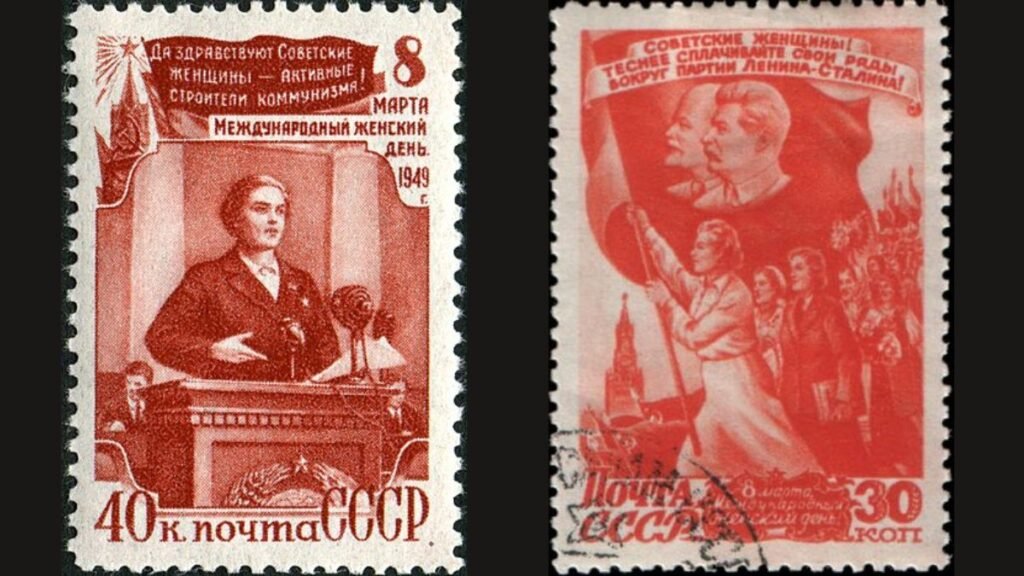
For decades afterward, International Women’s Day was primarily observed in socialist and communist countries. In many Eastern European states, it became a public holiday marked by political gatherings, rallies and events celebrating the contributions of women in labour and public life.
United Nations Recognition
Over time, the observance gradually expanded beyond its early political associations. Women’s rights organisations in Europe, Latin America and other regions began marking the day with demonstrations advocating equal pay, education rights and political participation.
By the 1960s and 1970s, feminist movements in several Western countries also adopted March 8 as a day to highlight gender equality and social justice issues.
International recognition increased significantly in 1975, when the United Nations began officially observing International Women’s Day during International Women’s Year. In 1977, the UN General Assembly invited member states to proclaim March 8 as a day dedicated to women’s rights and international peace.
Since then, the date has been observed worldwide through conferences, public events, cultural programmes and policy discussions focusing on gender equality and women’s participation in society.
A Date Forged in Struggle and History
More than a century after the first demonstrations, March 8 stands as a date shaped by a chain of historic events that unfolded across continents. What began with factory workers demanding fair wages and dignity in the workplace gradually evolved into a global moment recognised by governments, international institutions and civil society. The marches in New York, the proposal made in Copenhagen, and the strikes led by women workers in Petrograd together created the historical path that established International Women’s Day.
The date carries the memory of organised protests, political debates and social movements that unfolded over decades. Each stage of its history reflects how women’s participation in labour struggles, political movements and public life influenced major historical developments in different parts of the world.
Today, the global observance of March 8 continues to be linked to those early events that reshaped conversations around rights, representation and equality. The story behind International Women’s Day remains a reminder that the date itself was not randomly chosen, but forged through movements that altered the course of history and brought women’s voices to the centre of global public life.
– Magizh