
In a judgment with far-reaching consequences for lakhs of Other Backward Classes (OBC) aspirants across the country, the Supreme Court of India has ruled that a candidate’s creamy layer status cannot be determined solely on the basis of parental income from salary, and that the category and status of the post held by the parents must be the primary determinant. The verdict has been widely welcomed as a decisive affirmation of constitutional fairness and the original intent behind India’s OBC reservation framework.
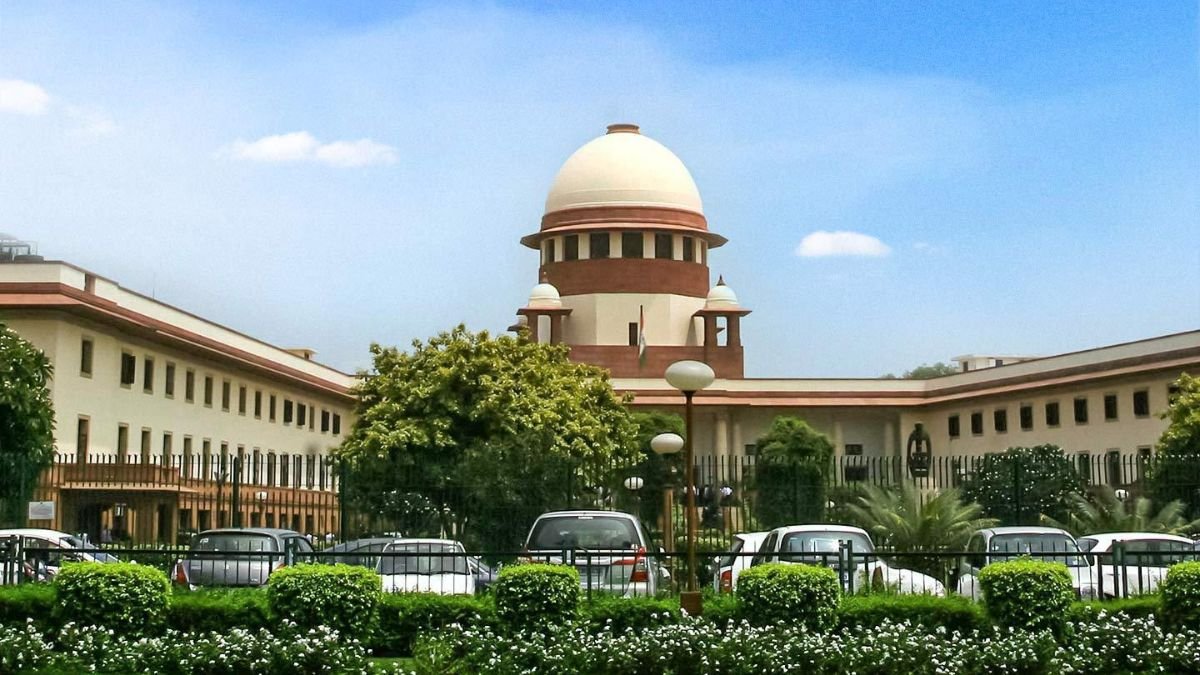
A bench comprising Justice P.S. Narasimha and Justice R. Mahadevan delivered the judgment, dismissing a batch of appeals filed by the Union of India. The ruling granted relief to several Union Public Service Commission (UPSC) candidates who had cleared the Civil Services Examination but were denied appointments after authorities wrongly classified them as belonging to the creamy layer basing that determination almost entirely on their parents’ salary income.
As the bench held in its verdict, “Mere determination of the status of a candidate as to whether he/she falls within the creamy layer or the non-creamy layer of the OBCs cannot be decided solely on the basis of the income.”
The dispute traces its roots to a longstanding tension between two government policy instruments the foundational 1993 Office Memorandum (OM) issued in pursuance of the Supreme Court’s landmark Indira Sawhney judgment, and a 2004 clarificatory letter issued by the Department of Personnel and Training (DoPT). The 1993 OM established that the exclusion of candidates from OBC reservation benefits should be based primarily on the status and category of posts held by parents not their salaries. Crucially, the OM explicitly excluded income from salary and agricultural land when applying the residual income/wealth test used to identify creamy layer status.
However, the 2004 DoPT clarification introduced a divergent approach. It stated that in cases where a parent’s post in a public sector undertaking (PSU), bank, or private organisation had not been determined equivalent to a government post, salary income alone could be used as the yardstick. Under this reading, candidates whose parents earned above the prescribed threshold even as routine PSU or bank employees were being shut out of OBC reservation benefits.
The Supreme Court found this approach constitutionally unsound on multiple counts. It held that the 2004 letter could not be read to override the structural framework of the 1993 OM, observing that salary income “cannot be mechanically aggregated in a manner that defeats the constitutional objective articulated in Indira Sawhney.” The bench was also categorical that “a clarificatory instruction cannot introduce a substantive condition that does not exist in the parent policy.”
The Court further flagged a dimension of hostile discrimination embedded in the government’s approach. Under the pre-existing policy, children of Group C and Group D central government employees whose salaries could similarly grow over time were not excluded from reservation benefits on the basis of income alone. Yet children of similarly placed PSU and private sector employees were being excluded purely because their parents’ salaries crossed a threshold. The bench held this differential treatment to be a violation of Articles 14 and 16 of the Constitution, which guarantee equality before law and equality of opportunity in public employment. “The object of excluding the creamy layer is to ensure that socially advanced sections within the OBCs do not appropriate benefits meant for the genuinely backward; it is not to create artificial distinctions between equally placed members of the same social class,” the bench observed.
The court directed the DoPT to revisit the claims of all affected candidates and intervenors within six months, applying the creamy layer test without including parental salary income. Noting that the Union government had previously indicated before a parliamentary committee that supernumerary posts could be created for affected candidates, the bench directed that such posts be created wherever necessary.
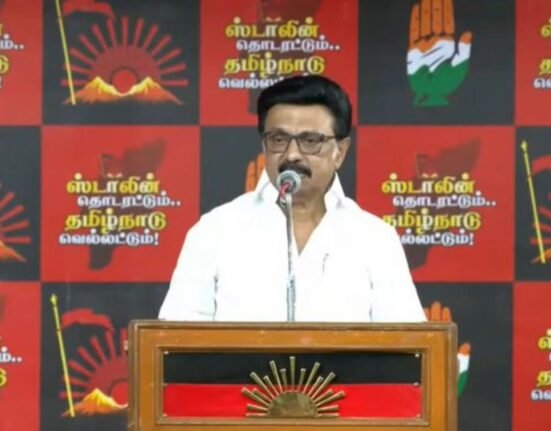
The verdict drew an immediate political response from Tamil Nadu. Chief Minister M.K. Stalin, welcoming the ruling as “a decisive victory for OBC justice,” urged the Union government to act swiftly on the court’s direction and create supernumerary posts for those OBC candidates who had cleared the Civil Services Examination but been wrongly denied appointment. “I urge the Union government to create supernumerary seats for OBC candidates who cleared the Civil Services Examination but were denied their rightful place, and rectify this injustice in the spirit of constitutional equality,” Stalin said.
The case formally titled Union of India and Others versus Rohith Nathan and Another is now a significant milestone in the evolving jurisprudence around OBC reservation and the creamy layer doctrine, reaffirming that social advancement, not a salary figure, must remain the bedrock of who is excluded from these protections.