Desiya Murpokku Dravida Kazhagam (DMDK) has formally entered the 2026 Tamil Nadu Assembly election fray, releasing its list of 10 candidates as part of the DMK‑led INDIA alliance. The move underscores the party’s shift from a relatively independent venture to a clearly defined ally within the ruling combine, with the list reflecting a mix of legacy, experience and a new generation of faces.
Central role for Premalatha and Virudhachalam
At the heart of the candidate line‑up is DMDK general secretary Premalatha Vijayakanth, who has been fielded from Virudhachalam, a constituency historically associated with the late party founder and actor‑politician Vijayakanth. Known to supporters as the party’s emotional anchor after Captain’s death, her nomination from Virudhachalam is seen as an attempt to retain the core DMDK voter base while signalling continuity rather than a complete break.
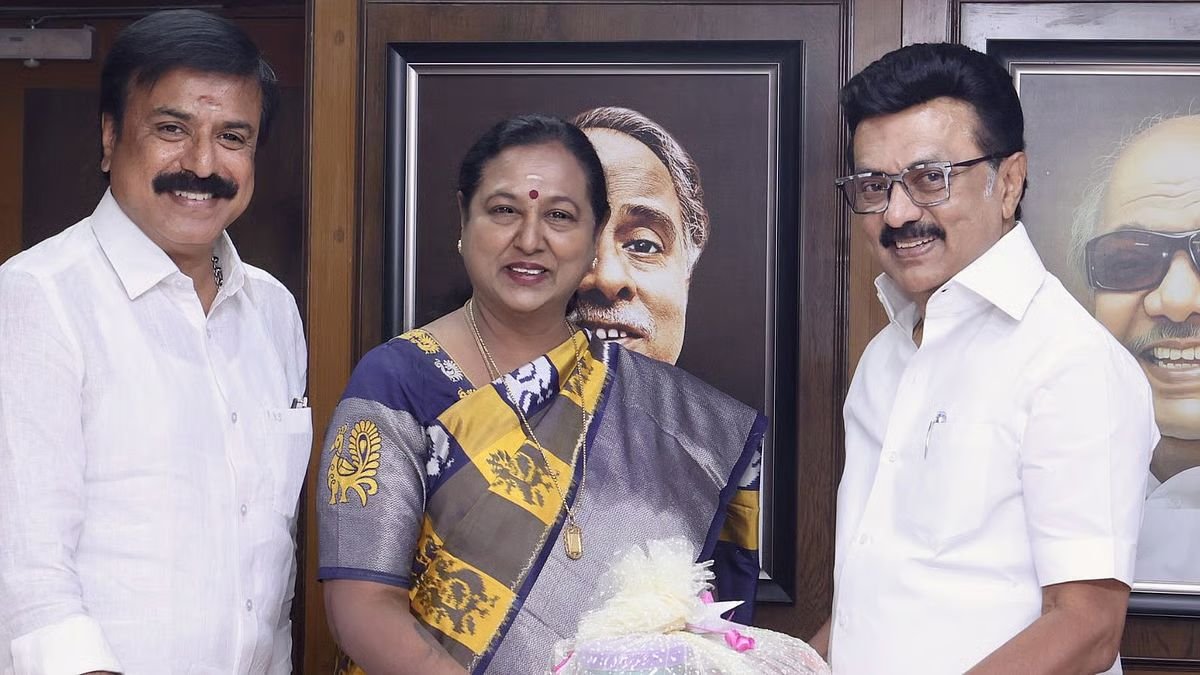
Ahead of the announcement, Premalatha told associates that the party had earlier proposed a much larger list of “winnable” constituencies to Chief Minister M. K. Stalin, but accepted 10 seats as part of the broader alliance arithmetic. This willingness to settle for fewer tickets than initially sought has been framed inside the party as a commitment to discipline and cohesion within the DMK‑led front.
Virudhunagar and the Vijaya Prabhakar factor
Among the other high‑profile entries, Virudhunagar has drawn close attention, with DMDK’s Vijaya Prabhakar, son of Vijayakanth and Premalatha being positioned as a key contender. The constituency has emerged as a three‑cornered contest.
For DMDK, Virudhunagar offers a symbolic link to the party’s recent national‑level experiments, where Vijaya Prabhakar was earlier sent to contest the Virudhunagar Lok Sabha seat under the AIADMK alliance. This repeated reliance on the family name in the same region indicates that the party still banks heavily on its association with Vijayakanth’s legacy, even as it seeks to deepen grassroots structures.
Strategic bet on 10‑seat basket
The DMDK’s 10‑seat allocation under the DMK alliance is modest compared with the larger blocs held by the main regional parties, but it is large enough to test the outfit’s organisational reach across districts. Party leaders have described the list as a “calibrated mix” of veterans, sitting local functionaries and relatively fresh faces, aiming to balance battle‑tested campaigners with leaders who can connect with younger voters.
Officials close to the leadership say that the party did not press for a higher number of seats in Virudhunagar and Virudhachalam despite internal demand, in order to avoid friction with the alliance leadership. This deference to the DMK’s seat‑sharing formula is being read as a sign that DMDK is now prioritising stable alliance politics over aggressive seat‑grabbing.
What the list signals for TN 2026
For voters, the DMDK slate adds one more layer to the multi‑dimensional contest shaping up across Tamil Nadu: regional parties, caste‑based outfits, and now an actor‑founded party now firmly embedded in the larger INDIA bloc. The party’s emphasis on Premalatha from Virudhachalam, coupled with Vijaya Prabhakar’s presence in Virudhunagar, suggests that legacy and identity will remain central to its pitch, even as it sheds some of its earlier image as a purely protest‑driven outfit.
As nominations begin and campaigning intensifies, DMDK’s performance in these 10 pockets will not only shape its own future but also influence how far the DMK‑led alliance can stretch its dominance beyond its core strongholds.
-Samuthiran