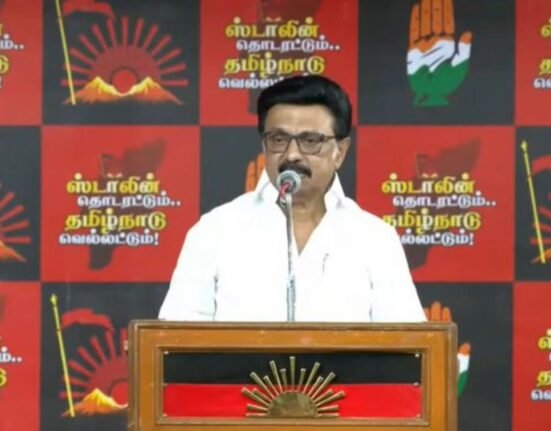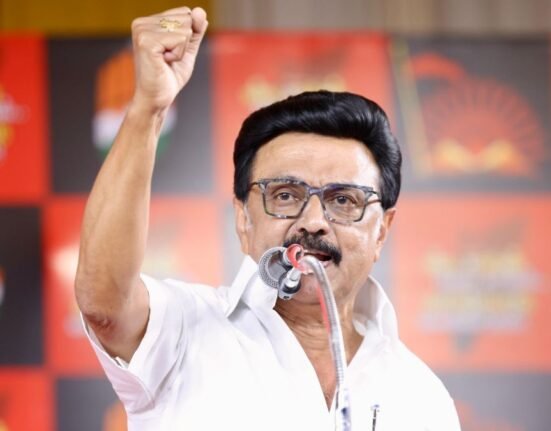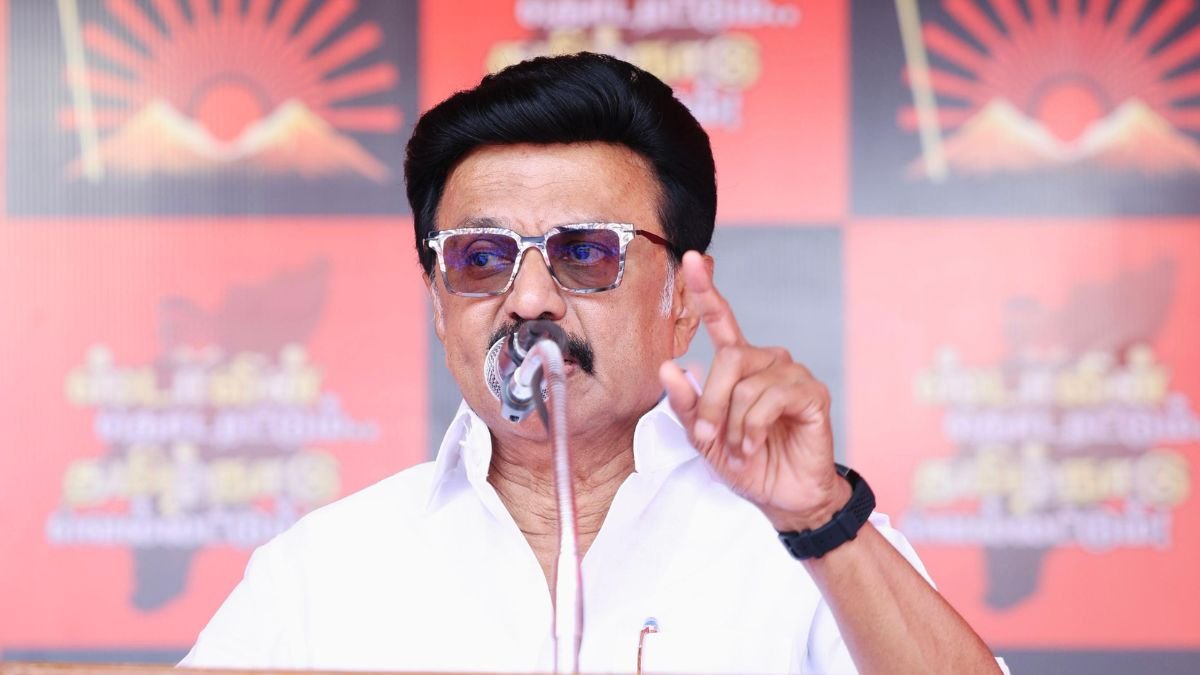
Tamil Nadu Chief Minister M. K. Stalin has strongly reiterated his opposition to the Centre’s three-language policy under the National Education Policy (NEP), intensifying the ongoing debate over alleged Hindi imposition in non-Hindi-speaking states. Addressing the issue in multiple statements and social media posts, Stalin questioned whether the Bharatiya Janata Party (BJP) has the “guts” to include the three-language policy as a core promise in its election manifesto, asserting that such a move would reveal the party’s real intentions to the public.
Stalin emphasized that Tamil Nadu has consistently followed a two-language policy and would not accept any attempt to impose Hindi through educational reforms. He stated that the introduction of a three-language formula from Class 6 in Central Board of Secondary Education (CBSE) schools is a matter of concern for the state, reiterating that language policy should respect regional diversity and the rights of states. He also maintained that Tamil Nadu’s position is rooted in its long-standing policy framework and public sentiment.
In a video message shared on social media, Stalin reiterated that Tamil Nadu’s resistance is not new but part of a historic stand against Hindi imposition. He said the state would not accept any policy that indirectly forces students to learn Hindi under the guise of flexibility. He further stated that attempts to introduce such measures through centralised education frameworks would be firmly opposed, adding that linguistic equality must be preserved in a diverse country like India.
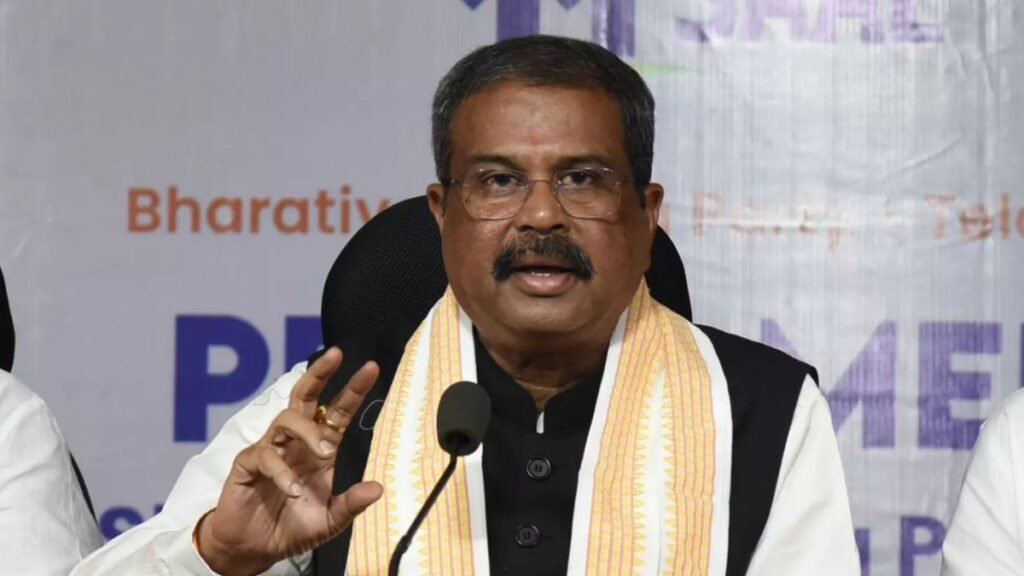
Responding to Stalin’s criticism, Union Education Minister Dharmendra Pradhan clarified that the NEP does not impose any language on states and that the three-language formula is intended to provide flexibility and promote multilingualism. Pradhan stated that no student would be forced to learn any particular language and that the policy aims to offer choices rather than mandates.
Following this, Stalin directly criticised Pradhan’s remarks, calling them “irresponsible and reckless” and stating that they reflect a disregard for India’s plurality and federal structure. He asserted that Tamil Nadu’s opposition is not against any language but against imposition, adding that claims of “no Hindi imposition” are “plainly dishonest” when policy structures effectively compel non-Hindi-speaking states to adopt an additional language.
Stalin further alleged that the Centre had withheld ₹2,200 crore under the Samagra Shiksha scheme, linking it to Tamil Nadu’s refusal to accept the three-language policy. He stated that these are funds that rightfully belong to the state and should not be used as leverage to enforce policy compliance. He described the move as coercive and said financial allocations cannot be tied to language policy decisions.
Raising a series of questions, Stalin asked what third language is being implemented in Hindi-speaking states such as Uttar Pradesh, Madhya Pradesh, Rajasthan, and Gujarat. He also questioned how many schools in northern India offer South Indian languages including Tamil, and how many teachers have been appointed to teach such languages in institutions like Kendriya Vidyalayas. He sought data on the Union government’s spending on promoting classical languages such as Tamil compared to Sanskrit.
Stalin also rejected remarks suggesting shortcomings in Tamil Nadu’s education infrastructure, stating that the state has built a strong public education system with high enrolment, learning outcomes, and welfare initiatives. He highlighted schemes such as the Chief Minister’s free breakfast programme, which benefits over 20 lakh students, and said further expansion has been proposed.
Reiterating his stand, Stalin said Tamil Nadu will not accept any language imposition “under any circumstances,” whether through policy framing, financial pressure, or claims of national interest. He maintained that the state’s two-language policy has delivered strong results and contributes to its social and economic progress.
The Chief Minister also challenged the BJP to advocate compulsory three-language learning in Tamil Nadu during elections and called on Edappadi K. Palaniswami and the All India Anna Dravida Munnetra Kazhagam to clarify their position. He asked whether they support the Centre’s policy or stand with the people of Tamil Nadu, bringing the issue into the broader political contest in the state.