
In a polity where political theatre often takes precedence over institutional coherence, Tamil Nadu’s opposition parties appear to be scripting their own marginalisation. With just months to go before the 2026 Assembly elections, the picture that emerges from the non-DMK spectrum is not one of challenge but of chaos: fragmented, ideologically disjointed, and devoid of a credible counter-narrative. And in that vacuum, the Dravida Munnetra Kazhagam (DMK), despite its incumbency burdens, finds itself in the relatively rare position of facing a disorganised and disoriented opposition.
The Numbers That Speak Volumes
The 2024 Lok Sabha elections provided a crystal-clear snapshot. The DMK-led INDIA bloc not only swept all 39 seats in the state but did so with an impressive consolidated vote share of nearly 47%. The opposition, meanwhile, was split across multiple fronts: the AIADMK-led bloc at 23.05%, the NDA (BJP-led, sans AIADMK) at 18.28%, and the Naam Tamilar Katchi (NTK) standing independently with 8.2%. While electoral arithmetic does not always translate directly into Assembly outcomes, these numbers hint at a broader trend: the DMK’s consolidation of its social coalition, and the opposition’s inability to present a united, let alone coherent, alternative.
In the 2021 Assembly polls, the DMK alliance polled 45.38%, while a then-intact NDA (AIADMK–BJP–PMK) clocked 39.71%. Today, that opposition unity lies in tatters.
AIADMK’s Fragmentation: A Party Eating Itself
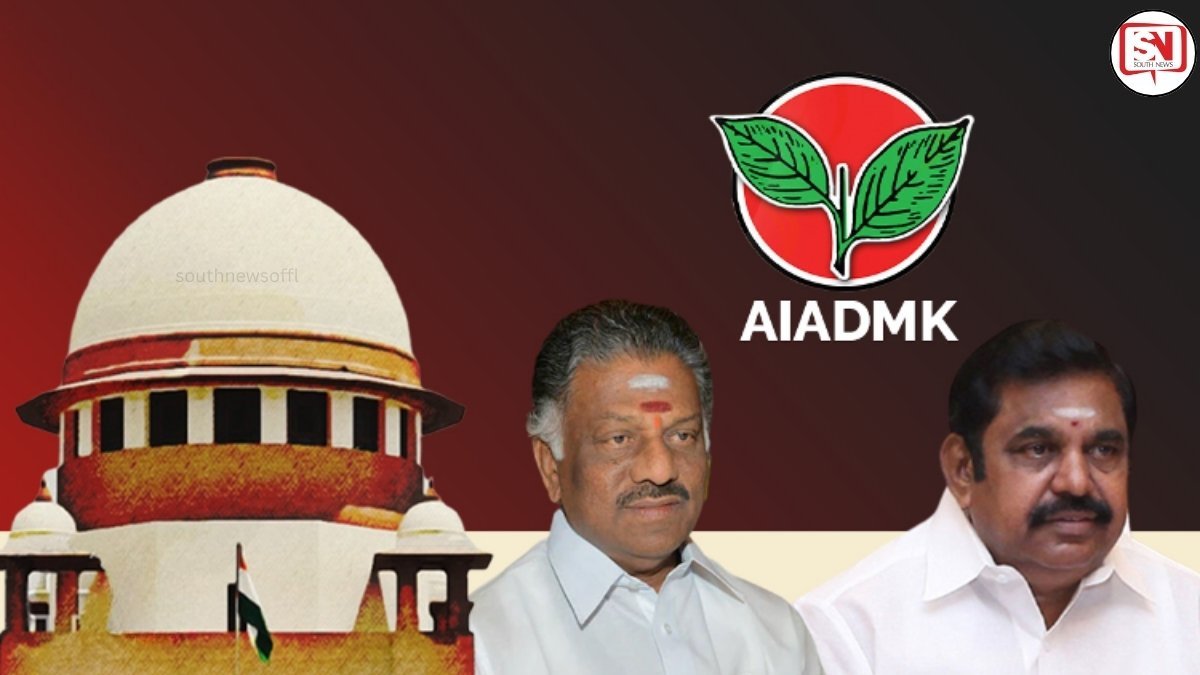
If the AIADMK once prided itself on being the sole inheritor of MGR’s legacy, it now resembles a party in slow-motion disintegration. The split between Edappadi K. Palaniswami (EPS) and O. Panneerselvam (OPS) has refused to heal, with the latter publicly calling for “reunification” and the former insisting the party is “already united.” Behind these semantics lies a brutal turf war, complicated further by Sasikala, TTV Dhinakaran (of the AMMK), and even peripheral claims by Deepa Jayakumar and her supporters.
Each faction claims the legacy. None offers a roadmap.
This internal drift was laid bare in 2024, when the AIADMK secured only 20.46% of the vote despite contesting with DMDK and others. The senior leadership’s expulsion of dissenters, such as K.A. Sengottaiyan, only reinforces the perception of a party more invested in purges than people’s issues.
PMK: A Vanniyar Base Divided
The Pattali Makkal Katchi (PMK), once a stable vote-bank mobiliser among the Vanniyars in northern Tamil Nadu, has entered 2025 in a self-engineered crisis. The formal ouster of Dr. Anbumani Ramadoss and the emergence of a rival “Puratchi PMK” faction has essentially split the party’s core social base.
Given that PMK polled 4.33% in 2024—enough to tilt seats in multi-cornered contests—its internal rift is bound to dilute its influence further. For the BJP or AIADMK, PMK’s split means diminished leverage in a region where margins are already tight.
BJP’s Internal Contradictions and Peripheral Positioning
In 2024, the BJP—despite relentless campaigning by then-state chief K. Annamalai—could muster only 11.24% of the vote. The leadership handover to Nainar Nagendran in 2025 signalled a course correction aimed at mending fences with AIADMK. But this move also exposed the BJP’s deeper tension: between an aggressive Hindutva pitch and the need to adapt to Tamil Nadu’s Dravidian political grammar.
Even now, while the BJP makes overtures to re-align with the AIADMK for 2026, its ideological alienation in a state steeped in anti-Brahminical social justice traditions remains a fundamental roadblock. Its dependence on alliance arithmetic, rather than standalone appeal, reflects that.
TVK and NTK: The Uncertain Disruptors
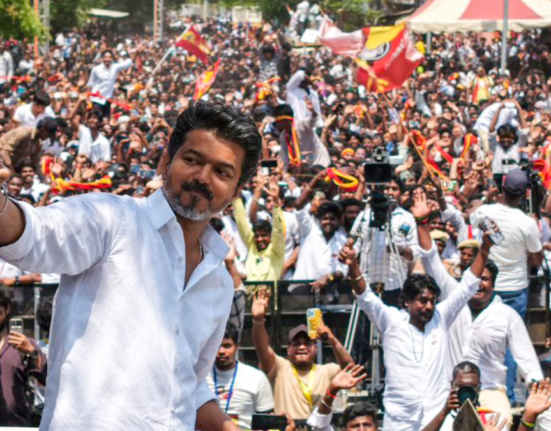
Seeman’s NTK, which polled 8.2% in 2024, remains a wildcard. Its rhetoric-heavy nationalism and Tamil revivalist agenda have built a modest urban youth base, but it has failed to convert that into meaningful legislative presence. The same applies to Vijay’s TVK, a party still in incubation.
Since its launch in 2024, TVK has skipped the Lok Sabha elections, choosing instead to focus on district-level enrolments and cadre-building. While it attracts first-time voters and disillusioned youth, its ideological ambiguity and absence of a detailed programme mean it remains more of a mood than a movement.
The real risk? These “alternatives” may end up splintering the anti-incumbency vote—helping the DMK without intending to.
The Electoral Math: A Game of Divisions
If one were to mechanically add up 2024’s opposition vote shares—AIADMK bloc (23.05%), NDA (18.28%), and NTK (8.2%)—it would result in a competitive 49.53%, outstripping the DMK-led bloc. But that is a fiction, for two reasons.
First, fragmentation: these forces aren’t pooling their votes; they’re contesting each other, often bitterly.
Second, first-past-the-post logic: in tightly contested seats, even a small NTK or AMMK presence can flip outcomes by siphoning off 1–2% from one side.
The BJP–AIADMK reunion attempt under Nagendran aims to address this. But unless seat-sharing is ironclad and field-level coordination is seamless, three-cornered fights—especially in northern and southern belts—will remain the norm.
DMK’s Advantage: Cohesion, Ground Game, and Narrative Control
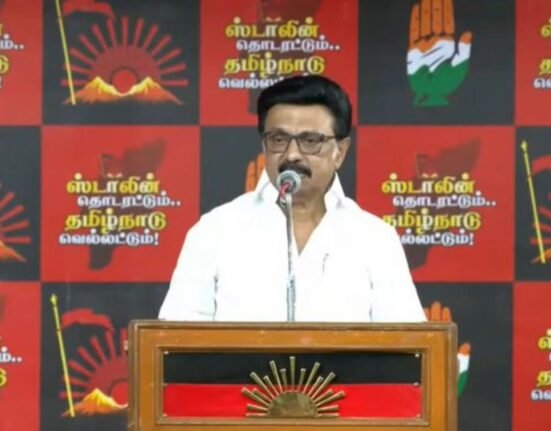
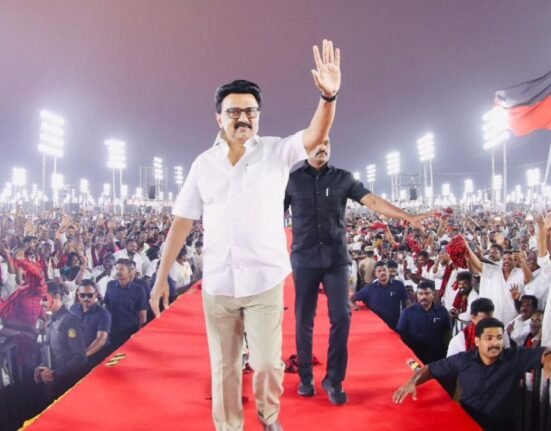
While the opposition drifts, the DMK, led by MK Stalin, is holding its core alliance intact: Congress, VCK, CPI, CPI(M), MDMK, and IUML remain within the fold. In parallel, the Youth Wing under Udhayanidhi Stalin is working to fill 5 lakh posts, each tasked with reaching ten voters—an ambitious model of micro-mobilisation.
This is not mere optics. It reflects a party aware of its incumbency risks and determined to compensate through disciplined ground organisation.
Further, the DMK has carefully curated its welfare narrative: the CM’s breakfast scheme, free bus travel for women, and higher education stipends are being pushed aggressively as markers of the “Dravidian Model.” With Punjab’s CM praising Tamil Nadu’s initiatives, the DMK also enjoys a rare aura of external validation.
The Opposition Is DMK’s Best Ally—For Now
If elections were held today, the DMK would walk into the contest not just with incumbency, but with organisational coherence, social coalition stability, and an opposition that is either in denial, disrepair, or disarray.
That, more than any single welfare scheme or rhetorical flourish, may be the reason why 2026 might not be the uphill climb that state-level incumbents typically face.
As things stand, it is not just MK Stalin’s charisma but the opposition’s cacophony that is scripting the contours of the next Tamil Nadu Assembly.