
In a landmark recognition for Tamil literature, veteran poet, lyricist and novelist R. Vairamuthu has been named the recipient of the 60th Jnanpith Award for the year 2025, India’s highest literary honour. The announcement was made on Saturday, March 14, by the Bharatiya Jnanpith, whose selection committee unanimously chose the 72-year-old for his outstanding contributions to Tamil, marked by what it described as a distinctive poetic voice and uncommon creative depth.
With this honour, Vairamuthu becomes only the third Tamil writer to receive the Jnanpith Award, following P.V. Akilan, who won it in 1975, and D. Jayakanthan, who received it in 2002. The selection committee, chaired by noted writer Pratibha Ray and comprising eminent literary scholars including Madhav Kaushik, Damodar Mauzo, Suranjan Das, A. Krishna Rao, and others, noted that Tamil remains one of India’s richest literary traditions and that its recognition at this level has been rare and long overdue.
Vairamuthu was born on July 13, 1953, in Vadugapatti, a small village in Tamil Nadu’s Theni district, to a family of farmers. He began his literary journey in 1972 with the poetry collection Vaigarai Megangal and has since authored over 40 books spanning poetry, novels, and essays. Among his most celebrated works are Kallikattu Ethikasam, Karuvachi Kaaviyam, Thanni Desam and Moondraam Ullaga Por (The Third World War). His literary career has been marked by a deep engagement with human emotion, social concerns, and an abiding sensitivity toward nature and ordinary lives.
Alongside his work as a writer, Vairamuthu built a parallel career of extraordinary scale in Tamil cinema one that arguably made him a household name far beyond literary circles. Over a film career spanning more than four decades, he has penned over 7,500 songs and poems, entering the industry in 1980 through director Bharathiraja’s film Nizhalgal. He holds the rare distinction of winning the National Film Award for Best Lyrics on seven occasions a record for any Indian lyricist. The Government of India conferred the Padma Shri on him in 2003 and the Padma Bhushan in 2014. That same year he received the Padma Shri, he was also awarded the Sahitya Akademi Award for Kallikattu Ethikasam. The Tamil Nadu government has honoured him with the Kalaimamani award for his literary and artistic contributions.
Reacting to the announcement, Vairamuthu said: “The Jnanpith is greater than the greatest in literature; for Tamil, it is rarer than the rarest. I am deeply pleased to receive the Jnanpith Award, which the world of letters regards as the Nobel Prize of Indian literature.”
The news drew warm responses from the who’s who of Tamil cinema and politics. Actor-politician Kamal Haasan congratulated Vairamuthu on X (formerly Twitter), referring to him as his close friend and mentor. Posting in Tamil, Kamal wrote that a quarter century after Jayakanthan, Vairamuthu had brought great pride to Tamil literature with this honour, and quoted Vairamuthu’s own poetry to describe the depth of their friendship and his admiration for the poet. Superstar Rajinikanth also took to social media to extend his congratulations, celebrating the recognition as a proud moment for Tamil literature and the state of Tamil Nadu.
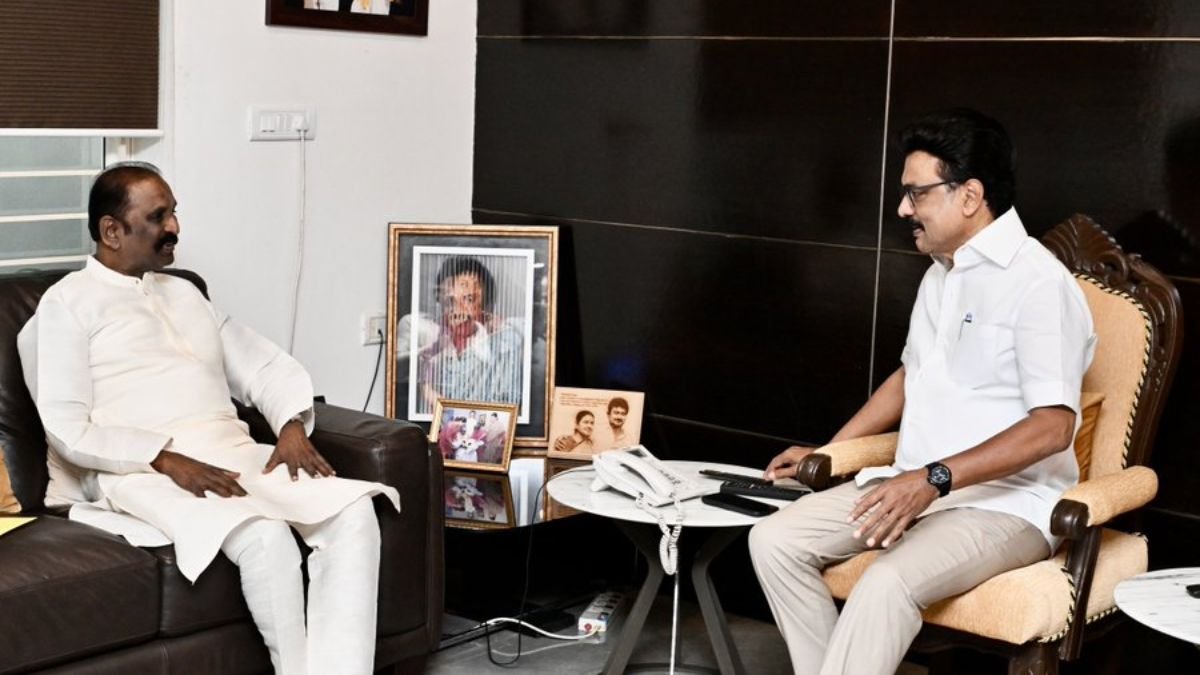
Chief Minister M.K. Stalin too shared his joy on X, noting that he had met Vairamuthu earlier that very morning and that the award news arrived shortly after, sweetening their meeting. Stalin noted that Vairamuthu had mastered both traditional and modern poetry and brought innovation to Tamil letters, stating: “Tamil Nadu congratulates Kavi Perarasu.”
The award, however, has also reignited controversy. Vairamuthu was among the prominent figures named during the MeToo movement in 2018, with multiple women, including noted playback singer Chinmayi Sripaada, making allegations of sexual misconduct against him. The announcement drew sharp reactions from those who felt the recognition was inappropriate given those unresolved allegations. Chinmayi, expressing disappointment, recalled that a previous literary committee in Kerala had announced Vairamuthu’s name for the ONV Kurup award before withdrawing it following public protest. Vairamuthu has never been formally charged, and no judicial proceedings have concluded on the matter. Separately, in 2018, he also faced significant backlash for remarks about the revered 8th-century Vaishnavite saint Andal, after which he publicly apologised, saying he had no intention of hurting religious sentiments.
The Jnanpith Award carries a cash prize of ₹11 lakh, a bronze statuette of Vagdevi (Goddess Saraswati), and a citation. It is presented annually to an author for exceptional contribution to literature in any of India’s recognised languages.
-Samuthiran