
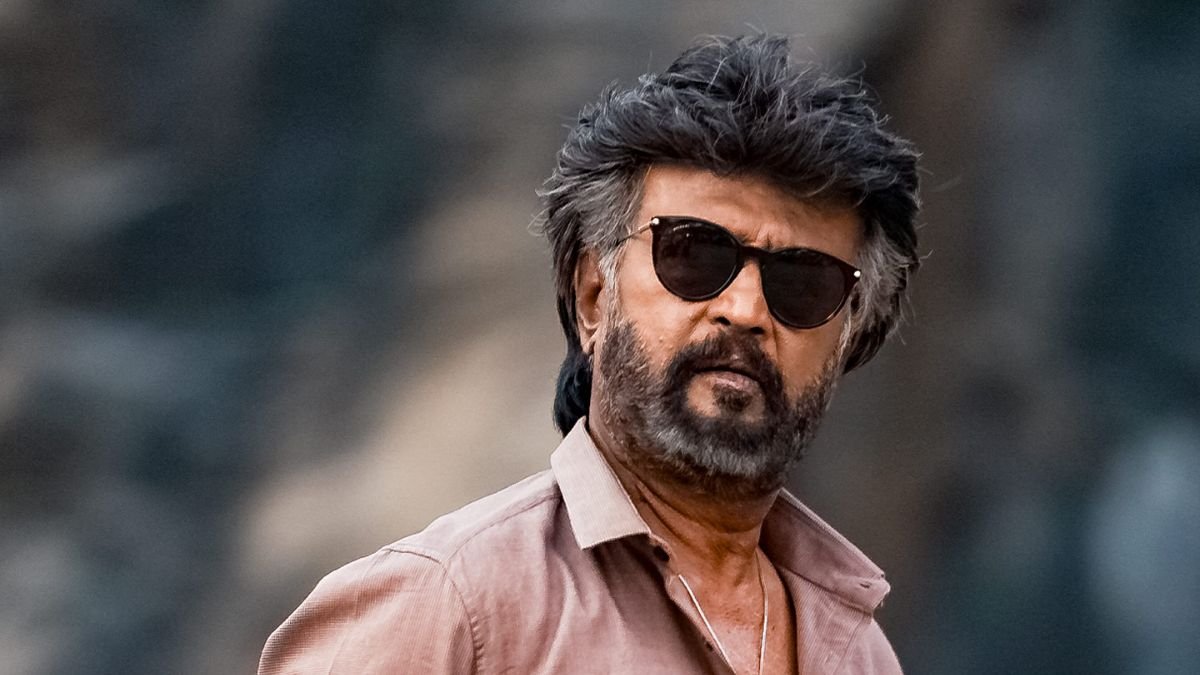
A remark made at a political rally has snowballed into one of Tamil Nadu’s most talked-about controversies of the week and on Tuesday, March 17, Tamil superstar Rajinikanth broke his silence with a measured but pointed response that sent a clear message across political lines.
The flashpoint was March 12, when Aadhav Arjuna, the General Secretary for Election Campaign Management of actor Vijay’s Tamilaga Vettri Kazhagam (TVK), was addressing party cadres at a protest organised in front of the Chennai District Collector’s office. The protest was called to demand a caste-based census and to raise concerns over law and order in Tamil Nadu. In the course of his speech, Arjuna made a sweeping allegation that Rajinikanth had not entered politics because of threats from the DMK, and not, as widely understood, due to health concerns. He invoked the claim to draw a contrast with TVK founder Vijay, suggesting that the actor-politician had dared to withstand similar pressure and still launched his party.
The remark detonated almost immediately. Rajinikanth’s fans mobilised swiftly across the state posters appeared in Madurai and Tiruchengode, with messages expressing outrage and demanding a public apology from Arjuna. Protests erupted across multiple districts. Political leaders from a wide spectrum of parties rushed to condemn the statement, with many framing it as a direct and unwarranted insult to one of Tamil Nadu’s most revered public figures.
Reacting to the backlash, Aadhav Arjuna attempted to clarify that he had not intended to criticise or demean Rajinikanth that his point was merely to highlight Vijay’s courage in the face of adversity. The clarification did little to stem the tide of condemnation.
On Tuesday, Rajinikanth posted his response directly on X (formerly Twitter). In the statement, written in Tamil, he categorically termed Arjuna’s remarks as “contrary to the truth” and “defamatory.” He reiterated that his decision not to enter active politics was entirely his own made on personal and health grounds and had nothing to do with any external pressure or intimidation. He closed his statement with a philosophical line that is already being widely quoted: “Time does not speak, but it waits and gives the answer.”
Rajinikanth also used his statement to publicly acknowledge and thank the long list of leaders who had spoken up in his defence. These included AIADMK Leader of Opposition Edappadi K. Palaniswami, Tamil Nadu BJP president Nainar Nagendran, Union Minister L. Murugan, Tamil Nadu Minister S. Regupathy, VCK chief Thol. Thirumavalavan, AIADMK leader S.P. Velumani, BJP leader K. Annamalai, Arjunamoorthy, PMK leader Anbumani Ramadoss, Tamil Maanila Congress president G.K. Vasan, TMMK leader John Pandian, and Pugazhendhi. He also thanked film personalities Ameer and G. Dhananjayan, as well as media figures Nakkheeran Gopal and journalist Rangaraj Pandey. In a characteristic closing, Rajinikanth extended his deepest gratitude to his fans, describing them as “the very deities who sustain my life.”
The episode provides a revealing glimpse into the fractured and combustible political landscape of Tamil Nadu, just months before the state goes to the polls. TVK, still a relatively young party, has been attempting to carve out political space in a state dominated by the DMK and the AIADMK. The claim about Rajinikanth whether calculated or casual has exposed the party to significant backlash from multiple political quarters simultaneously, none of whom are its friends, but all of whom found common cause in condemning the remark.
For Rajinikanth, who announced his political ambitions in December 2020 before withdrawing citing health concerns and COVID-19 risks, the controversy has once again placed his unfinished political chapter at the centre of Tamil Nadu’s public discourse this time, entirely against his choosing.
-Samuthiran