
Sambhavi Ganesh, PhD in South Asian Studies, University of Edinburgh
Gender is inseparable from caste as a hierarchical system of social relations. Social reformers including Periyar, activists, and academic researchers, have recognised this connection. Yet, how gender operates within castes to sustain the system is often overlooked in contemporary political discourse. This lacuna has consequences that affect the Dravidian imagination of a socially just, anti-caste future.
Let us probe the issue in some detail. Caste discrimination is condemned as a punishable offence. Much-needed reminders about the criminality of untouchability feature in state board textbooks for school students in Tamil Nadu. Yet, it is nearly forgotten that endogamy – marrying within a pre-defined group – determines most marriages in India (Uma Chakravarti 2018), and Tamil Nadu has been no exception to this. Endogamous marriages and the gender relations within them guarantee the continuation of caste practice into the future, although it is justified as a cultural practice (Balmurli Natrajan 2011).
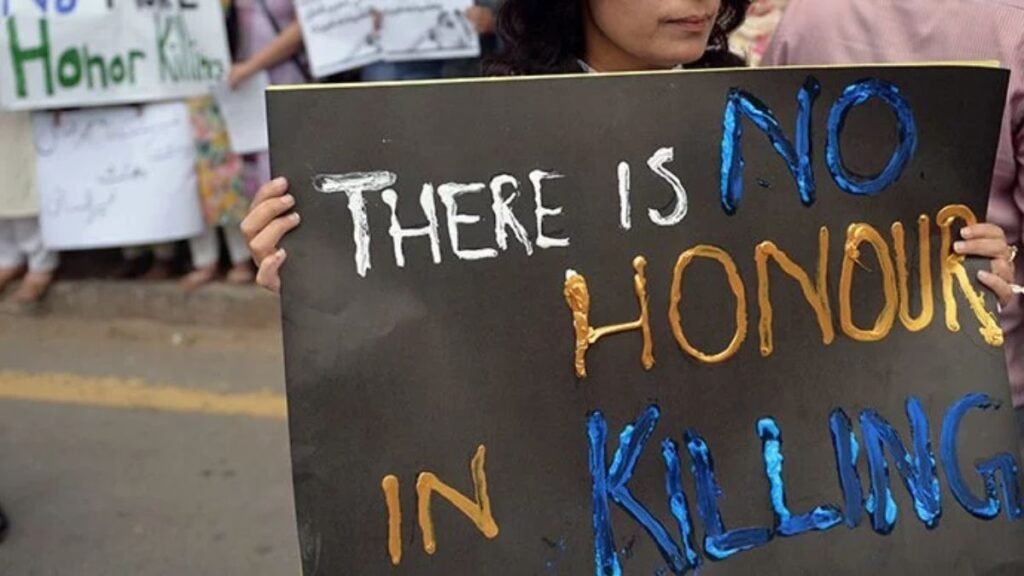
Similarly, news reports routinely highlight killings of Dalit grooms based on caste status as condemnable acts of caste violence. At the same time, we must not forget that the (mis)treatment of intercaste and interreligious couples by parents, family members, and caste kin also contributes to the caste conundrum – the question of caste honour is still at the core of these concerns (Hugo Gorringe 2018). One only needs to read the anonymous narratives of couples on social media to get a sense of its widespread nature.
In this context, the present article focuses on Periyar’s ideas about gender relations and self-respect, and their practical expression through Self-Respect Marriages as a site of transcending caste and gender hierarchies, as well as religious rituals. It also discusses the potential to expand the scope of Tamil Nadu’s Self-Respect Marriage legislation as a powerful alternative to the Special Marriage Act, the country’s existing civil marriage legislation. Ultimately, I argue that, unlike most other states, Tamil Nadu has legal frameworks for social transformation that must be capitalised on to ensure the full realisation of the Dravidian ethos.
Self-Respect and the Women’s Question
The women’s question was a crucial aspect of ideological contestations of the Indian independence movement. Common issues taken up by social reformers in Madras centred on the age of consent for marriage, widow remarriage, and girls’ education. Periyar’s ideas on the women’s question were far more revolutionary. Exactly a century ago, in 1926, he founded the Suyamariathai Iyakkam (Self-Respect Movement) to promote egalitarianism and rationalism and to combat Brahmanical hegemony. A key aspect of the self-respect movement was gender equality, whereby Periyar attacked the root cause of inequality – patriarchy and male domination – rather than seeking instrumental reforms in women’s education and age of marriage. His particular object of critique was the institution of marriage as a master-slave relationship, where the wife is considered her husband’s property. Anandhi S, V Geetha, and Karthick Ram Manoharan, among others, have written about Periyar’s thought and the women’s question in detail.
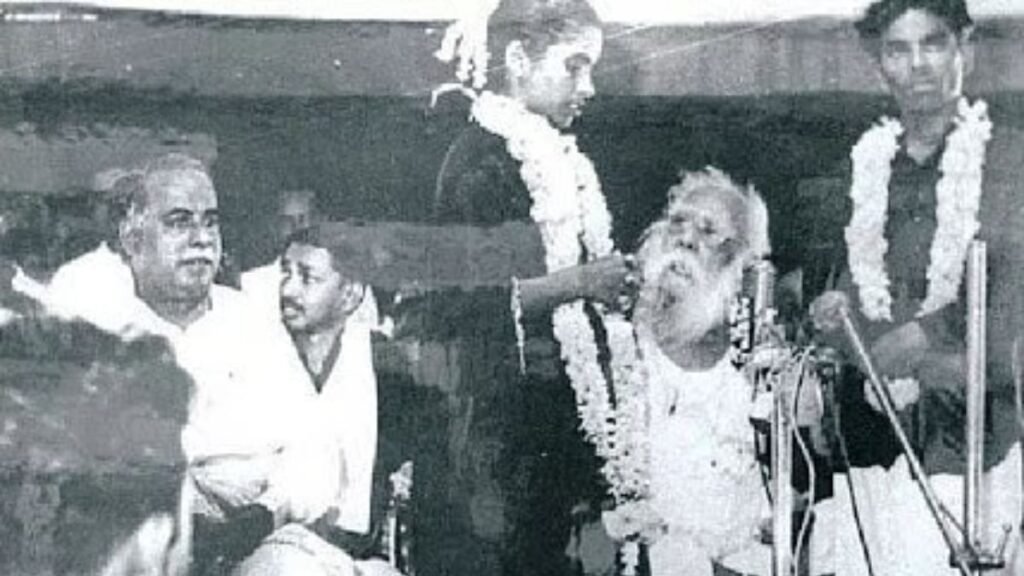
Self-respect marriages emerged as a practical outcome of Periyar’s radical ideas about womanhood and gender equality. The repertoire of events in self-respect marriages breaks away from the legal definition of a Hindu marriage, which was in place since colonial times, as one mediated by a Brahmin priest and conducted in front of a sacred fire pit. Self-respect marriages also establish equality between the marrying couple through a simple declaration of coupledom and partnership, unlike Brahmanical Hindu ceremonies, where the groom vows to protect the bride and the bride promises to be chaste.
Legal Challenges
The first self-respect marriage took place in 1928, after which 8,000 marriages occurred in the next three years (Anandhi 1991), amid ongoing legal challenges. In 1967, Tamil Nadu’s then-CM Annadurai amended the Hindu Marriage Act to include self-respect marriages in the state. To date, Tamil Nadu is the only state that allows for non-religious marriages within the Hindu marriage framework. In the past 6 years, more than 12,000 self-respect marriages have been registered. This carries important consequences.
In India, religious marriages are governed by the Hindu Marriage Act (1954) and the respective regulations of other religious communities. The Special Marriage Act (1954) governs civil and mixed marriages. While the Special Marriage Act offers a civil and secular framework for inter-caste and interreligious couples, it is also criticised for its mandatory 30-day notice period, during which the couple’s names and other identifying details are displayed outside the registrar’s office. The stated logic is that such display ensures that the marrying parties are not cheating on a previous spouse.
This logic begs the question of how people are expected to know a potential spouse’s character in an endogamous arranged marriage, which is not even required to be registered under the Hindu Marriage Act. The rituals are considered legally sufficient to establish the couple’s marital status. Media reports showcase instances of dowry deaths, domestic abuse, and marital rape affecting women in marriages with alarming regularity, which goes on to show that spousal choice is not well-handled even by parents, family members, and the caste milieu. In this context, the regulation of a couple’s spousal choice is bizarrely restricted to mixed marriages, due to the license given to bureaucratic institutions in implementing the Special Marriage Act. In this sense, the bureaucratic machinery seems to be no different from caste-ideological families in second-guessing the marrying person’s spousal choices if they decide to marry on their own terms.
Alternatively, the Self-Respect Marriage Act not only removes religious ritual agents from the picture but also guarantees the couple’s privacy and bypasses bureaucratic judgment. Several community-led initiatives across Tamil Nadu offer legal aid and support for self-respect couples. Although enacted under the Hindu Marriage Act, self-respect marriages are technically open to people from all religions and atheists. Yet, it is understood only under the Hindu marriage framework, something that I argue reduces its radical premise of breaking structural forces of caste, patriarchy, and religion.
Conclusion
Amidst recent instances of heavy regulation of the Special Marriage Act and endangerment of religious conversion for marriage across India, Tamil Nadu has a readymade legal framework to encourage mixed marriages rooted in Periyarist and Dravidian ideals of self-respect and rationality. What Periyar initiated a century ago, as a critique of Brahmanical rituals and women’s position within marriage, has far-reaching potential. It is up to us to make this happen.
Sambhavi Ganesh holds a PhD in South Asian Studies from the University of Edinburgh, where the School of Social and Political Science funded her research. Her work focuses on the category of Brahmin as a gendered one, contributing to the Sociology of South Asia, critical studies of caste, and Intersectionality. She has also taught on Sociology and Politics courses at the University of Edinburgh and King’s College London.