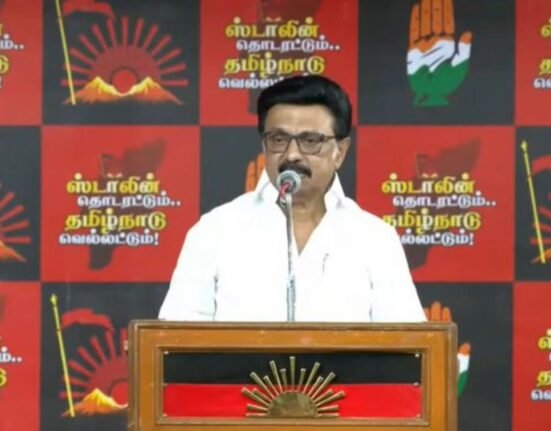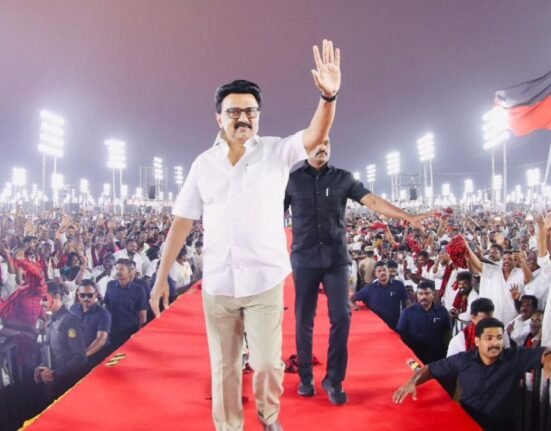

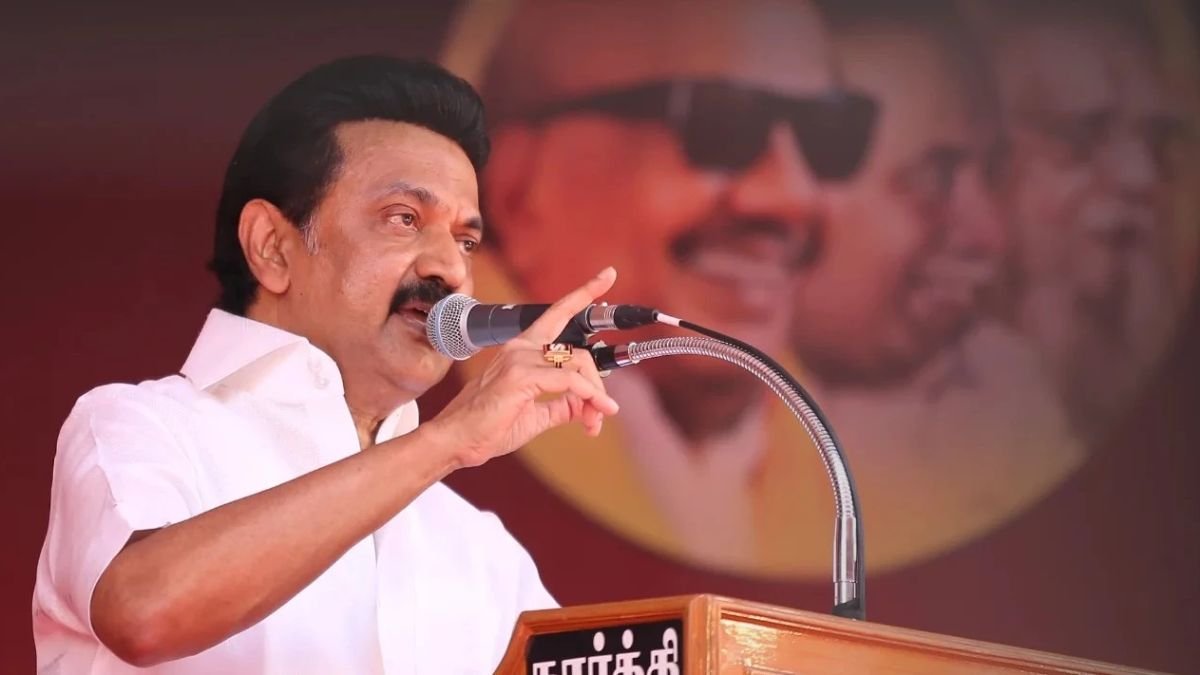
Throughout the entire Tamil Nadu Assembly election campaign, one question has followed Chief Minister MK Stalin at every press conference and campaign rally: why, when TVK chief Vijay was attacking the DMK government in constituency after constituency, did Stalin refuse to respond in kind? Chief Minister finally addressed that question head-on, offering the clearest public explanation he has given for what was, by any measure, one of the more deliberate and disciplined strategic decisions of this campaign.
The logic Stalin articulated was disarmingly straightforward. The principal enemy in this election, he made clear, is the AIADMK-BJP NDA alliance, the vehicle for the BJP’s attempt to recapture Tamil Nadu through the back door of EPS’s coattails. To spend energy attacking TVK and Vijay, Stalin argued, would be to misidentify the battlefield. Every moment spent on Vijay is a moment not spent on exposing Palaniswami’s silence on the three-language policy, delimitation, Sathankulam, Sterlite, Kodanad and the BJP’s tightening control over the AIADMK. It would be a gift to his actual opponents, and it would also risk elevating a political new entrant amplifying his visibility and lending him the credibility of a direct engagement from a sitting Chief Minister.
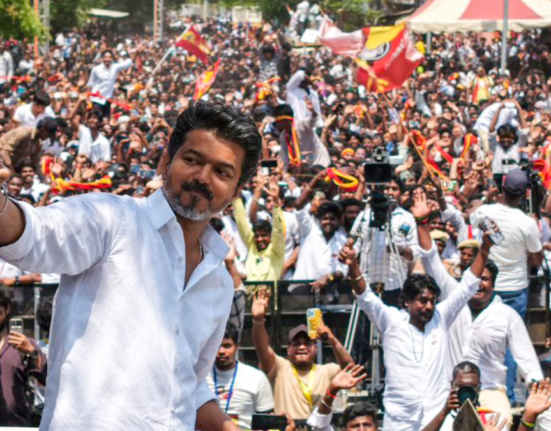
This calculation is not new political analysts had long observed Stalin’s studied silence on Vijay, and senior DMK leaders had been instructed to similarly hold back but it is the first time Stalin publicly confirmed and explained it as a deliberate choice rather than a tactical omission. The backdrop matters: Vijay had been relentlessly attacking Stalin throughout the campaign, accusing the DMK government of engineering the Karur stampede, imposing restrictions on TVK rallies, and of being the primary reason for women’s insecurity in the state. Stalin’s refusal to respond had been characterised by TVK functionaries as evidence of fear; the Chief Minister now framed it as evidence of strategic clarity.
The context is significant. TVK is contesting all 234 seats but is widely expected to be a vote-splitter rather than a seat-winner in this election. Pre-poll surveys have given the party minimal seat projections, with the primary contest still expected between the SPA and the NDA. For Stalin, engaging with Vijay would have been to grant the TVK an adversarial importance the oxygen of prime ministerial-level opposition at a time when the DMK’s strategic interest was in consolidating anti-NDA votes that TVK’s campaign might otherwise siphon.
For Vijay and TVK, the refusal to be engaged with by the Chief Minister has been both a frustration and a political challenge. A new political party gains legitimacy partly by being taken seriously enough to fight against. Stalin’s silence denied them that recognition. His decision to explain his silence now in the final days of the campaign is itself a message: the fight was never with you.
–Samuthiran