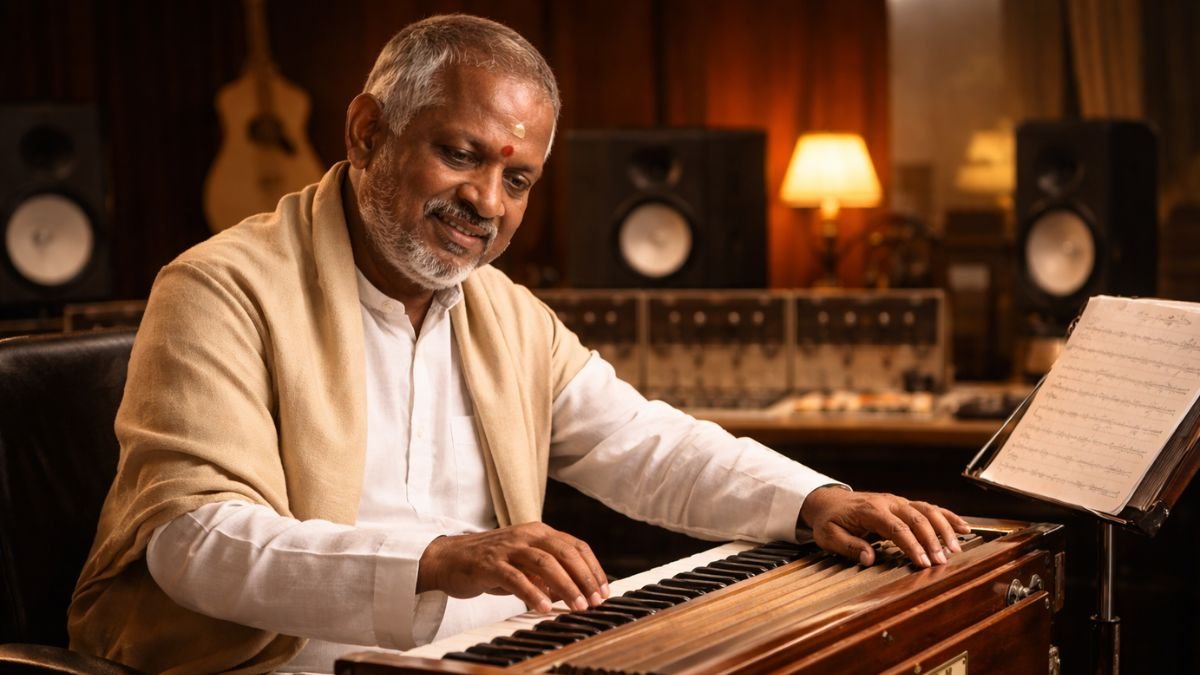
New Delhi — In a major interim ruling with wide implications for India’s music industry, the Delhi High Court on Monday restrained legendary composer Ilaiyaraaja from exploiting a substantial portion of his musical works held by Saregama India, pending a detailed copyright dispute hearing later in the year.
The single-judge bench granted the injunction following Saregama’s petition alleging that Ilaiyaraaja was in breach of contractual terms by exploiting certain master recordings that the label claims to own. The interim order covers 134 film sound recordings, classics composed by Ilaiyaraaja over several decades and prohibits him “from accessing, publishing, licensing, distributing, performing or otherwise exploiting” those works until the next hearing.
Delhi High Court Justice observed in court that the question of ownership and exploitation rights, as framed by Saregama, prima facie warrants protection until legal entitlement is conclusively determined. The bench noted that allowing unilateral exploitation could potentially render moot the dispute over contractual rights, copyright ownership and related economic interests.
Saregama’s plea stems from long-standing agreements with Ilaiyaraaja’s production entities dating back to the 1970s and 1980s, when the composer produced the bulk of his oeuvre for Tamil, Telugu and Malayalam films under labels that subsequently transferred rights to Saregama. The label argues that its acquisitions include exclusive rights to reproduce, distribute and commercially exploit the sound recordings under the Copyright Act, 1957, and that Ilaiyaraaja’s recent licensing initiatives circumvent those arrangements.
Ilaiyaraaja’s legal team countered that the composer retains certain underlying rights as the author of the musical works and that the scope of his contractual entitlements has been wrongly interpreted by Saregama. They argued that the interim order would cause irreparable harm by curtailing Ilaiyaraaja’s control over his creative legacy. The court’s view, however, was that these questions must be fully heard at the final hearing before rights are exercised.
Industry observers describe the case as emblematic of broader tensions in Indian entertainment between legacy rights, master recordings ownership and artists’ moral rights under copyright law. With the interim injunction in place, neither party can commercially exploit the disputed catalogue until the next scheduled hearing, expected later this year.
Representatives for both sides have indicated a willingness to pursue resolution through legal channels, though public comment has been limited. Fans and music industry stakeholders alike are watching closely, as the outcome could influence contract negotiations and rights valuations for decades of South Indian cinema’s musical heritage.