

Hariharan
At one point, it sounded simple.
A bill.
A progressive move.
33% reservation for women.
And honestly, who would oppose that?
That is exactly how the narrative started. That is how it was projected across many North Indian media platforms. And slowly, even a few South Indian platforms echoed the same.
But the thing is — this was not just that.
It was something deeper. Something structural.
This was not merely a women’s reservation bill. This was a delimitation-linked constitutional shift. And that is where the entire issue begins.
There are moments in Indian politics that pass like routine legislative events. And then there are moments that quietly attempt to redraw the future of the nation. And this bill falls into the second category — one that could alter representation, federal balance, and political power equations across India.
And that is where the real debate began.
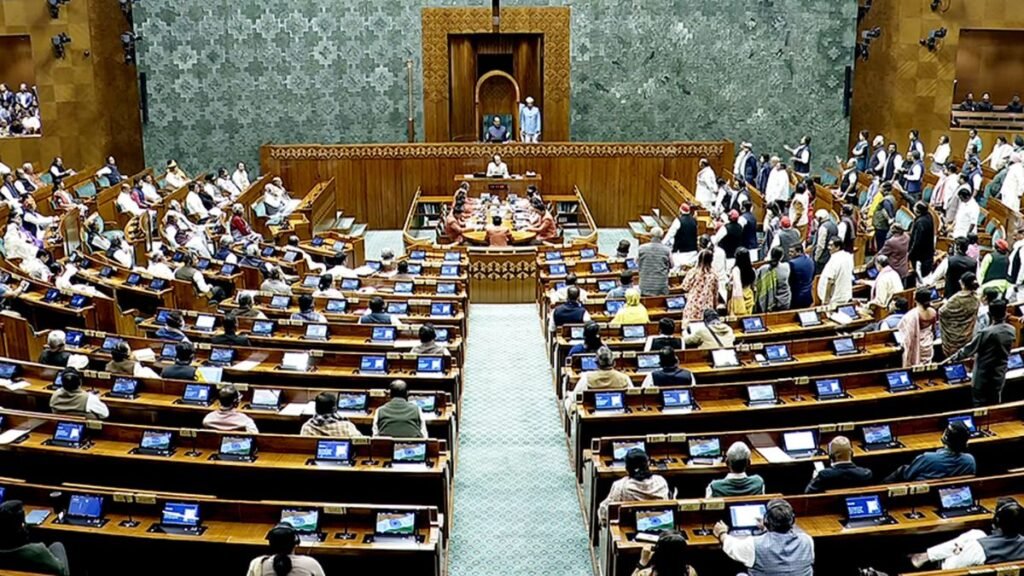
The Hidden Faultline: North vs South Representation
The core concern wasn’t reservation.
It was delimitation tied to population.
States that successfully controlled population growth—primarily South Indian states—risk losing parliamentary representation, while states with higher population growth—largely in the North—stand to gain.
This creates a structural imbalance:
- Rewarding population growth over governance efficiency
- Penalizing states that invested in education, healthcare, and family planning
Let’s look at the numbers.
Tamil Nadu vs National Metrics (Recent Estimates)
- Gross State Domestic Product (GSDP): Tamil Nadu ~ ₹27–30 lakh crore (2024–25 est.) Among the top 2–3 largest state economies in India
- Per Capita Income: Tamil Nadu ~ ₹2.7–3 lakh/year, whereas theIndia average ~ ₹1.7–2 lakh/year
- GER (Gross Enrolment Ratio in Higher Education): Tamil Nadu ~ 47–51%, whereas theIndia average ~ 28–30%
- Urbanization Rate: Tamil Nadu ~ 48–50% India ~ 35%
- Industrial Output Contribution: Tamil Nadu is one of India’s top manufacturing hubs (automobile, electronics, textiles)
These are not just numbers.
These are outcomes of policy.
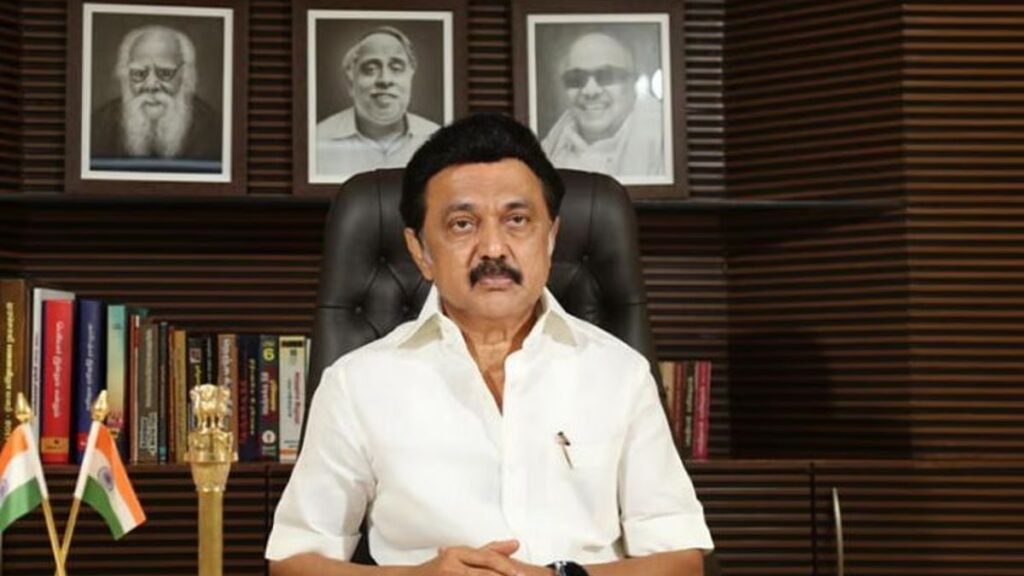
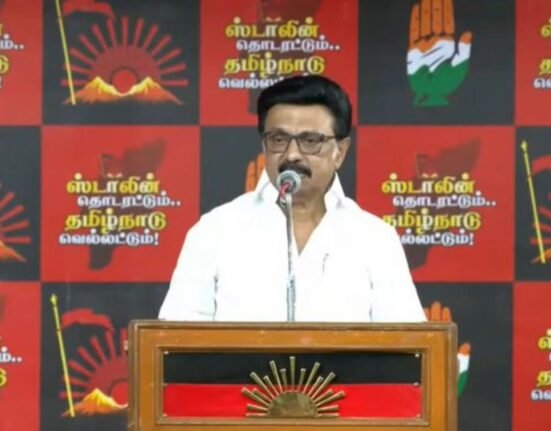
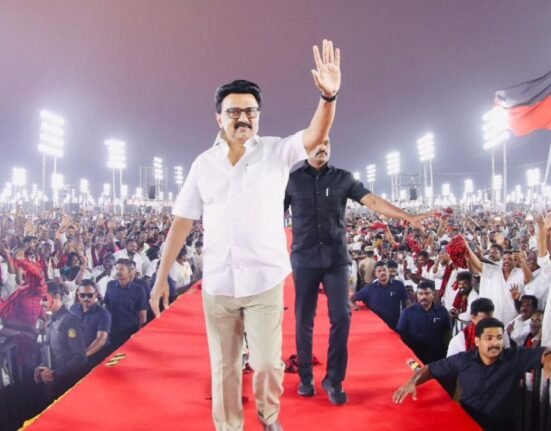
Tamil Nadu CM Stalin Who Saw It Early
While the debate picked up recently, one leader consistently flagged this issue years before it became mainstream — M. K. Stalin
Not as a reaction. But as a warning.
Over the past couple of years, there were repeated efforts to unite South Indian states, highlighting the long-term implications of such structural changes.
What started as a regional concern slowly became a national conversation. And importantly—it did not remain confined to party lines.
Leaders across states, including Pinarayi Vijayan, Revanth Reddy, and figures like Akhilesh Yadav began echoing similar concerns.
This wasn’t coincidence.
This was convergence.
At its core, this is not just policy vs policy.
It is ideology vs ideology.
On one side:
- A model often associated with centralization
- Political narratives built around religion-based polarization
- A governance approach critics associate with majoritarian consolidation
On the other:
- The Dravidian model
- Built on:
- Social justice
- Reservation
- Education-first policy
- Secular governance
- Rationalism and scientific temper
This ideological contrast is not theoretical.
It is visible in outcomes—especially in Tamil Nadu.
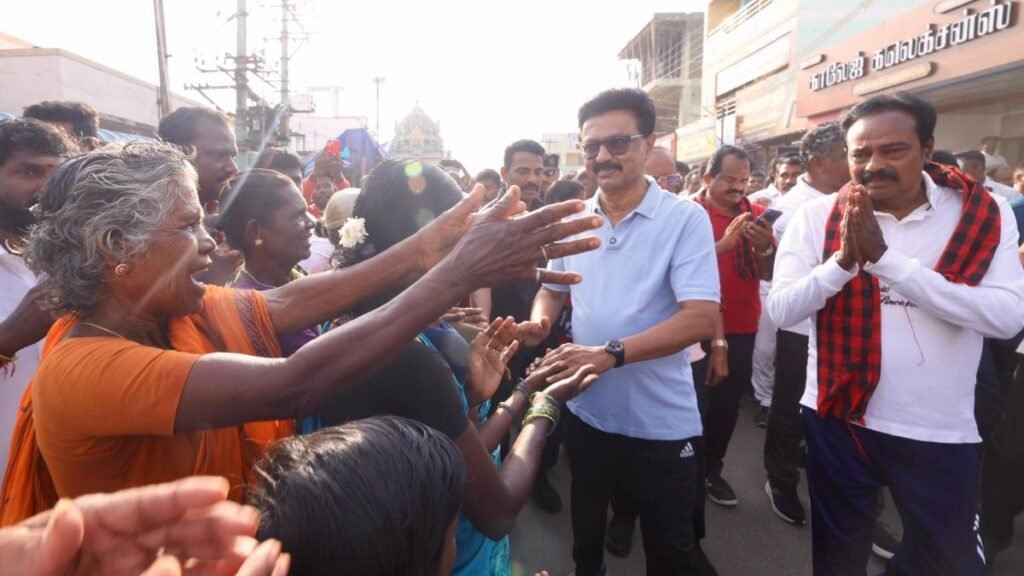
From Regional Resistance to National Signal
What began as resistance in the South is now shaping into something larger.
A pattern:
- South India unites on structural issues
- Narrative builds around federal fairness
- Gradual resonance in parts of North India
This is how political waves are formed.
Not overnight. But through consistent positioning.
A Larger Question: Is This Beyond Tamil Nadu?
At this point, a more strategic question emerges:
Is this just about state leadership? Or is it something bigger?
Because the pattern is familiar.
A strong Chief Minister → builds a governance model → gains national attention → transitions into national leadership
India has seen this before.
And today, conversations are quietly shifting toward whether M. K. Stalin could emerge as a national-level alternative in the future.
Not declared. Not formal. But increasingly discussed.
The Tamil Nadu Model: A Preview of Possibility?
If governance models are to be evaluated, Tamil Nadu presents a strong case study:
- High education penetration
- Strong public health system
- Balanced industrial + welfare model
- Consistent social justice framework
The question is no longer whether this model works.
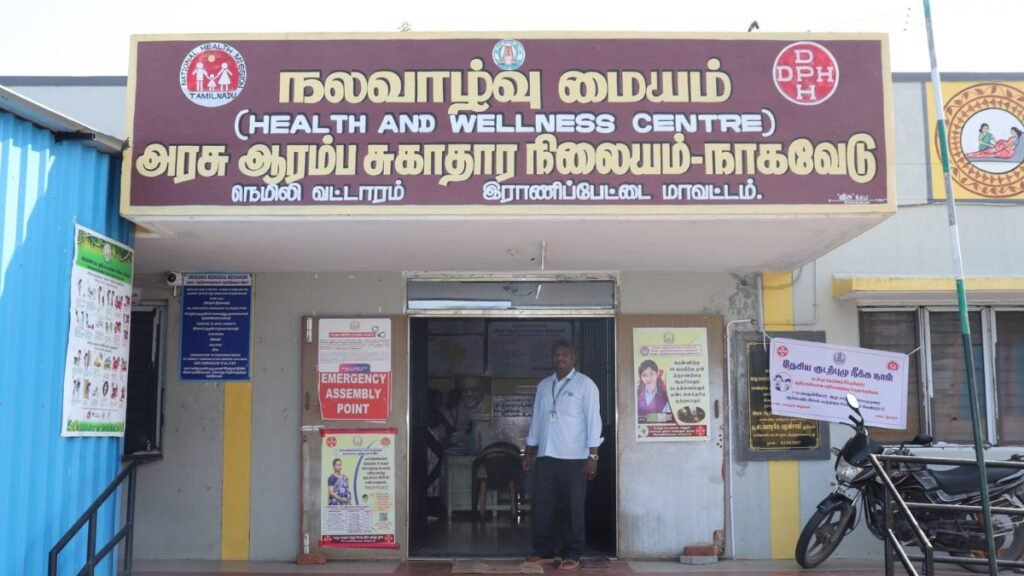
The question is: Can it scale nationally?
If even partial alignment happens between:
- State-level efficiency metrics and
- National-level governance
India’s trajectory could significantly shift.
What Lies Ahead
This moment is not about one bill alone.
It is about:
- Representation
- Federal balance
- Ideological direction
- Leadership emergence
Political narratives are being rewritten—not loudly, but steadily.
And sometimes, the biggest shifts don’t come from Delhi.
They begin elsewhere.
And then move north.
The Moment That Could Redefine India
Now think of this.
A man — M. K. Stalin
A man who has grown under the shadows of giants.
A man who has followed Anna, Periyar, Kalaignar — not just politically, but ideologically.
A man who has learned governance, social justice, and people-first politics from them.
Now imagine him…
Walking down the streets of Delhi, Uttar Pradesh, Maharashtra — regions where Hindutva is being preached aggressively, consistently, and structurally.
And in the middle of that…
He brings something completely different.
Not aggression.
Not division.
But inclusivity.
The idea that people can grow together. The idea that education matters more than identity politics.
The idea that empowerment is stronger than polarization.
That is the contrast.
That is the shift.
Mallikarjun Kharge reinforces this sentiment, stating, “The entire nation stands united behind Stalin, extending its full support to the Dravidian ideology he represents.”
Also leaders across the spectrum — including Rahul Gandhi —begin to vouch for him.
Not casually. Not symbolically.
In Parliament and public speeches, Rahul Gandhi has consistently pointed out that Tamil Nadu’s political consciousness cannot be easily controlled, and that the BJP’s ideological model does not find acceptance among the people of Tamil Nadu.
His broader assertion has been clear:
- That regional leadership like M. K. Stalin cannot be dictated or controlled from the Centre
- And that Tamil Nadu’s people will not accept BJP’s governance model
Not as a one-off statement.
But as a repeated political position and as part of a larger national alignment. And that is where this stops being a state story.
And becomes a national possibility.
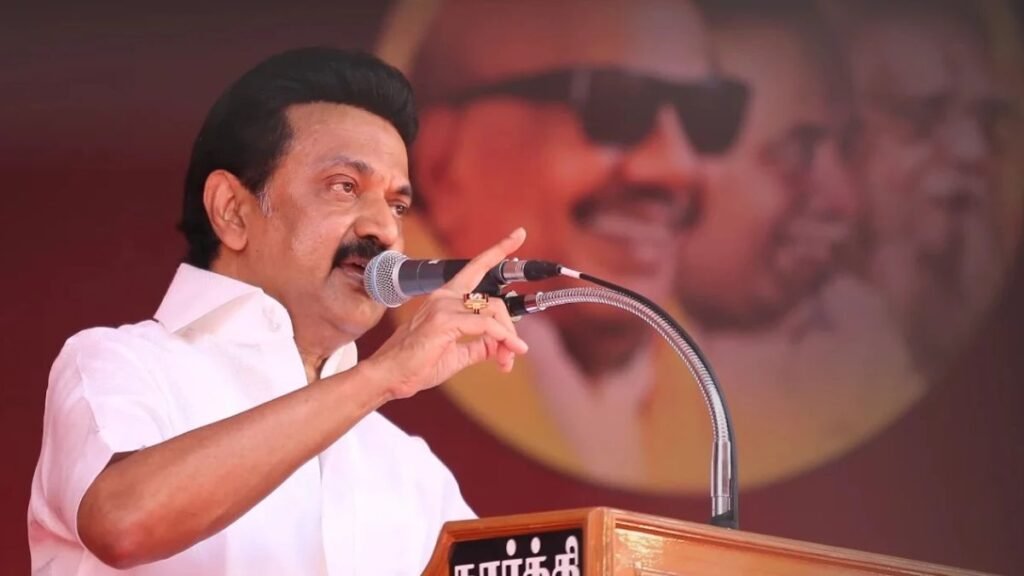
Because when a leader from the South — rooted deeply in Dravidian ideology, trained under Anna, Periyar, Kalaignar, tested through political struggle — steps into the national stage…
It is not just leadership.
It is ideology entering geography.
And that is when the real question emerges:
Is India ready for a shift from division… to inclusion?
There’s a quote that once circulated in political discussions:
“M. K. Stalin is far more dangerous than Karunanidhi.”
Not in the literal sense.
But in terms of political evolution, strategy, and timing.
If current trajectories continue, that statement may not remain just a remark. It may become a prediction.