A. S. Panneerselvan, Senior Journalist and Author
It is important to contextualise the various creative interventions of the Dravidian Movement since the third decade of the 19th century. The public sphere was dominated by the nationalists, the focus was on the anti-colonial struggle and it was oblivious to the struggle for dignity that was launched by the publication of the non-Brahmin manifesto in 1916. I have used the term “Dravidian Narratives” to denote the heterogenous interlocking public of the movement which was, and is, vastly different from the homogenous, monochromatic pan-Indian nationalism. The pan-Indian erasure of the details is created by laying emphasis on different forms of narratives as silos – it created Sahitya Akademi to address literature, Lalit Kala Akademi to foster visual arts and Sangeet Natak Akademi to nurture performing arts. On the other hand, in Tamil Nadu’s institutional arrangements, all forms of articulations are brought under one roof: “Tamil Nadu Eyal Isai Nataka Manram.” In a broader sense, this represents the difference between the ‘coming together’ model of the Self-Respect Movement where the focus is on empowerment and that of the ‘holding together’ model where it is on governance and control.
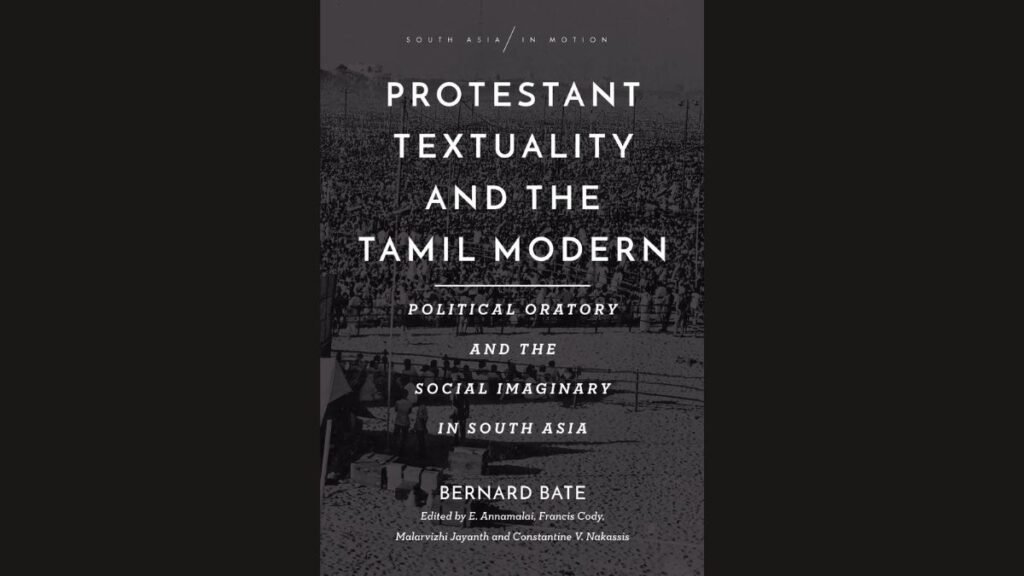
In his introductory note to Bernard Bate’s “Protestant Textuality and the Tamil Modern: Political Oratory and the Social Imaginary in South Asia”, A. R. Venkatachalapathy hints at the limits of journalistic reporting of politically significant interventions. He cites his translation of Thiru. Vi. Ka.’s observations under the rubric “The Mischief of Newspapers”: “The correspondent renders the speech in his own words. The views of the speaker thus lose their [original] garb. Sometimes meanings get distorted. Occasionally distortion is deliberate. If I elaborate on the mischief of party newspapers, it will run into pages. In short, one may say that it is rare indeed for talks delivered in the vernacular to be reproduced faithfully in newspapers… Today I would say something on the platform. In tomorrow’s newspapers it would appear in an entirely different version.” He also cites the observation of Periyar about the prejudicial reporting of a speech of P. Varadarajulu Naidu, which was in Tamil.
In this environment, the self-respect leaders did not wait for the nationalists to give them space and engage in a dialogue. They embarked on a journey of creating their own ideological vehicles. They launched multiple publications, they wrote and staged plays across the state, they created a new form of literary and cultural intervention and finally, they created their own cinema. This trend is not about the past alone. When the Indian skies opened up for private participation, the first satellite channel Sun TV was launched by Kalanidhi Maran, a product of the movement.
Periyar EVR was the one to make the earliest meaningful media intervention. The preface to the edited volume, Revolt – A Radical Weekly in Colonial Madras, recorded how the move was socially and politically significant. The preface read: “Revolt was the Self-respect Movement’s first English weekly. In 1925 only 7% of the population in Tamil Nadu was literate. Yet, Periyar dared to start the Tamil weekly Kudi Arasu that year. In 1928, the year that saw Revolt being published, very few Tamilians knew to read or write English. It is surely a historical feat that Revolt continued to be published until 1930. Periyar’s deep and abiding interest and commitment to destroying caste, women’s rights, his opposition to obscurantist faith and belief, to Brahmins, and his endorsement of proportional representation led him to risk such ventures such as these. Outlining the reasons for starting an English weekly, Periyar noted that he desired the ideals of the Self-respect movement to be known to people outside Tamil Nadu; he also wanted an English forum to counter the views expressed by Brahmins and the politically selfish class against the Self-respect movement which found an easy berth in existing English publications.”
S.V. Rajadurai and V. Geetha, editors of the Revolt anthology, explained the transformative power of this brand of journalism and the space it created for an inclusive polity in Tamil Nadu. They wrote: “Indignant, wickedly funny and expounding a philosophy of social compassion and comradeship, Revolt provided a much-needed antidote to the sanctimonious tenor of political and social debates in Tamil Nadu. Unmindful of criticisms voiced from orthodox quarters and the nationalist press, however vituperative these were, Revolt persisted in its radicalism.” There was a dual approach. Kudi Arasu was meant to the populace for whose rights the movement was established and Revolt was meant to reach the influential section to elucidate the egalitarian principles that governed the self-respect movement.
The defining aspect of the self-respect movement’s intervention was its multi-nodal arrangement. The different nodes were multiple cities and towns; multiple genres that varied from short stories and parables to plays and novels; parallel music and performances that resulted in the formation of the much-celebrated Tamil Isai Movement, creating a niche in the emerging influential media called the cinema. Each leader edited at least one magazine. For instance, Annadurai was the editor of Dravida Nadu (1942), Maalai Mani (1949), Kanchi (1964), Nam Naadu (1953), Home Land (1957), and Home Rule (1966). Karunanidhi edited Murasoli (the only surviving publication) and Mutharam (1964), Nedunchezian edited Manram (1955), Mathiazhagan founded Thennagam (1959), S.S. Thennarasu established Thennarasu in 1964, N.V. Natarajan edited Dravidan (1947), K. Anbazhagan started Ina Muzhakkam in 1959. According to K. Thirunavukkarasu, chronicler of the Dravidian Movement, there were nearly 200 ideological publications from the movement, and their longevity varied from six issues to a decade.
V. Rajesh’s “Reproduction and Reception of Classical Tamil Literature: Textual Culture in Colonial Madras” (2013) records some of the factors that contributed to the emergence of an informed Tamil public sphere. He recorded the fact that “the writing of Tamil literary history has been a subject of interest for scholars in the language even before Independence. From the beginning of the nineteenth century, missionaries, Orientalists and colonial administrators made an attempt to comment on the history of Tamil literature based both on the literary works available to them and the information gathered from teachers in this language.”
It is impossible to be encyclopaedic in providing a comprehensive reading of the Narratives of the self-respect movement as it spans a vast temporal and spatial canvas. In this paper, I would like to provide enough hints that capture the vibrancy, creativity and empathy that characterised the different public articulations of the movement. The journalistic interventions alone deserve a book-length paper. For instance, in 2022, R Subramanian compiled a book titled, En Namakku Itthanai Edhirigal: Thanthai Periyarin Ithazhiyal (Why do we have so many enemies: Journalism of Thanthai Periyar) a nearly thousand-page treatise on Periyar’s journalism alone. Tamilmann Pathippagam has brought out a 110-volume set of the collected works of C.N. Annadurai. A stunning compilation that runs to 54 volumes and has nearly 22,000 pages by Gowra Publications brings together the epistolary articulation of Kalaignar Karunanidhi alone.
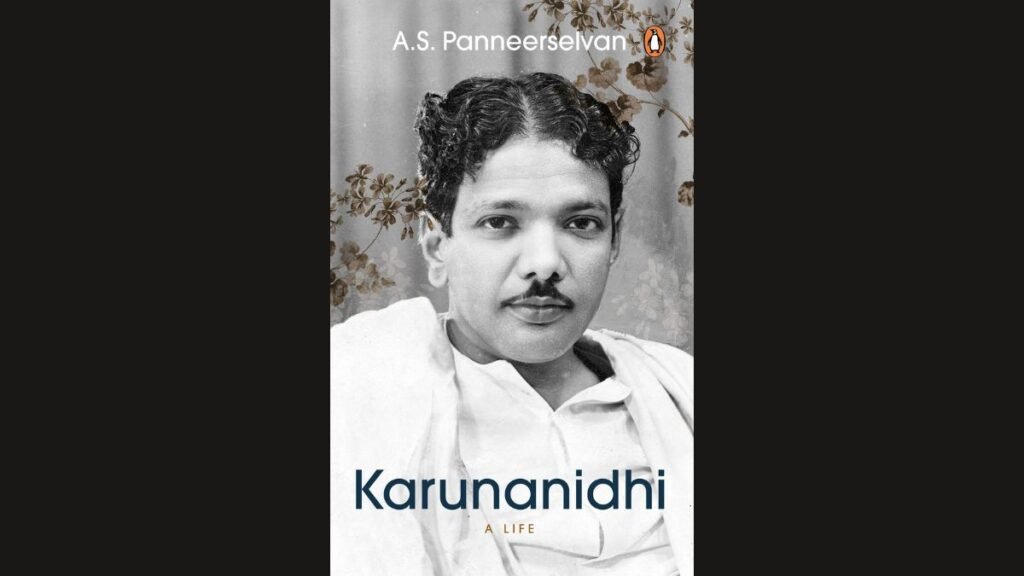
In my biography of Kalaignar, I have written about the differences in the approach between Periyar and Anna towards language and culture. I wrote: “The duality of the Self-Respect movement emerges clearly during this phase. While Periyar and Annadurai were fully agreed on the diagnosis, their prognoses were differing. For Periyar, language was an instrument for communication, nothing more; for Annadurai, language was an organic, socio-cultural oeuvre that lends a distinct identity and a sense of pride and belonging to the people.”
In this oeuvre, the first set of experimentation took place in theatre. The Indian Left gave birth to a remarkable institution– the Indian People’s Theatre Association (IPTA) – with its motto of “People’s Theatre Stars the People”. The Congress had a galaxy of musical performers such as M.S. Subbulakshmi and D.K. Pattammal. When the self-respect performers came into the stage, they drew the best examples from both the Left and the Congress, and created their own trajectory. Eric Miller, Director, World Storytelling Institute, has recorded how the Dravidian movement looked at ancient Tamil literature and literary figures such as Avvaiyar and Kannagi. In the process, we learn that the movement had a clear distinction between memory, which is a vital political tool, and nostalgia, which is a sentimental distraction. While role of thespians such as M.R. Radha, K. R. Ramasamy, S. S. Rajendran and D.V.Narayanasamy, among many others, shaped the new stage and celluloid rules ofTamil, this paper will focus on the contributions of the brilliant comedian N.S. Krishnan in creating space for iconoclasm in public discourse.
When N. S. Krishnan died on 30 August 1957 after a brief illness, Kalaignar wrote a moving obituary in Murasoli. Kalaignar recollected his interactions with NSK fondly. He wrote: “NSK taught us to use humour to confront enemies. He helped us to realize the difference between rivals and enemies. He told us that humour can neither generate hate nor divide people. Hence, use laughter as a tool to help people think and arrive at a considered conclusion.”
Karunanidhi was fond of deploying one-act plays for polemics ( or polemical one-act plays ) within his films and his plays and he dipped deep into early Greek thought and literature to focus on the idea of a republic and power to the people. ‘If Periyar was Socrates to the Self-Respect movement, Anna was its Plato. NSK was the movement’s Aristophanes, who was the greatest representative of ancient Greek comedy and the one whose works have been preserved the most, enabling us to understand that his comedy delivered more than the fabled Greek tragedies’, observed Karunanidhi, in his obituary of NSK in Murasoli as well as in Nenjukku Neethi.
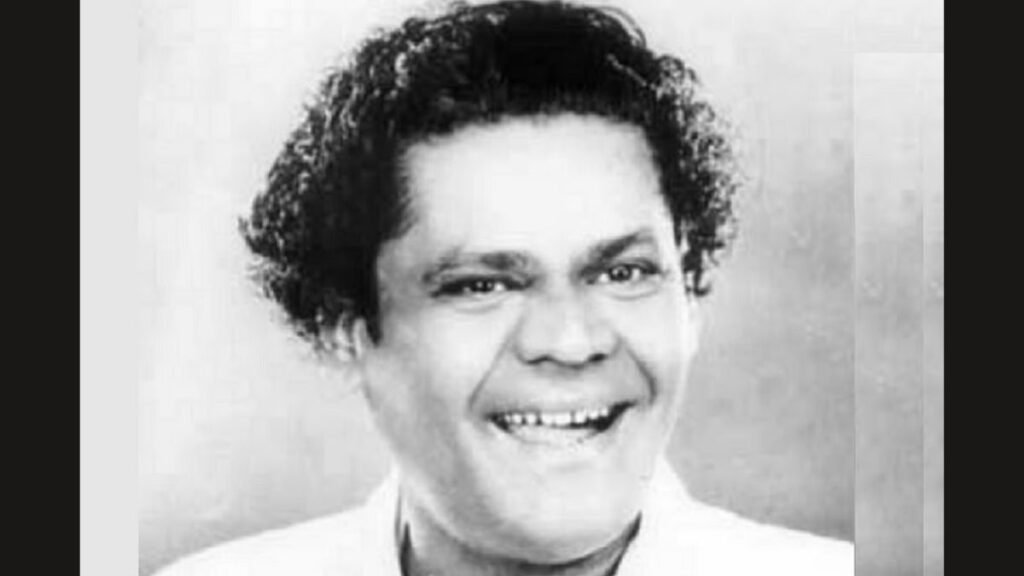
While it is nearly impossible to list and enumerate the number of creative subversions of NSK, I would like to record just one of his stupendous interpretations that changed the dynamics of Tamil proscenium and as its extension, Tamil cinema. By the early 1940s, NSK had become a star and he was widely described him as India’s Charlie Chaplin. He used the popular musical idiom of Kathakalachetpam (musical rendition of a story) to turn mythological and religious stories on their head and give them a radical twist. NSK gave a new interpretation to the story of Nandan. According to the Saivite tradition, the untouchable Nandan, gains temple entrance after innumerable sacrifices and attains mukti by disappearing inside the sanctum sanctorum. In NSK’s tale the protagonist, named Kindan gains entry into school, which he referred to as the real temple, and emerges as a scholar and winner. Here the goal is no longer attaining mukti, but gaining public acceptance and being part of public good. NSK’s comedy is one of the reasons for the forces of bigotry find it difficult to gain foot hold in Tamil Nadu.
The role of the centralising forces to contain the democratic potentials of the Self-Respect movement gained currency in the post-colonial era. One of the methods adopted by the governments, both at the Union and the state, to cripple the growth of the DMK was to invoke colonial laws to ban the works of the DMK leaders. Among the long list of banned writings, the popular ones were: Anna’s Arya Mayai and Elatchia Varalaaru (The Righteous History); Kalaignar’s Thookumedai (The Gallows); Bharathidasan’s Eranian Alathu Enaiattra Veeran (Eranian or the Matchless Warrior); A.V.P. Asaithambi’s Gandhiyar Santhi Adaya (To Let Gandhi Rest in Peace); Pulavar Selvaraj’s Karunchattai Oyiavenduma (Do you Want the Obliteration of Black Shirts) and Pulavar Kuzhandhai’s Ravana Kaviyam (The Epic of Ravana).
Of these banned texts, let me share some of my observations of Pulavar Kuzhandhai’s Ravana Kaviyam in detail from my biography. Ravana Kaaviyum was first published in 1946. It was banned in 1948, one of the earliest books to be banned by independent India. The ban order was issued by the then government of Madras; the inputs and suggestions from the Union government, too, played a role. In 1971, the DMK government led by M. Karunanidhi lifted the ban on the book, saying that this is an epic that begins in the South and travels to the North, unlike the story of Rama that begins in the North and travels to the South. There are two important evaluations of this epic: one by Annadurai published in 1946, and another by Karunanidhi published in 1971, when he lifted the ban. These writings give an idea of the cultural aspects of federalism, an issue that often gets ignored in the discussions on federalism, where political devolution and fiscal matters occupy pole position.
As I have written elsewhere, both Anna’s essay and Karunanidhi’s literary criticism of Ravana Kaaviyum were from considered positions, that both Rama and Ravana were literary characters, and not historical beings. While Rama was used by the hegemonizing forces to create the ‘Arya Mayai’ (The Aryan Illusion) in the epics celebrating Rama, Ravana Kaaviyum is aimed at Dravidian awakening. It does not aim to replace Rama Dasans with Ravana Dasans, argued Annadurai. Ravana Kaaviyum’s 5 Cantos, 57 chapters and 3,100 songs, provide a fine counter-narrative of heterogeneity, where the accent is on decentralizing, regional dignity and linguistic pride, as opposed to the centralizing and homogenizing ‘Rama Kaaviyum’, whether in Sanskrit or in Tamil.
What makes the Dravidian trajectory an interesting creative world is its conscious attempt to see that the universal human values and the particular civilizational inheritance of Tamil do not subsume the other. Politically aware artists created space for dialogue and to mutually learn from each ? other’s lived experience. They invested in the process of give and take, and inculcated the willingness to adopt and transform.
In their book, “Rule of the Commoner, DMK and Formations of the Political in Tamil Nadu, 1949–1967”, Rajan Kurai Krishnan, Ravindran Sriramachandran and VMS Subagunarajan have a full chapter titled “Counter-Narratives” explaining multiple strands that contributed to the creative interventions. They talk in detail about three plays “Iraniyan” by Bharathidasan, Neethi Devan Mayakkam and Sivaji Kanda Hindu Samrajyam by Annadurai. One of the interesting interventions was Karunanidhi’s adaptation of the novella by Annadurai titled Rangoon Radha. The film was produced by Mekala Pictures. The novella itself was an adaptation from a British play Gas Light by Patrick Hamilton, which gave birth to the term ‘gas-lighting’, to denote manipulating someone by psychological means into doubting their own sanity. The viewers were able to interpret the film as representing the Congress’s manipulations and its psychological games. The lyrics for the film were by Bharathidasan, Udumalai Narayana Kavi, NSK, Karunanidhi, and Pattukottai Kalayanasundaram, who later became a mascot for the Left in Tamil Nadu, and Bharathiyar. This was the last film before the DMK decided to enter electoral politics.
(To be continued… The next part explores how cinema and political strategy transformed these ideas into mass power.)
A.S.Panneerselvan is an author and journalist with more than four decades experience. After holding Key responsibilities in mainstream media organizations such as the Hindu, Sun TV, Outlook among others, he is the author of the biography of elder statesman M.Karunandhi published by Penguin Random House in 2021.