
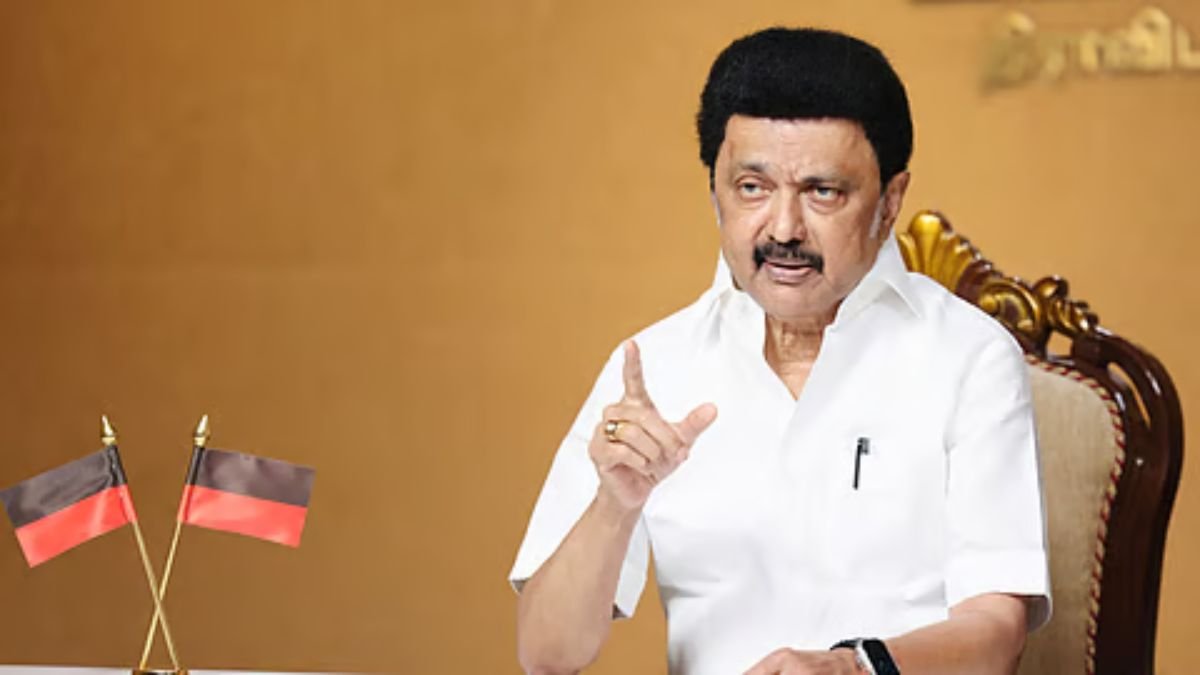
Tamil Nadu Chief Minister M. K. Stalin has strongly criticised the proposed One Nation, One Election (ONOE) policy, describing it as a “remedy worse than the disease” and warning that it could undermine the constitutional structure of India’s parliamentary democracy and federal system. In a detailed article on the ONOE policy written in an English daily, Stalin raised concerns about its potential impact on democratic accountability, state autonomy and electoral processes.
Stalin argued that the “One Nation, One Election” proposal seeks to synchronise elections to the Lok Sabha and all state legislative assemblies. However, he said doing so would require major constitutional changes and could alter the functioning of India’s parliamentary system. According to him, the proposal “reverses the logic of parliamentary democracy” by treating the dissolution of legislatures as an administrative inconvenience rather than a democratic safeguard.
Concerns Over Federalism and Constitutional Structure
Stalin noted that the Constitution provides a maximum five-year term for legislatures but does not guarantee a fixed tenure, allowing early dissolution when political circumstances demand it. He added that the ONOE proposal could shorten or extend the tenure of state assemblies in order to align them with national election cycles. He argued that such changes could weaken the principle of federalism because states have distinct political mandates and electoral cycles.
He also pointed out that the Supreme Court of India has recognised federalism as part of the Constitution’s basic structure.
‘Unexpired-Term Elections’ and Governance Issues
In the article, Stalin also criticised the idea of conducting “unexpired-term elections”, in which a newly elected assembly would serve only the remaining period of a previous term instead of a full five-year mandate. Stalin said this could reduce the value of voters’ mandates and create governments with shorter tenures that may struggle to implement long-term policies.
He further warned that such a system could lead to administrative complications, including the possibility of extended periods of President’s Rule or interim governments if elections are delayed to maintain synchronisation with national polls.
International Examples and Cost Debate
Stalin also referred to international examples while discussing the proposal. He noted that countries such as Canada and Australia hold national and regional elections separately, while Germany maintains political stability through constitutional mechanisms rather than synchronised elections.
Stalin also addressed the argument that simultaneous elections would reduce expenditure. Referring to available parliamentary estimates, he said the combined cost of conducting elections to the Lok Sabha and state legislative assemblies is about ₹4,500 crore, which accounts for roughly 0.03% of India’s GDP. According to him, such expenditure represents only a very small share of the national economy and should not be used as justification for making major constitutional changes to India’s electoral and parliamentary system.
Call to Withdraw the Proposal
Stalin said a high-level committee on Union–State relations headed by former Supreme Court judge Justice Kurian Joseph had recommended that the proposed legislation be withdrawn. He added that the benefits promised by the “One Nation, One Election” policy were exaggerated, while its structural risks to the Constitution and federal governance were significant.
Reiterating his position, the Chief Minister said that elections held at different times allow governments to remain accountable to the public and help reflect changing political sentiments across the country.
– Magizh