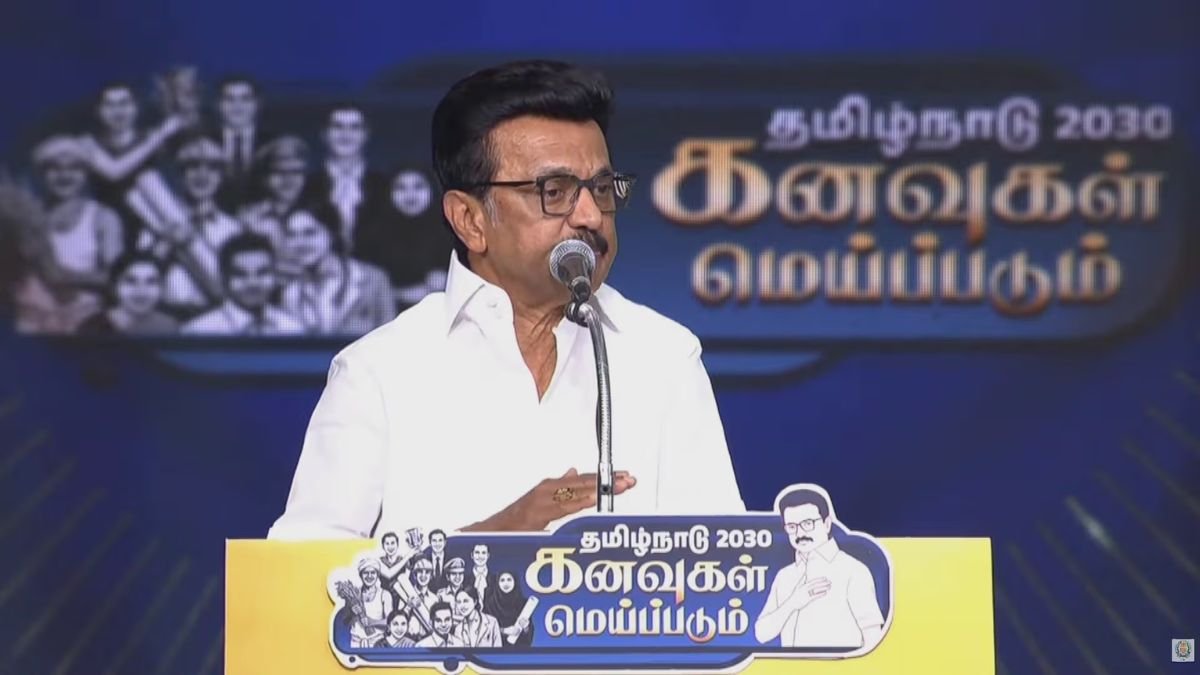
Tamil Nadu Chief Minister M. K. Stalin unveiled a set of 14 major development commitments titled the “Stalin Statement,” outlining a roadmap for the state’s progress over the next five years.
The announcements were made at the “Kanavugal Meippadum – Dreams Come True” event in Chennai, where the Chief Minister presented a long-term vision to accelerate economic growth and improve social development across the state. The plan forms part of the “Tamil Nadu 2030 – Dreams Come True” vision programme and aims to strengthen multiple sectors such as housing, education, agriculture, health, water management, and infrastructure.
The initiatives were presented as part of the government’s broader plan to strengthen growth, improve public services, and enhance the quality of life across Tamil Nadu.
Stalin Statement
In a post on social media, M. K. Stalin said he was releasing the “Stalin Statement,” outlining Tamil Nadu’s development roadmap for the next five years.
He said the announcement was made on the anniversary of the formation of the first Dravidian government in the state in 1967, led by C. N. Annadurai.
Stalin stated that the new roadmap would lay the foundation for “Dravidian Model 2.0” and guide Tamil Nadu’s development in the coming years.
What Are the 14 Key Announcements?
- Housing Development:
Under the Kalaignar Dream Housing Scheme, a total of 7 lakh houses will be constructed by 2030, including 5 lakh houses in rural areas and 2 lakh houses in urban areas. - Healthcare and Medical Support:
Medical insurance will be provided to people. Special medical camps will be conducted to detect diabetes and high blood pressure, and mental health counselling centres will be established in every district. - Water Conservation and Food Production:
1,000 rainwater harvesting structures will be built in the Western and Eastern Ghats regions. Food grain production in the state will be increased to 125 lakh metric tonnes. - School Education and Libraries:
100% smart classrooms will be introduced in all government and government-aided schools. More than 300 libraries will be established, and sports and life-skills education will be ensured in every school. - Youth Skill Development:
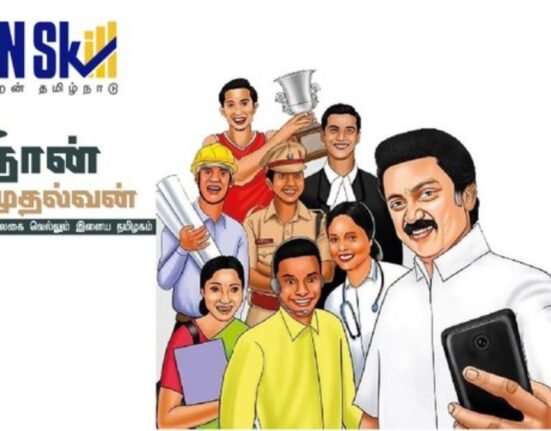
Under Naan Mudhalvan Scheme 2.0, additional skill training will be provided to youth so they can compete globally. Artificial Intelligence laboratories will be set up in every educational institution. - Economic Advancement for Backward Communities:
Skill training will be provided in sectors such as textiles, garments, and leather to support the economic advancement of backward communities. Skill development centres will be established in districts with a large minority population. - Support for Minorities and Marginalised Communities:
Loan facilities will be simplified for minorities to start businesses. Social justice hostels will be established where needed. By 2030, house site pattas will be provided to every landless Adi Dravidar and tribal family, and residential schools will be expanded. - Rural Development:
Villages will be transformed into economic growth centres and developed with facilities similar to urban areas. As a first step, the Uthamar Gandhi Model Village Scheme will be implemented in 10 panchayats. - Employment Generation:
The government aims to create employment for 50 lakh youth. In the IT sector alone, 2 lakh new jobs will be created. In the textile sector, modernisation will ensure livelihoods for 35,000 workers in Tiruppur and Karur. - Fisheries, Livestock and Dairy Development:
The sea cage fish farming scheme will be expanded, and new fish farms will be established. Fish production will be increased from 200 tonnes to 400 tonnes. By 2030, the livestock population will be increased to 3 crore, and the state will aim to produce 4.5 crore litres of milk daily. - Waste Management and Urban Infrastructure:
New reforms will be introduced in solid waste management. Modern cultural centres will be established in all municipal corporations, and comprehensive stormwater drainage systems will be created in all corporations and municipalities. - Industrial Development:
By 2030, five special industrial clusters will be established under the Micro, Small and Medium Enterprises (MSME) sector, with priority given to agriculture-based industries. - Road Infrastructure and Safety:
Modern road technology and AI-based monitoring systems will be used to extend the lifespan of roads and bridges and reduce accidents. Roads connecting temple towns and coastal tourism destinations will be improved. - Weavers’ Welfare:
New technologies will be introduced to improve the livelihoods of weavers, and Tamil Nadu’s handloom varieties will be showcased at international exhibitions.
The Chief Minister said the “Tamil Nadu 2030 – Dreams Come True” vision framework was prepared after engaging with a large number of families across the state to understand their aspirations and development priorities.
He added that the roadmap aims to ensure that the state’s growth benefits the people, the economy, and the overall development of Tamil Nadu in the coming decade.
– Magizh