
The Republic of India has successfully completed seventy-six years. In the history of humankind, for such a large population to sustain itself as both a democratic and a federal republic for such a long period is an achievement worth celebrating. India’s republic is remarkable not only for its population or geography, but also for its immense cultural diversity.
Over these seventy-six years, violent outbreaks have occurred in various states, and calls for separatism have echoed in many places. Despite all of this, the Republic of India has endured because of its democratic processes and federal structure.
Throughout the past 250-plus years of human history, whenever a community develops self-awareness and attempts to define itself, it naturally seeks liberation from external domination. Nationalist rhetoric has historically supported such liberation. However, once a republic is formed, real democracy can exist only when that nationalist narrative ensures the sharing of power internally within the country.
When India became independent, Pakistan was partitioned as a separate country. This led to massive waves of violence. As a result, India’s unity became a major concern, and there was hesitation to strongly emphasize state identities.
Although the Constitution states that the states are governments and the Indian Union is the administration, power has increasingly been concentrated at the Union level. Still, it was believed that if adequate coordination existed, this federal structure would function well. In English, this is called cooperative federalism.
For this coordination to work, the Union must see itself as an assembly of states. But if it imagines itself as an empire and the states as minor kingdoms, the system will not work. Those who view the Indian government as a federal republic understand this cooperative nature. Those who see it as a centralized authority believe that states must be controlled by the Union. This is the greatest challenge our Republic faces today.
The dispersal of power protects the Republic; the concentration of power erodes it. This concept has been misunderstood by many in recent times.
The Dravidianism That Protects the Republic
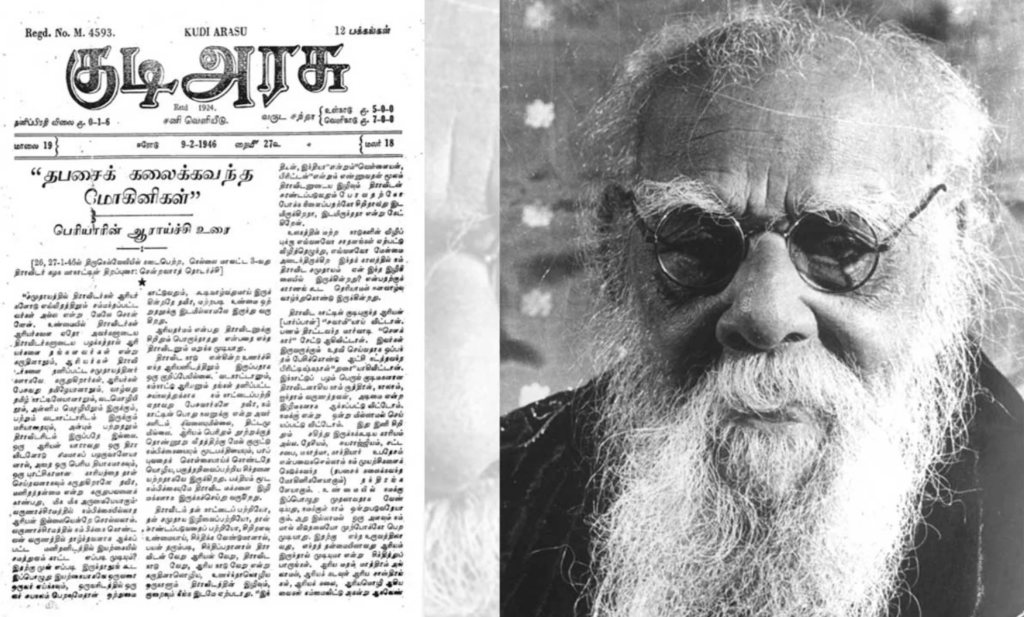
Before India gained independence, the Dravidar Kazhagam, led by Periyar, demanded that South India be declared a separate republic, a Dravidian Republic. This demand arose in response to the slogan popular in the North, “Hindi, Hindu, India”, a slogan that conveyed the possibility of Brahmin-Bania ideological domination.
There existed an idea among nationalist forces that Hindi should be made the national language or the sole administrative language of the Indian Union, forcing every state to learn and use Hindi.
When the Congress came to power in Tamil Nadu in 1937 and attempted to make Hindi compulsory, the first agitation against Hindi imposition erupted. Natarasan and Thalamuthu died as martyrs in that struggle.
Since the nineteenth century, the Dravidian Tamil identity has opposed Brahminical supremacy and Sanskrit dominance. It emphasized India’s cultural and historical plurality and promoted a vision of equality that challenged caste-based hierarchical systems.
The Dravidian Tamil identity championed by thinkers such as Manonmaniam Sundaram Pillai and Ayothidasa Pandithar was seen as the seed of a new egalitarian society. From this emerged movements like the Justice Party, the Self-Respect Movement, the Dravidar Kazhagam, and the Dravida Munnetra Kazhagam (DMK), each flourishing in its own historical context.
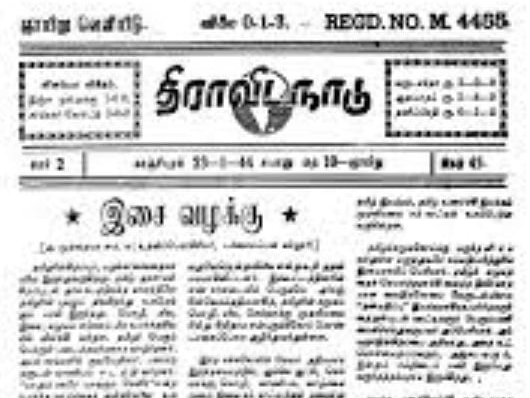
In 1942, Perarignar Anna began publishing Dravida Nadu. For the next twenty years, he called for a separate federal republic in South India. However, when the Union government made it clear that full participation in democracy was essential, he abandoned the demand for separation. He argued that if the Union accepted state autonomy and self-rule, a separate Dravidian republic was unnecessary. From this emerged the DMK slogan: “Maanilathil Suyatchi, Mathiyil Kuttachi” (மாநிலத்தில் சுயாட்சி, மத்தியில் கூட்டாட்சி), translated as “Autonomy in the State, Federalism at the Centre.”
Anna’s vision, and that of the Dravidian movement, was a federal republic with state autonomy, not separatism. That is why the Dravidian movement consistently supported India’s constitutional identity, sovereignty, unity, security, and economic development. It championed healthy power-sharing, social equality, and cultural renewal. It operated with genuine love for the nation, and there is abundant evidence to support this.
Dravidianism has consistently emphasized cooperative federalism as the healthy approach to protecting and strengthening the Indian Republic. In contrast, forces rooted in Aryan revivalism reject this progressive vision and insist on the supremacy of a single national state in the name of caste restoration. They attempt to portray voices advocating power-sharing as separatist and anti-national.
Since the Bharatiya Janata Party (BJP) came to power at the Union level in 2014, such regressive and revivalist thinking has intensified.
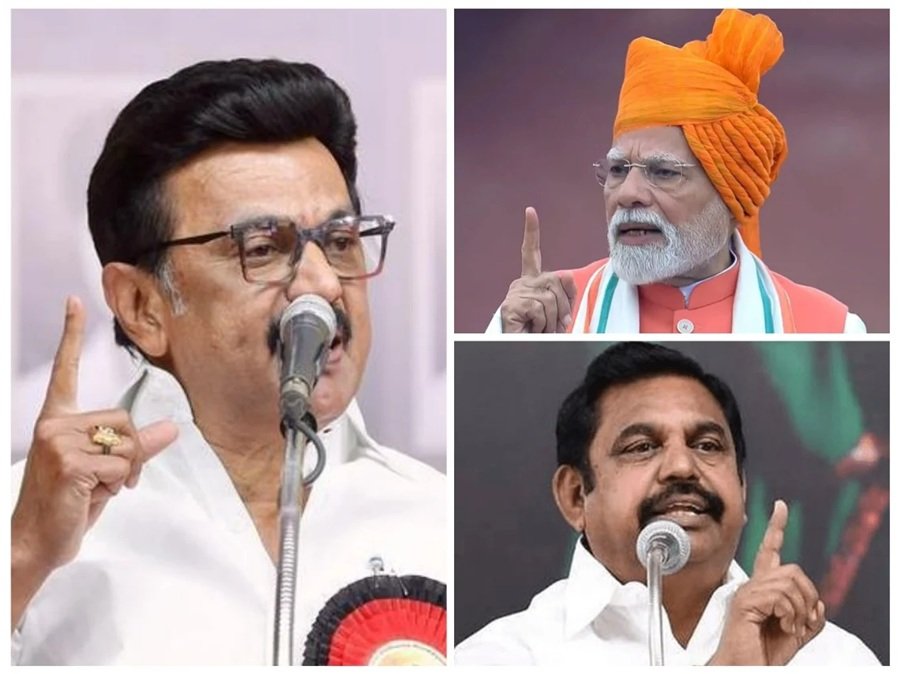
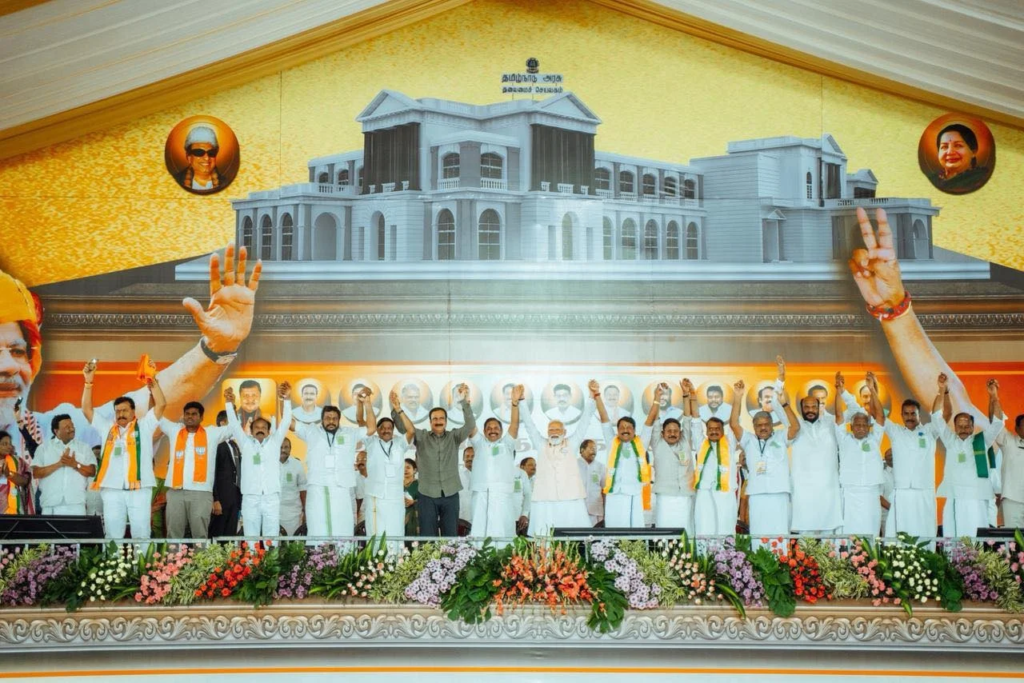
One manifestation of this conflict is the upcoming Tamil Nadu state elections. For fifty years, the AIADMK served as the DMK’s principal opposition. Now, however, the BJP has brought the AIADMK largely under its control. This was clearly visible at the recent National Democratic Alliance (NDA) rally in Maduranthagam.
The Coalition That Will Break the Republic
They call it the National Democratic Alliance. They claim that the AIADMK leads it in Tamil Nadu and that Edappadi Palaniswami is its leader and chief ministerial candidate. Large banners featuring both Prime Minister Narendra Modi and Palaniswami were displayed at the rally. However, the BJP’s party symbol, the lotus, dominated the stage.
When Palaniswami speaks, he offers unreserved praise for the Prime Minister. But when the Prime Minister speaks, he neither mentions Palaniswami nor refers to him as the alliance leader or chief ministerial candidate. Instead, he merely declares that the BJP/NDA government must come to power in Tamil Nadu. If there were genuine unity within the alliance, such double messaging would not exist.
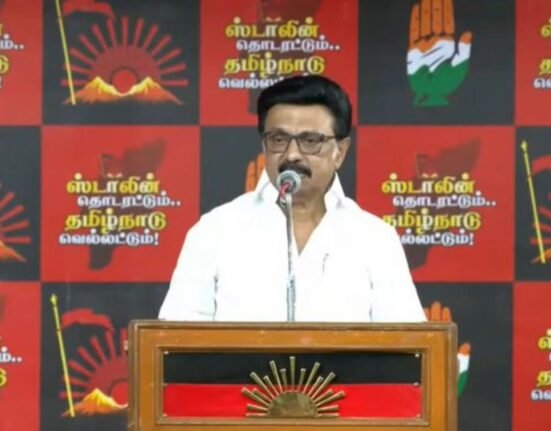
This requires careful reflection. The ruling party’s campaign slogan is “Let Stalin Continue! Let Tamil Nadu Win!” If they truly wanted to oppose it, they should have raised the slogan, “Palaniswami will be Chief Minister again.” But the Prime Minister could not say that.
This is because the BJP’s goal is not to strengthen the regional party AIADMK. Its aim is to weaken it, fragment it, absorb it, and ultimately ensure BJP dominance within it.
When large snakes such as pythons attempt to consume animals larger than themselves, they coil around their prey and crush their bones before devouring them. Similarly, the BJP encircles strong regional parties, squeezes them until they break, and then seeks to absorb them.
This may be a political strategy. And one may ask, what is the danger to the Republic? That is the crucial question. If the BJP establishes power in all states as well as at the Union level, it could completely amend the Constitution, transforming the Indian Republic into a unitary national state and centralizing power at a single point.
The ideological roots of the BJP, the Hindu Mahasabha and the Rashtriya Swayamsevak Sangh (RSS), originated in the Marathi region. In the eighteenth century, the Maratha Empire strengthened caste-based society and sought to bring all of India under its rule. When that dream failed, these organizations began envisioning an Indian national empire. Consequently, they view the Union government as an empire and the states as subordinate kingdoms.
The BJP refuses to consider whether such a centralized national government would benefit India’s diverse cultural history. Today’s elite-centric worldview also seeks to empower big capital and therefore favors empire-like governance while embracing caste-restorationist ideology.
For instance, on Republic Day, the district collector of Koraput in Odisha banned the sale of meat, chicken, fish, and eggs. We must reflect on the mindset that restricts people’s food choices on Republic Day itself.
At the Maduranthagam rally, this imperial mindset appeared in another form, the dangerous concept of the “double engine government.”
Three Engines vs One Engine
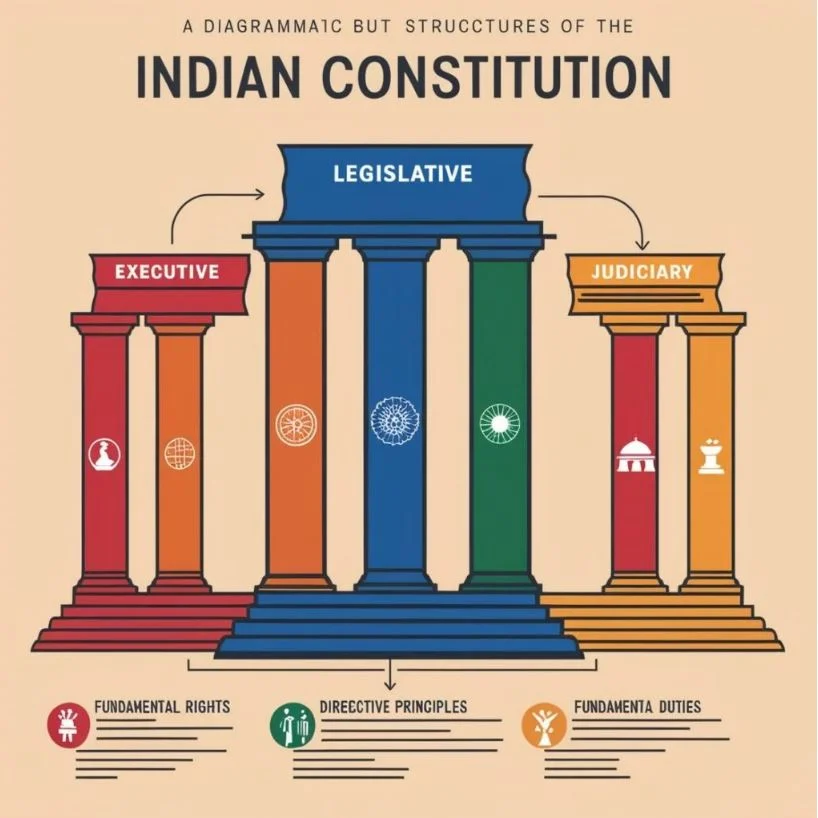
Our Republic divides authority vertically into three layers and horizontally into three pillars. Horizontally, these are the legislature (law-making representatives), the judiciary (which upholds the rule of law), and the executive (which implements laws).
Vertically, authority is shared among the Union government, state governments, and local bodies, each with specific responsibilities. Land, law and order, education, and health fall under the states; taxation, defense, and the Reserve Bank fall under the Union; and civic administration falls under local bodies.
Chief Ministers, who head state governments, and the Prime Minister, who heads the Union government, are partisan figures only within legislatures. As heads of government machinery, they are expected to function impartially. The same applies to heads of local government bodies.
This structure means that all three engines must operate together to guide people’s lives. Only when all three function effectively does society flourish. This is the core philosophy of the Republic.
However, the BJP turns the Prime Minister and Chief Ministers into party functionaries. According to its narrative, when the Union Prime Minister’s party and the state Chief Minister’s party are different, it is called a single-engine government. When they are the same, it is called a double-engine government. This framing undermines the dignity of constitutional offices.
What should a Prime Minister say during a state election?
“Irrespective of which party you vote for, my Union government will cooperate fully with your state. You need not feel compelled to vote for my party out of fear. However, my party offers capable governance, and that is why you may choose to support us.”
But what does our Prime Minister actually say?
“Only if you vote for our coalition will you get a double-engine government and development. If you don’t vote for us, your state will not receive necessary assistance.”
This rhetoric erodes the very philosophy of the Republic.
Edappadi Palaniswami says that the state must cooperate with the Union government. But what does that mean? Singing praises of the emperor to receive rewards? If asserting state rights leads to disharmony, what is the alternative? submission? Slavery? Is this not a rejection of cooperative federalism?
Cooperative federalism does not mean that state governments must act subserviently to the Union. It means that the Union must respect the rights and autonomy of states.

Is a Double-Engine Government Necessary for Development?
The NDA consistently claims that a double-engine government is essential for development. This claim is false in two ways.
First, many BJP-governed states do not lead in development indicators. Madhya Pradesh, ruled by the BJP for over two decades, is marked primarily by large-scale corruption scandals. The situation in Manipur under a so-called double-engine government speaks for itself.
Second, over the past four years, while the BJP has ruled at the Union level and the DMK, an ideologically opposed party, has governed Tamil Nadu, the state’s economic growth has remained among the highest in India, according to Union government data. Despite discriminatory budget allocations, politically conscious southern states have not lagged in development.
Both the BJP and AIADMK promote a flawed worldview. Only governments that exercise full awareness of state rights can ensure sustainable development. Blind obedience to the Union will never benefit a state. Moreover, the BJP’s threat that funds will be released only if states support it, and the AIADMK’s silence on this issue, reveals the depth of its servile mentality.
Ignoring dangerous slogans like double-engine government and reducing political debate to mere electoral arithmetic is deeply unfortunate.
Those who truly love the nation understand that the future of the Indian Republic lies in strengthening cooperative federalism.
Written by:
Rajan Kurai Krishnan
Professor, Ambedkar University, New Delhi
Contact: rajankurai@gmail.com
Translated by: Magizh