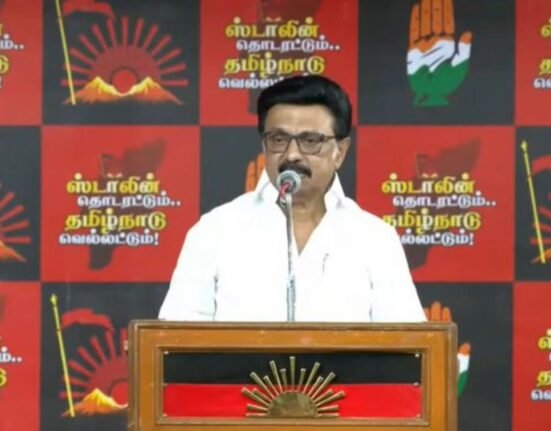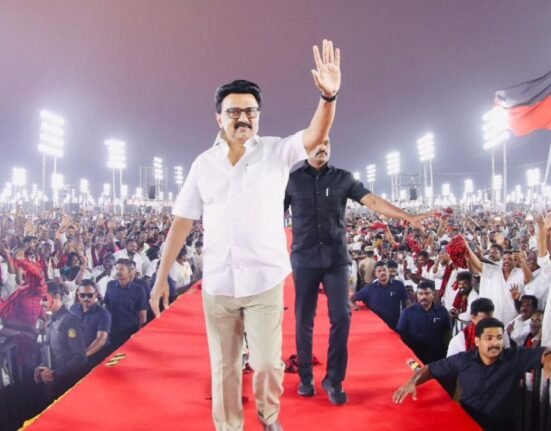

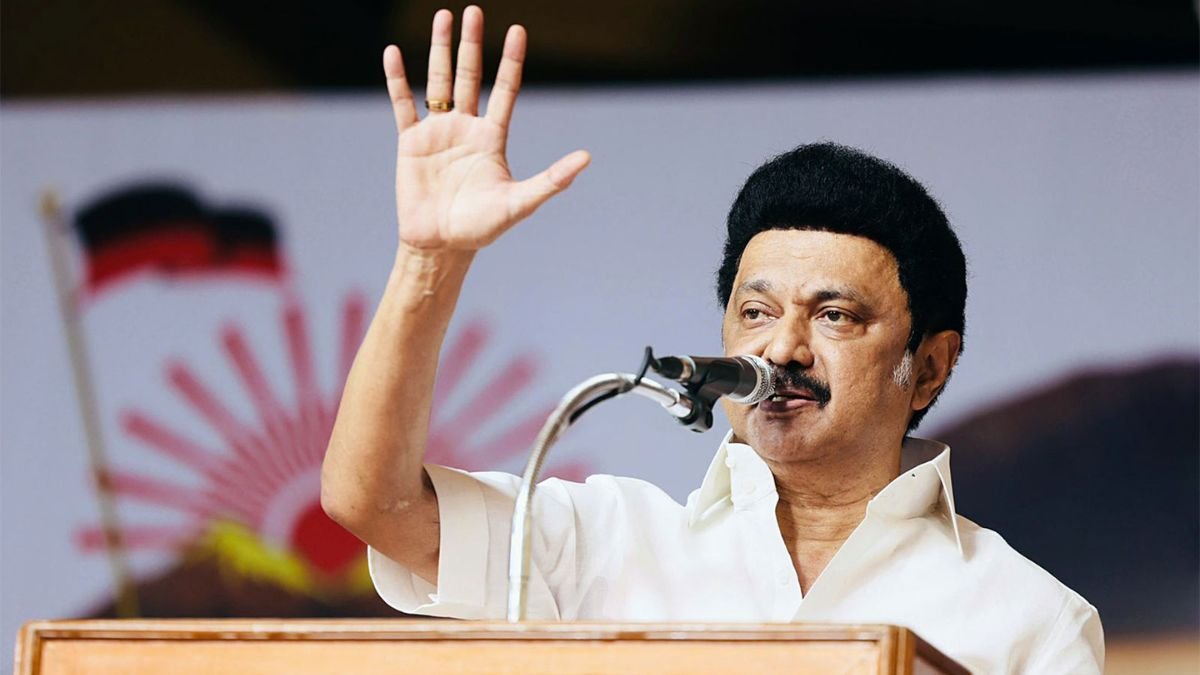
Dravida Munnetra Kazhagam president and Tamil Nadu Chief Minister M. K. Stalin has unveiled what the party is calling a “superstar manifesto” for the 2026 Assembly elections, packing it with a wide range of welfare measures aimed squarely at women, students, farmers and low‑income households. The manifesto, released on the eve of the poll campaign, lays out an ambitious mix of financial transfers, social‑security enhancements and development promises designed to shore up the ruling alliance’s support just as the contest is tightening across districts.
Women at the centre of welfare
The most eye‑catching elements of the manifesto are women‑centric cash transfers and appliance‑linked benefits. The DMK promises to raise the existing monthly cash assistance to women under the Kalaignar Magalir Urimai Thittam from ₹1,000 to ₹2,000, more than doubling the direct‑handout component for millions of beneficiaries.
Alongside this, the party has introduced the “Illatharasi Coupon” scheme, under which eligible housewives defined as non‑income‑tax‑payers would receive an ₹8,000‑worth coupon to buy or replace common household electronic items such as washing machines, televisions, grinders, refrigerators, mixies, microwave ovens and induction stoves. The scheme is framed as a direct boost to domestic convenience and middle‑class purchasing power, particularly in rural and semi‑urban Tamil Nadu.
Freebies and infrastructure push
The manifesto also doubles down on the DMK‑led regime’s record of free‑power provision, promising to continue electricity support for over 20 lakh households, mainly for lighting and domestic use. Farmers are set to gain further concessions, with the party pledging to supply modern pump sets without electricity meters, easing irrigation‑related costs in agriculture‑dependent belts.
In education, the party plans to distribute 35 lakh laptops to students pursuing higher studies, expanding the existing digital‑inclusion drive that has already reached several lakh students in recent years. The DMK also vows to double the number of dialysis units in government hospitals, widen the Chief Minister’s breakfast scheme to cover more classes, and invest in upgrading government colleges and higher‑education infrastructure.
Political signalling in a crowded field
By branding the document a “superstar manifesto,” party leaders, including Stalin, are consciously drawing a parallel between the document’s scale and the party’s cultural‑political identity in Tamil Nadu. The opposition, in turn, has dismissed the release as a “copy‑paste” exercise that repackages earlier promises, but the DMK argues that the package is a calibrated response to rising inflation, youth unemployment and the competition posed by both AIADMK‑led fronts and new entrants such as TVK.
For voters, the manifesto reads as a mix of continuity and enhancement: the core pillars of free electricity, women’s grants and educational support are retained, but with higher ticket values and new, tangible schemes like the Illatharasi coupon and expanded breakfast rollout. As April 23, the single‑phase poll date, draws closer, the electorate’s verdict will hinge on how much they see these promises as affordable, implementable and deserving of a fourth consecutive term for the Stalin‑led DMK.
-Samuthiran