
Vishal Vasanthakumar, PhD Candidate at the University of Cambridge
One way to understand the evolution of the Self-Respect Movement in Tamil Nadu is through the evolution of school education in the state, rooted in democratising access , challenging rigid caste hierarchies, and changing forms of citizenship. The state today boasts of a gross-enrolment ratio of 100% in primary education, i.e. every child of primary school age goes to school in Tamil Nadu today, followed by high retention rates in secondary schooling, significantly higher than the national average. Universalised access to education is not merely a development indicator but is a powerful tool in addressing entrenched caste inequalities.
Such universalisation doesn’t happen overnight or without precedent. More than a hundred years ago, the Justice Party, for instance, pushed for a ‘more vigorous educational policy for the Non-brahmins’, rooted in the understanding that the exclusion of marginalized-caste students from schools would only serve to reinforce caste-based professions, particularly exploitative manual labour. After the Justice Party secured its first victory in the Madras Legislature, it made schooling free and compulsory for children between the ages of 5 and 12 and even imposed a penalty for parents who withdrew their wards. School education cannot be seen in isolation from the rest of society, for schools don’t exist in a vacuum. A grounding pillar of the Self-Respect Movement is to understand schooling as a strong political institution to secure access to social justice and change forms of citizenship.
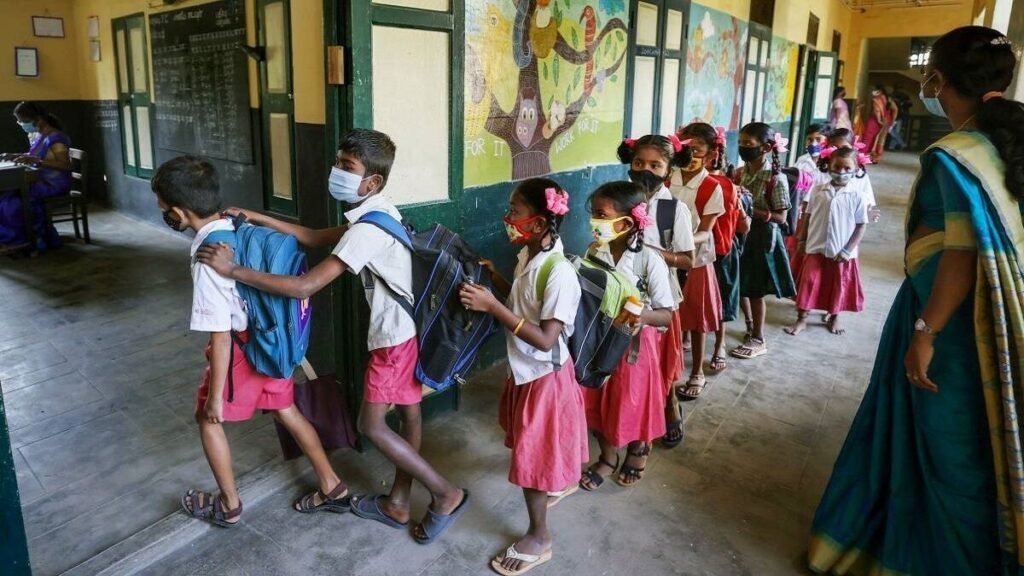
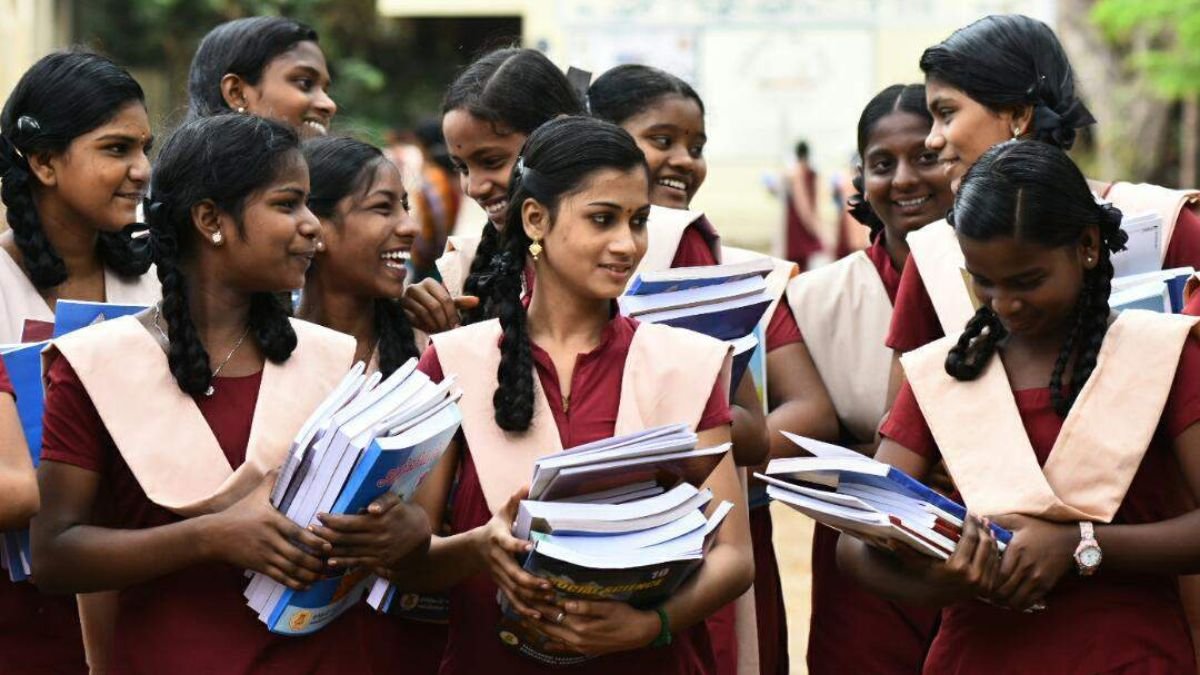
In a state where settlements and work are segregated on caste lines and spaces for interaction remain limited, free and compulsory schooling provides a place for socialisation, where caste-based differences can either render themselves acute or made to disappear, even for a brief minute.
Over the course of decades, especially post-independence, the state saw a marked increase in the number of schools, coupled with a long history of food provisioning. The popular Mid-day meal scheme, pioneered in Tamil Nadu and then widely adopted across India has its foundations in a Government Order passed in 1922 by the Justice Party, which allotted one anna per student to provide a noon meal in select schools in the Chennai corporation. Providing meals for lunch and now for breakfast as well broadens not just access to school education but also challenges caste-based nutritional indicators. Children of marginalised caste backgrounds have historically shown various signs of malnutrition and deficiencies, primarily linked to their parents’ inability to afford, access, or make nutritious food.
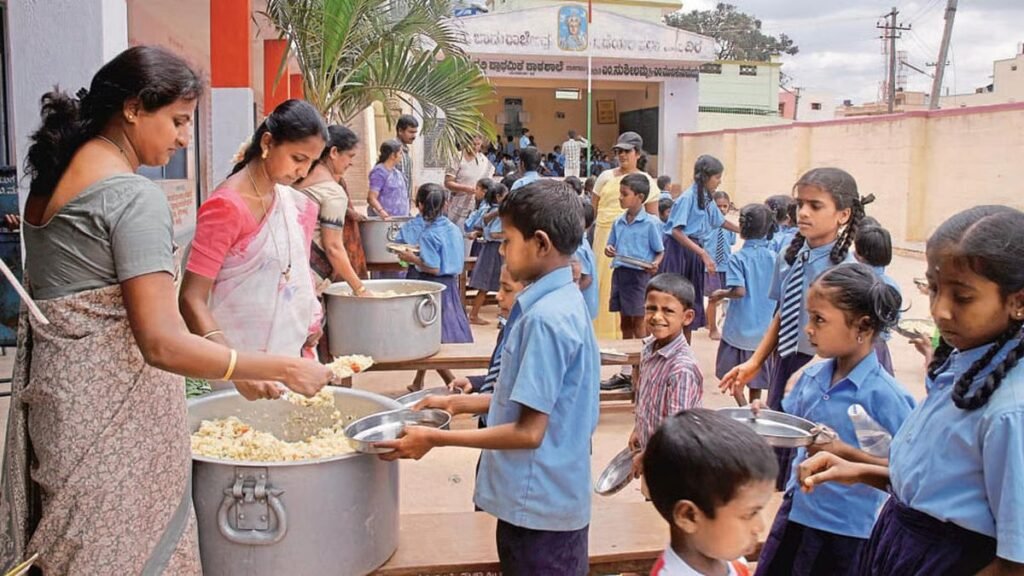
Of course, the mere presence of infrastructure only tells a part of the story. The state also has some of the best indices of infrastructure for primary schools, such as availability of drinking water, separate toilets for girls, IT infrastructure such as smart boards, and computer labs, libraries, amongst others. This is also being done in remote villages in the state. Apart from working to increase equality of opportunity for students across the state, it also embeds a political aspiration that caste-based differences can effectively be tackled through schooling. This is significant in a state where privileged castes had a near-monopoly over access to school and higher education. As the census commissioner of 1931, J.H. Hutton noted, in the 1930s only 1% of the ‘exterior’caste male population went beyond primary school, compared to 80% among Brahmin males in the Madras presidency (Hutton, 1933).
As many Dravidian scholars have pointed out, education today is part of a ‘Dravidian common-sense’. This common sense is now fully embedded in political and policy discourse in Tamil Nadu today. The last five years have seen the launch of several innovative schemes, such as Naan Mudhalvan (a skills training and guidance program), Pudhumai Penn (a financial assistance scheme for girl students), Model Schools, 7.5% reservation for government school students in professional courses, which have had a significant impact. This is a small sample of the more than 25 schemes launched by the government in the last five years.
A study by Tamil Nadu’s State Planning Commission has shown a 34% increase in number of girls joining higher education institutions, out of which 38.6% were from Scheduled Castes, 34.4% from the Most Backward Classes and 24.8% from the Backward Classes. This is not just gender mobility, but also bringing citizenship in practice where girls from oppressed-caste backgrounds are able to make claims to institutions that have historically been out of reach. Similarly, the Model Schools program has caught national attention, with 448 students from these schools qualifying for JEE Mains and over 2,400 from government schools securing admission to 93 premier institutions in India, including IITs, National Law Universities, and the National Institute of Fashion Technology (NIFT) across 50 streams. The Naan Mudhalvan scheme is being used by more than 22 lakh students and is providing much-needed guidance and information on various career paths,
Each of these programs works to systematically dismantle educational advantages being cornered by privileged and dominant-caste students, thereby providing a relatively more level playing field. The economic effects notwithstanding, the potential social effects have to be seriously considered. Firstly, broad-based access to education through improved infrastructure, meal provisioning, and various supporting schemes enables people of different castes to see themselves as citizens entitled to particular rights from the state and to make claims. From a social justice perspective, a legacy of the expansion of access to schooling is to give agency to groups that have historically had their agency significantly limited, bringing them within the folds of democratic society. By promoting the dignity associated with obtaining an education, ideals of self-respect get infrastructurally reproduced.
The school, its infrastructure and schemes that have expanded access to it then become an active site of the state’s presence. Universally expanding access to schooling and introducing targeted schemes render citizenship not neutral and reinforce claims that the state must actively compensate for historical marginalisation. Of course, expansion of access to schooling alone cannot remedy centuries of disadvantage. Quality schooling is equally critical. The state, along with the rest of the country, has a long way to go in improving foundational learning outcomes, addressing caste issues inside schools, addressing teacher shortages, and strengthening assessment systems. The promise and potential of the Self-Respect Movement hinges on the parallel expansion of infrastructure and quality, though, of course, improving quality is a significantly more complex and challenging task. The risk of increased access to varying quality renders political claim-making to distorted, where the promise of equal citizenship only appears so on paper, a form of citizenship without complete substance. Any serious critique of the self-respect movement needs to account for the significant progress and also take note of contradictions and shortcomings in educational policy. The movement remains unfinished; the task is to ensure that what is built inside the schools holds itself up to the ideological promises that sustain it.
Vishal Vasanthakumar is a PhD Candidate at the University of Cambridge and a Gates Cambridge Scholar. His doctoral research examines the role of private schools in reshaping caste and class in Tamil Nadu. He is the author of the book ‘The Smart and The Dumb: The Politics of Education in India’.