

Jeyannathann Karunanithi, Chemical Engineer
(This article is part of a three-part series. This section continues a larger narrative on Tamil Nadu’s evolving water security framework.)
Prologue: The Invisible Infrastructure
Cities are often judged by their most visible infrastructure like flyovers, metro lines, airports, and industrial corridors. Yet the real stability of an urban economy rests on systems that are largely invisible. Among these, water systems occupy a uniquely foundational role. When they function well, cities grow with confidence. When they fail, the consequences ripple through everyday life, industry, and public health in ways that no amount of visible infrastructure can offset. Water infrastructure, in this sense, is not a municipal service. It is a form of economic insurance.
In June 2019, Chennai offered a stark illustration of what happens when that insurance lapses. The city’s four principal reservoirs – Poondi, Cholavaram, Red Hills, and Chembarambakkam approached simultaneous depletion. Lorries carrying water became a fixture of daily life. Hotels reported shutdowns. Industries curtailed production. The episode exposed a structural vulnerability that had been present for decades but had never been fully reckoned with: a metropolitan economy of nearly twelve million people whose entire water supply rested on a monsoon-fed reservoir system designed for a much smaller city.
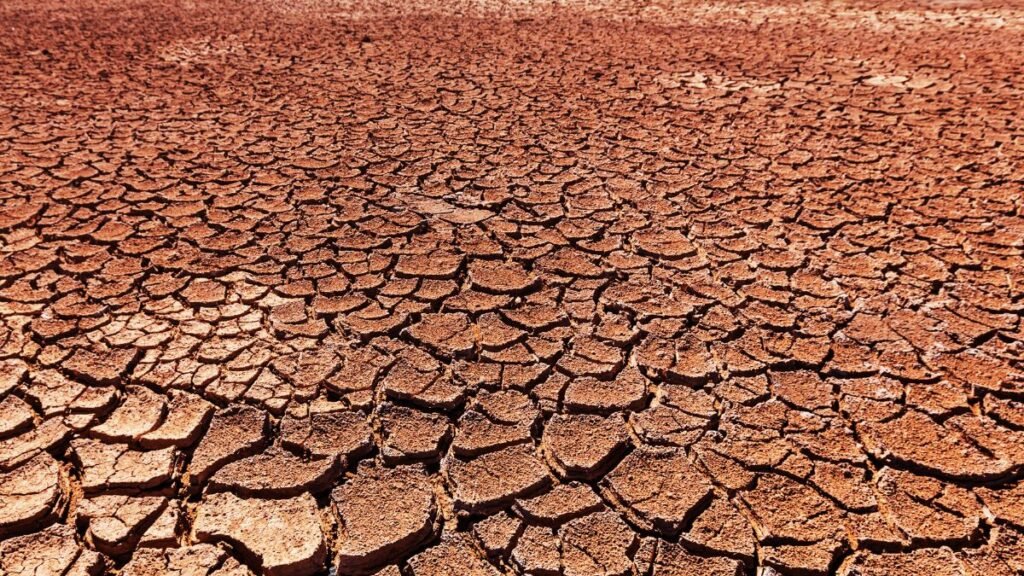
That crisis was not a failure of water management in the ordinary sense. It reflected a system constrained by the governance arrangements and technological options available at the time. Recognising that distinction is the beginning of understanding how Tamil Nadu has approached the challenge in the years since.
Tamil Nadu’s water strategy must be understood against a background of dual structural vulnerability. The first is meteorological. The state lies in a semi-arid climatic zone and depends heavily on the northeast monsoon for the bulk of its annual rainfall. Variability in that monsoon translates quickly into pressure on reservoirs, groundwater systems, and urban supply networks. The second is political. A significant portion of the state’s river water is governed through inter-state allocation arrangements that involve ongoing negotiation and periodic legal dispute. In practice, water planning in Tamil Nadu must operate within a landscape shaped not only by hydrology but by institutional uncertainty over sources that lie partly beyond the state’s own control. Strategies that diversify supply, reclaim wastewater, and reduce system losses therefore become more than technical improvements. They become instruments for building resilience into the state’s development trajectory, a quiet form of sovereignty over the variable that most threatens it.
This question is particularly consequential for Tamil Nadu given the character of its urbanisation. With fifteen city corporations and a degree of urban population among the highest in India, the state’s water challenge is not confined to one exceptional metropolis. Chennai is the largest and most visible node, but Coimbatore, Madurai, Trichy, Salem, Tirunelveli, Thoothukudi, and others are each significant urban economies, each with distinct industrial profiles, each under distinct and growing water stress. How Tamil Nadu manages urban water security is therefore a question that bears on the functioning of the state’s entire economic geography, not merely its capital.
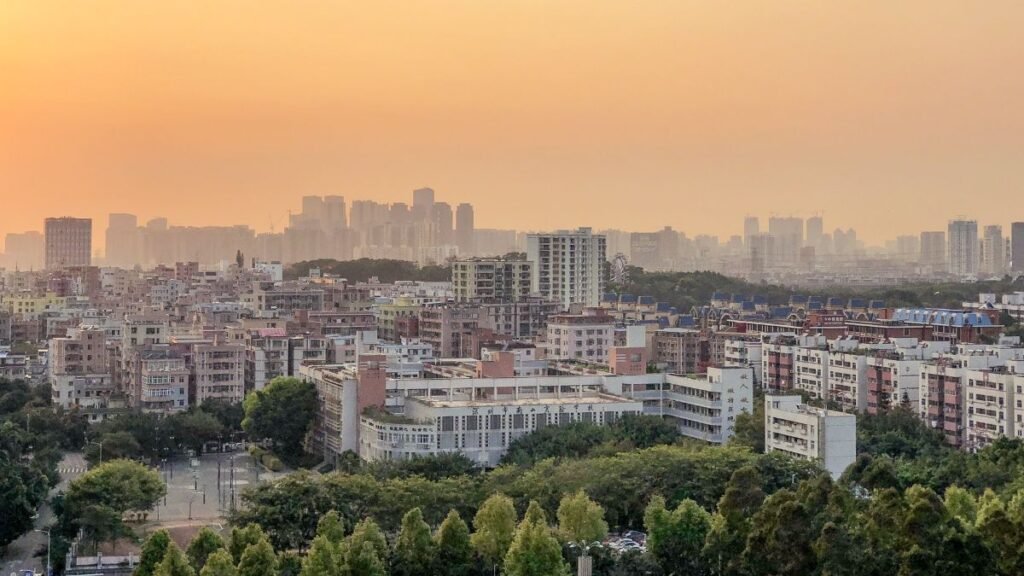
For a state that is highly industrialised, rapidly urbanising, and located in a semi-arid climatic zone, water availability is not merely a welfare concern. It is increasingly a structural constraint on economic growth. Manufacturing clusters require reliable supply. Cities must support growing populations and service economies. Agriculture continues to draw from the same hydrological base. In such conditions, water can become a rate-limiting factor, a variable whose inadequacy does not merely inconvenience daily life but actively constrains the next phase of development.
What follows is an attempt to trace how Tamil Nadu has come to understand this challenge and how that understanding has been translated into infrastructure and policy over more than five decades.
I. Institutional Foundations of Tamil Nadu’s Water Governance
The story of Tamil Nadu’s water governance does not begin in 2021, or even in the years immediately preceding the 2019 crisis. Its institutional roots reach back to the early 1970s, during the administrations of Kalaignar M. Karunanidhi, when a rapidly urbanising state began to recognise that water supply, urban planning, and engineering capacity had to evolve together if its cities were to grow sustainably.
Three institutional decisions from this period are worth examining carefully, because they represent not merely administrative acts but a governing philosophy.
The first was the establishment of the Tamil Nadu Water Supply and Drainage Board in 1970. TWAD was created to professionalise water supply planning at the state level to build the engineering capacity for large water schemes that lay beyond the fragmented capabilities of individual municipalities. This marked a transition from localised water works to a state-level planning framework, recognising that water systems in a rapidly developing state required institutional scale to match their physical scale.
The second was the creation of what became the Chennai Metropolitan Development Authority (erstwhile Madras Metropolitan Development Authority) between 1972 and 1975. This provided a metropolitan planning platform within which land use, urban expansion, drainage systems, and infrastructure corridors could be addressed coherently rather than through isolated municipal decisions. It represented an early understanding that water infrastructure and urban form are inseparable, that a city’s drainage, its groundwater recharge, and its supply networks are shaped by land use decisions made decades before the water crisis arrives.
The third was the conceptual and institutional groundwork laid for what would become the Chennai Metropolitan Water Supply and Sewerage Board. Although political disruptions during the Emergency period interrupted some of this work, the idea that a city of Chennai’s scale required a specialised metropolitan water utility capable of managing complex supply and sewerage networks had already been established. CMWSSB’s eventual creation formalised that idea into an institution capable of executing it.
These three moves, a state-level planning body, a metropolitan development authority, and a dedicated urban water utility constituted a systems architecture for water governance at a moment when most Indian states were still managing water through fragmented municipal departments. They did not solve the problem of water scarcity. No institutional design can do that. But they created the conditions within which serious water planning could occur.
The Veeranam project, initiated during the Karunanidhi era, added a further dimension to this thinking. By proposing to transport water from Veeranam Lake in Cuddalore district to Chennai, the project articulated for the first time what would become a defining principle of Tamil Nadu’s water strategy: source diversification. The city’s dependence on its four monsoon-fed reservoirs was a structural vulnerability. The solution was not merely to manage those reservoirs better but to introduce independent sources capable of supplementing supply during drought years. The mechanics of a growing metropolis, the argument ran, should not be undone by an indifferent northeast monsoon.
II. Desalination and the Turn Toward Supply Independence
The most consequential water infrastructure decision in Tamil Nadu’s recent history was taken during Karunanidhi’s administration between 2006 and 2011. It was the decision to adopt large-scale seawater desalination as a structural response to Chennai’s water vulnerability.
The Minjur seawater desalination plant, India’s first large-scale facility of its kind was inaugurated on 31 July 2010 by Chief Minister Karunanidhi, with M.K. Stalin present as Deputy Chief Minister. The plant was designed to produce 100 million litres per day of potable water from seawater drawn from the Bay of Bengal. The Nemmeli desalination plant, conceived during the same period along Chennai’s southern coast, added a further 100 million litres per day of capacity. Together these facilities introduced a new category of supply into the city’s water system.
Their significance extended beyond the volume of water they produced. They represented a shift in how the city understood the nature of its water problem. Monsoon-fed reservoirs, even when carefully managed, remain dependent on rainfall variability. A desalination plant produces water independently of seasonal precipitation, establishing a supply floor, a baseline below which the city’s water availability cannot fall regardless of how the monsoon performs. It was the first time Tamil Nadu had a source of water that neither the northeast monsoon nor the decisions of upstream neighbours could take away.
This was not an obvious policy choice. In the mid-2000s, desalination was still considered expensive and technically demanding in the Indian context. The decision to adopt it at metropolitan scale reflected a willingness to treat water infrastructure as a long-term strategic investment rather than a short-term welfare intervention. It also reflected an early recognition, ahead of its time in Indian policy terms, that water security and economic competitiveness were increasingly intertwined. A city capable of guaranteeing a reliable water supply could attract investment that a water-stressed city could not.
The Minjur and Nemmeli plants established Tamil Nadu as India’s pioneer in urban desalination. The infrastructure programme undertaken by the current government since 2021 builds directly on that foundation. Understanding the present trajectory without recognising this earlier strategic shift risks misreading the longer story of how Tamil Nadu has approached urban water security.
This is not the concluding section. The section continues in the next part of this series.
Water as Foundation: The DMK’s Long Game on Water Security in Tamil Nadu | Part 2
Jeyannathann Karunanithi is a Chemical Engineer based in Chennai, with a background in Industrial Biotechnology and Environmental Engineering. He works for a global membership association for water professionals, and his interests lie in the urban water sector, approached through the lens of emerging economies where the constraints, the stakes, and the opportunities are distinctly their own.