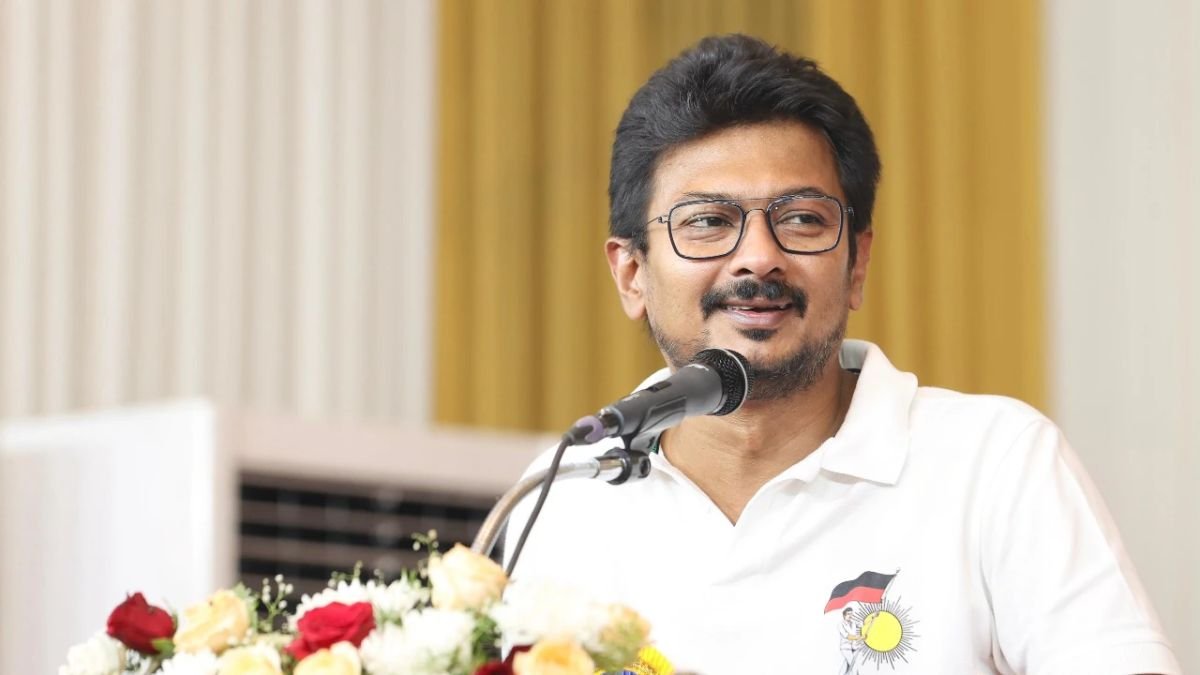
Chennai — A series of pointed remarks by Deputy Chief Minister Udhayanidhi Stalin has ignited political controversy and intensified the leadership debate within the India bloc, as Tamil Nadu’s Assembly polls draw closer. Speaking at multiple public forums this week, Udhayanidhi projected confidence in his party’s prospects, explicitly affirmed his support for his father Chief Minister M.K. Stalin as the alliance’s leader, and issued a challenge to political opponents including Prime Minister Narendra Modi.
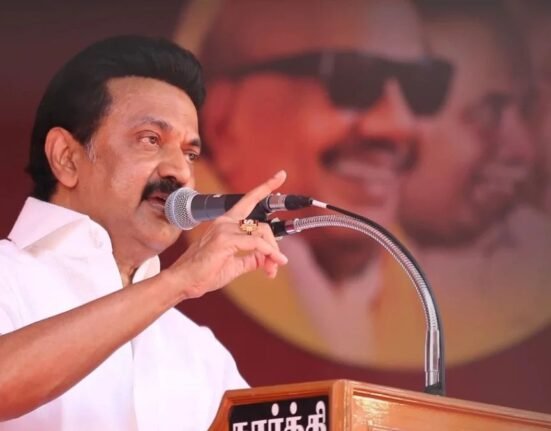
Speaking at a DMK Youth Wing event in Coimbatore, Udhayanidhi said the DMK “neither fears the Prime Minister nor his father.” He said whenever Modi appears on television, people get frightened about what he is going to announce. “Demonetization and the corona (lockdown) announcements by Modi made people fearful. But if Stalin appears on TV, people are happy about the new schemes,” he said. The comment quickly reverberated across political circles, drawing both applause from DMK supporters and sharp backlash from rival parties.
Beyond projecting electoral confidence, Udhayanidhi also made clear his support for continuing leadership under his father, M.K. Stalin, rejecting internal speculation about generational transition. “For us, the leadership question is simple we have the right leader, and the people know him,” he stated in a separate interaction with party workers, framing his comments as a reaffirmation of stability and continuity within the INDIA bloc alliance. This was interpreted by observers as an attempt to pre-empt discussions about succession or internal power recalibration at a time when opposition narratives have sought to characterise the DMK as factionalised.
The remarks drew swift responses from the Bharatiya Janata Party (BJP) and its allies. BJP leaders accused Udhayanidhi of “undermining national leadership” and alleged that such rhetoric risks polarising voters along personality lines, rather than focusing on governance issues such as development, employment and inflation. Party spokespeople countered that Tamil Nadu voters are best served by constructive debates on policy and delivery, not confrontational sloganeering.
Political analysts suggest that Udhayanidhi’s statements are part of a broader campaign strategy to energise the DMK’s base particularly among youth and regional identity voters while pre-empting narratives that seek to link the State’s electoral choices with national leadership dynamics. By asserting that his party “does not fear” central figures, Udhayanidhi is attempting to position the DMK as confident, independent and focused on local priorities rather than rhetorical dependency on national politics.
With elections imminent, the political temperature in Tamil Nadu is clearly rising. Udhayanidhi’s remarks have not only sparked debate among rival parties but also amplified internal discussions about leadership, strategy and messaging ahead of what promises to be an intensely contested campaign.