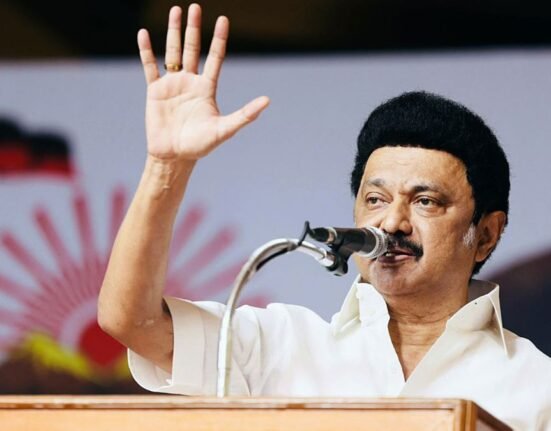
Chennai — Tamil Nadu Chief Minister MK Stalin has taken a firm stance against the idea of political “power-sharing” formulas and external models of governance, asserting that they are neither suitable nor necessary for the social and political realities of Tamil Nadu. In a series of remarks across public engagements this week, Mr Stalin reiterated his commitment to inclusive democracy rooted in the State’s distinctive Dravidian ethos and challenged narratives he described as out of sync with local aspirations.
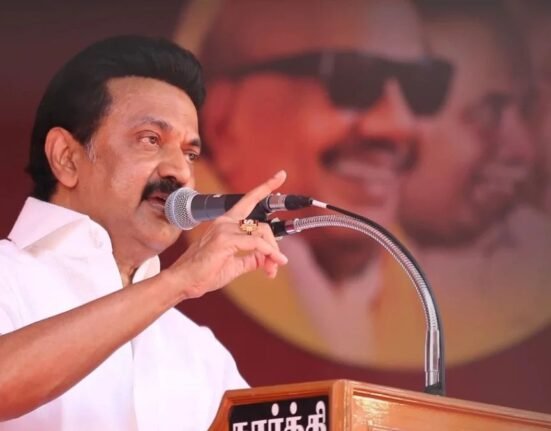
Speaking at an event in Chennai, Mr Stalin noted that successive Tamil Nadu governments including his own have undertaken efforts to recognise and honour the identities of families and communities that have long been marginalised. Referring to recent administrative orders, he said that several households and clans whose names had been historically overlooked have now been recorded correctly in official registers. “Recognition is not merely symbolic,” he said. “It is foundational to dignity and inclusion, and that is what we have striven to deliver.”
On the broader theme of governance, the Chief Minister made clear that the State will not adopt what he called a simplistic “share in government” formula, which he said had no relevance to Tamil Nadu’s political culture. “The argument that government must be shared in fixed proportions with certain groups overlooks the essence of public service and merit,” Mr Stalin told reporters. “Tamil Nadu’s political journey has been about social justice, affirmative action and equal opportunity, not quotas of power.”
Mr Stalin’s remarks were echoed at the India Today Conclave, where he rejected what he characterised as “fascist politics” as antithetical to the State’s democratic traditions. “Authoritarian or exclusionary approaches have no place in Tamil Nadu,” he said, underlining that the people of the State will not embrace politics that divides rather than unites.
At another event in Chennai, dedicated to discussions on education, intelligence and women’s empowerment, the Chief Minister emphasised the need for policies that expand opportunity rather than restrict it. Speaking at a programme associated with women’s colleges, he highlighted initiatives aimed at strengthening education infrastructure and enhancing career prospects for female students. “Intelligence is not bound by gender, and beauty should never be a barrier to ambition,” he said, advocating for systemic support that enables young women to realise their full potential.
The consistent theme across MK Stalin’s recent comments has been a rejection of rigid political formulas in favour of a more fluid, inclusive concept of governance. He stressed that Tamil Nadu’s social contract is built on shared values of equity, rationalism and progress, and that any framework of power must uphold those principles rather than reduce governance to arithmetic.
Political analysts say the Chief Minister’s remarks reflect an effort to assert a distinct regional identity amid broader national debates about federalism, identity politics and representation. By framing governance as a dynamic, inclusive process rather than a fixed share of power among groups, Mr Stalin appears to be positioning Tamil Nadu’s political culture as one rooted in collective advancement rather than factional bargaining.
As the State prepares for a series of elections at both local and national levels, Mr Stalin’s articulation of this narrative not only reinforces his government’s ideological stance but also provides a strategic contrast to political models emerging elsewhere in the country. Whether voters respond to this vision of inclusive governance will be tested in the months ahead.