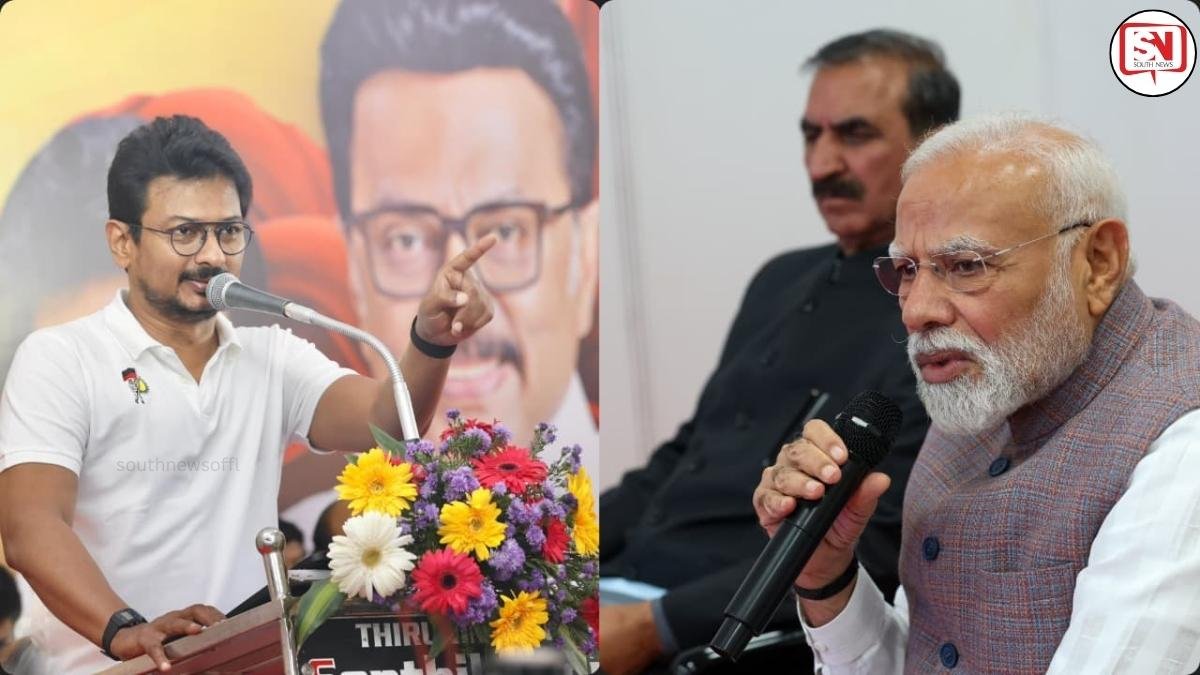
ED – Modi, I Fear None: What Udhayanidhi Stalin’s Defiance Reveals About India’s Federal Tensions
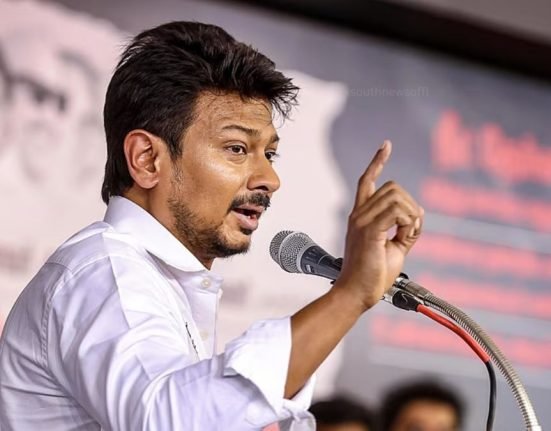
“Not just ED, even if Modi comes, I will not fear. I’ve done no wrong to be afraid.”
— Udhayanidhi Stalin, Deputy Chief Minister of Tamil Nadu
A Sentence as a Signal
In a country where silence often follows summons, and deference has become the currency of survival, a young southern politician’s voice rang out not in apprehension but assertion. “Not just ED, even if Modi comes…” — seven words that encapsulate more than personal confidence. They carry the weight of a political philosophy that sees resistance not as rebellion, but as duty.
When Tamil Nadu Deputy Chief Minister Udhayanidhi Stalin uttered those lines in Kanchipuram in September 2025, he wasn’t just addressing his cadre. He was addressing the Union.
Legacy of Defiance, Not Just Drama
Udhayanidhi’s words are born of a deeper political soil — one tilled by Periyar, harvested by Anna and nurtured by Karunanidhi. The Dravidian movement, with its emphasis on linguistic pride, social justice, and state autonomy, has always viewed excessive Union interference with suspicion. In this tradition, institutions like the ED, CBI, and Income Tax Department are often seen as wielded more as tools of political pressure than instruments of impartial justice.
The DMK heir’s refusal to be cowed by these agencies is more than rhetorical theatre. It is a reiteration of the state’s right to dissent — a reminder that Union agencies, if they act politically, will be met with political resistance.
Union Overreach, Southern Resistance
In the last two years, Tamil Nadu has seen multiple interventions from Union investigative bodies. From alleged liquor scandals to land allocation cases, the pattern of ED raids and CBI notices has not gone unnoticed. The DMK, while claiming legal transparency, has consistently called out what it terms “vindictive targeting” — pointing out how similar allegations in BJP-ruled states often fail to attract similar urgency from the Union machinery.
The context in which Udhayanidhi speaks is one where the use of agencies by the Union government is not just feared — it is anticipated. His refusal to flinch, then, is part resistance, part inoculation. By declaring his fearlessness now, he aims to blunt the narrative before any summons or raids arrive.
Welfare and Words: The Dravidian Equation
The DMK’s response to this perceived overreach is not only in words. It is in the arithmetic of schemes. The Chief Minister’s Breakfast Programme, free bus travel for women, monthly education assistance, and expanded ration entitlements form the bedrock of a governance model that foregrounds dignity.
This “Dravidian model,” often mocked by northern commentators unfamiliar with its roots, is not just policy — it is pride. When Udhayanidhi pairs his fiery defiance with welfare enumeration, he’s not boasting. He’s building contrast: “They bring raids, we bring rice.”
Cadre as Currency
Udhayanidhi’s words must also be seen in the context of his political method — mass appointments to the Youth Wing, block-level meetings doubling as mobilisation platforms, and his frequent assertion that “you are the party” to local organisers.
By connecting the personal (“I’ve done no wrong”) to the collective (“we will not fear”), he transforms individual resistance into organisational resolve. This grammar of mobilisation is crucial ahead of the 2026 Assembly polls, where the BJP hopes to make inroads, and the AIADMK remains fragmented and directionless.
From Rhetoric to Referendum
But Udhayanidhi’s challenge carries risk. Sound-bites, while effective, can age poorly under scrutiny. Welfare tallies must match actual government data. Defiance must translate into electoral gain, not merely applause. And a party claiming moral clarity must ensure its house is in order when allegations arise.
Yet, in a country where the Union government’s agencies often arrive before public support does, such statements matter. They signal that not all states will respond to coercion with quietude.
What This Means for India’s Federal Soul
The quote that set this conversation ablaze may seem aimed at one Prime Minister. But its true audience is larger: the Indian Union, its citizens, and its foundational promise of cooperative federalism. The assertion that a state leader can stand firm against the weight of political intimidation — and still speak of schools, breakfasts, and social justice — is a reminder that democracy’s vocabulary isn’t owned by Delhi alone.
Udhayanidhi’s challenge is not personal. It is political, constitutional, and regional. And in a time when too many states bow before the Centre’s muscle, Tamil Nadu is reminding India what federal dignity sounds like.