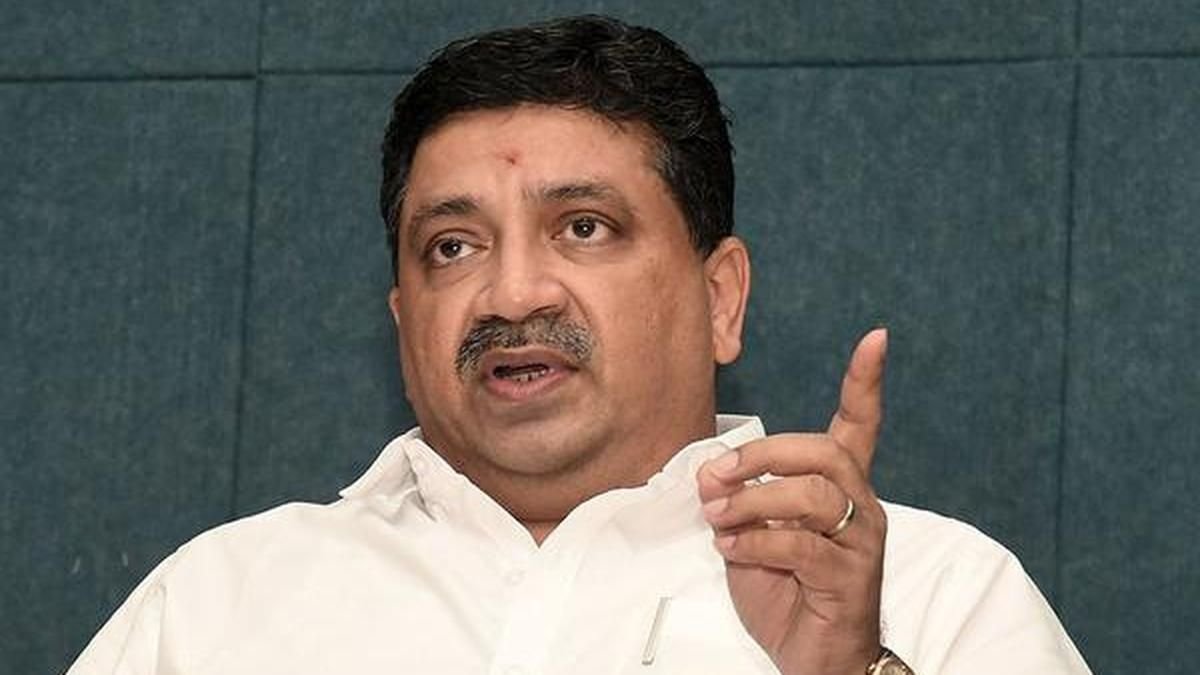
Chennai — With the Assembly elections looming in Tamil Nadu, Palanivel Thiaga Rajan (PTR), the State’s Minister for Information Technology and Digital Services, delivered a robust articulation of the DMK government’s position on the contentious three-language formula under the National Education Policy (NEP) during the India Today Tamil Nadu Roundtable this week.
In a packed session bringing together leading politicians, analysts and policy experts, Mr Thiaga Rajan emphasised that the State’s opposition is not to Hindi as a language, but to what it sees as its imposition through central policy, a distinction he insisted is crucial to understanding the DMK’s stance. “We are anti-Hindi imposition, not anti-Hindi,” he said, countering narratives that portray Tamil Nadu as hostile to the language itself. “If people want to speak Hindi, they can. But no one has the right to dictate that our children must absorb a third language in school without clear benefit.”
Tamil Nadu has long followed a two-language policy, Tamil and English which the State government insists has delivered strong educational outcomes without overburdening students. Mr Thiaga Rajan questioned why the NEP’s three-language directive which typically adds Hindi as the third language for many students should be applied to a region where it believes educational needs and linguistic realities differ markedly. “It becomes three languages for us, while it is effectively one language for the Hindi belt and two for us,” he said, highlighting perceived asymmetry in the policy’s impact.
The minister also challenged the Centre to “do better” if it hopes Tamil Nadu will reconsider its stance, asserting that the State’s own educational and social infrastructure already compares favourably with national benchmarks. His remarks underscored a broader theme of federal autonomy and respect for regional policy choices, especially when States fund and administer their own institutions.
Beyond the language issue, Mr Thiaga Rajan outlined his government’s vision of what he termed the “Dravidian Model 2.0” of governance. Framing it as a tested alternative to what he described as the “Gujarat model,” he argued that long-standing principles of social equity, educational access, reservation and inclusion are central to Tamil Nadu’s development trajectory. “We started with social structure justice, education, opportunity more than 100 years ago, and that foundation feeds into economic growth,” he said, positioning the model as an ideological and practical blueprint for the South’s future.
Addressing charges commonly levelled at regional parties about corruption and dynastic politics, Mr Thiaga Rajan broadened the debate to assert that no state is immune to such challenges. “Name one state where there isn’t corruption or dynastic politics,” he said, urging critics to focus on governance outcomes rather than rhetoric.
The minister’s remarks ensure that linguistic rights, state autonomy and contrasting models of development are likely to remain central themes in Tamil Nadu’s political discourse as the elections approach, with language policy once again becoming a flashpoint in the broader debate over federalism and identity in India.