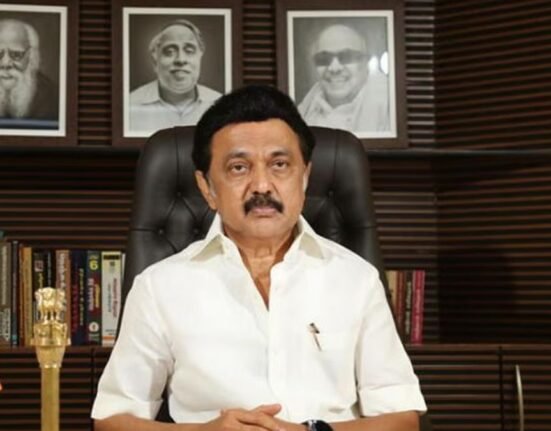
Chennai / New Delhi — Tamil Nadu Chief Minister MK Stalin has written to Prime Minister Narendra Modi, urging urgent release of pending railway funds and accelerated implementation of key railway infrastructure projects in the State. In his letter, Mr MK Stalin highlighted that despite significant progress on land acquisition and preparatory works, several rail initiatives remain stalled due to arrears in central funding and clearances.
In the detailed communication addressed to the Prime Minister, the Chief Minister noted that Tamil Nadu has completed 94 per cent of land acquisition for 19 railway projects, yet timely fund releases from the Ministry of Railways have not kept pace with preparatory progress. He urged the Centre to expedite disbursements and restart delayed works that are critical for connectivity, economic growth and employment generation across the southern State.
MK Stalin flagged key corridors in his letter, stressing that the region’s strategic importance both for freight movement and passenger mobility warranted priority attention. “The State government has ensured land acquisition, clearances and support infrastructure for multiple projects, reflecting our commitment to rail connectivity,” he wrote. “I request the Government of India to release pending funds and ensure early execution of sanctioned projects.”
Officials in Chennai underscored that several of these rail projects form part of long-standing demands from communities, industry and local administrations, and are expected to transform connectivity between major cities, industrial hubs and hinterland regions. They include new lines, doubling and gauge conversion works designed to improve rail capacity and reduce travel times for both freight and passengers.
The Chief Minister also urged that funds be released in a timely and predictable manner to ensure uninterrupted implementation, pointing out that delays in central budget allotments risk slowing project traction and inflating costs. “Predictability in fund flow is fundamental to efficient project delivery,” Mr Stalin’s letter emphasised.
Tamil Nadu’s push comes amid broader political and administrative demands for accelerated infrastructure development across states, with railway connectivity emerging as a key priority for both economic growth and regional equity. The Chief Minister’s appeal reflects concerns that funding bottlenecks particularly in the railway sector, which is largely centrally funded are slowing progress in areas where groundwork, including land acquisition and environmental clearance, has already been completed.
Political observers say the letter also serves a dual purpose: highlighting the State government’s proactive role in preparing projects for execution and underscoring cooperative federalism amid ongoing debates over Centre-State resource flows. Neither the Prime Minister’s Office nor the Ministry of Railways has formally responded to the letter yet; officials indicated that replies typically follow internal review and inter-ministerial consultations.
Railway analysts echoed the urgency of quick funding releases, noting that stalled projects not only defer benefits for residents and businesses but also tie up capital and labour in limbo. “Once land acquisition is complete, the next binding constraint becomes funding,” one transport economist said. “Unpredictable allocations can disrupt contractor schedules and equipment mobilisations, leading to cost escalations.”
For now, Tamil Nadu’s focus remains on securing a prompt response from the Centre and ensuring that preparatory gains translate into visible infrastructure progress on the ground. As both political and economic pressure mounts, the coming weeks may prove decisive for some of the State’s long-pending rail ambitions.