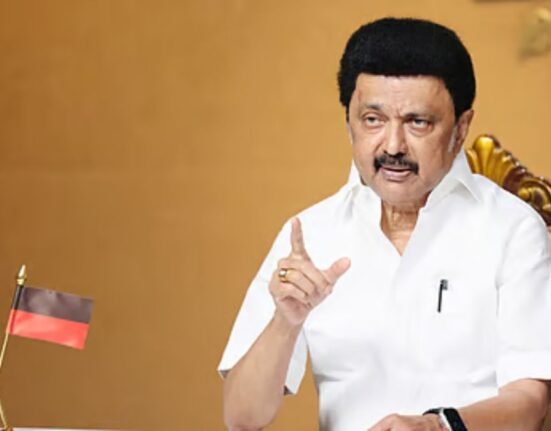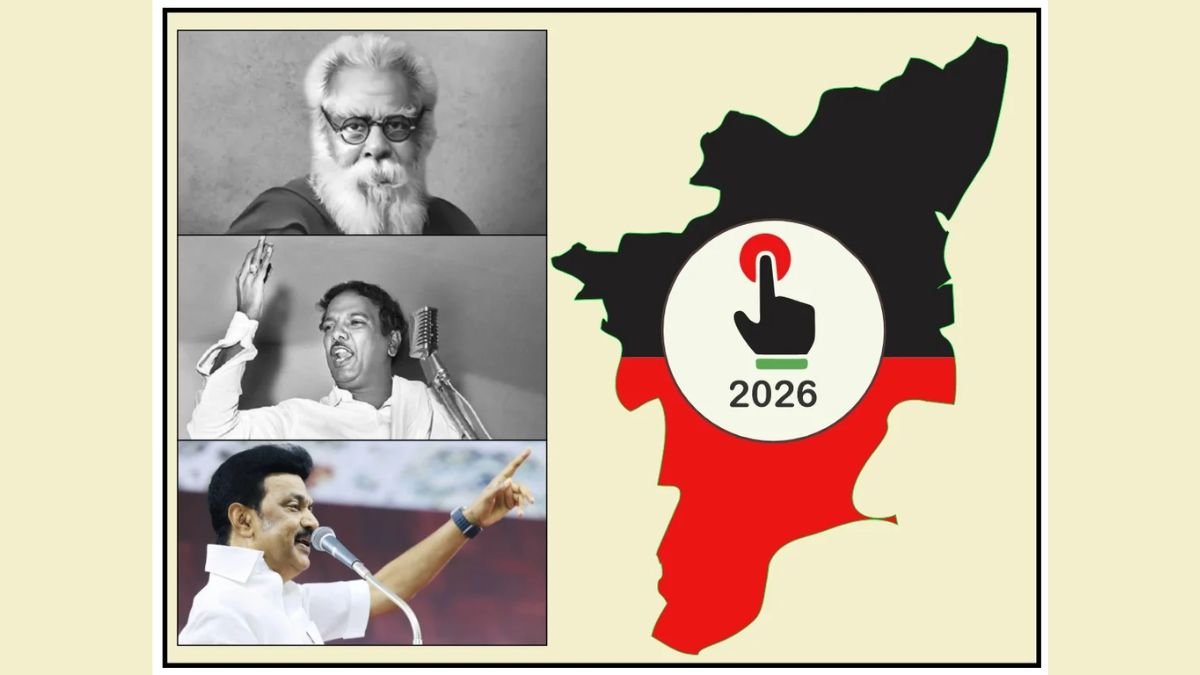
After the passing of leader Kalaignar (M. Karunanidhi), many predicted that the DMK (Dravida Munnetra Kazhagam) would fade and its political journey would end. But under Chief Minister M.K. Stalin, the party has seen a major resurgence. It has reaffirmed its mission to shape India as a federal republic committed to pluralism and unity.
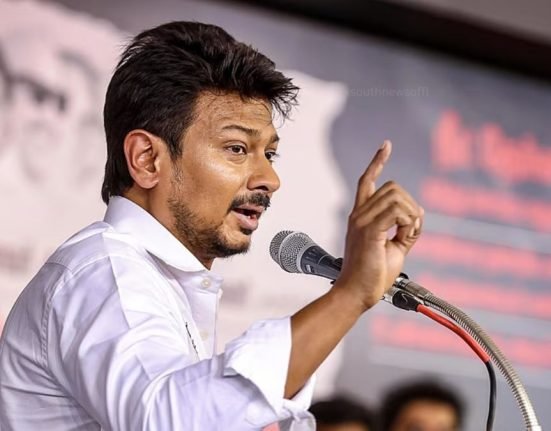
The DMK has restricted the entry of communalistic forces into Tamil Nadu and continues to emphasize the distinct history of Dravidian Tamil identity and the right to self-rule. The presence of younger leader Udhayanidhi Stalin signals that the next generation will carry forward this vision.
On the opposition side, after J. Jayalalithaa’s passing, the AIADMK (All India Anna Dravida Munnetra Kazhagam) diminished into multiple factions driven by self-interest. Meanwhile, the BJP (Bharatiya Janata Party) is trying to surround and weaken it, in an attempt to fragment the Dravidian Tamil identity.
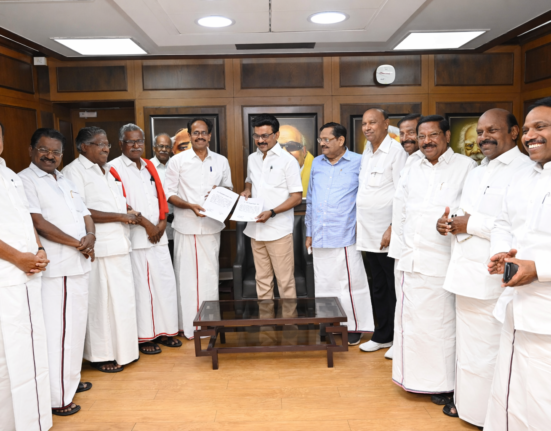
This is evident to the eyes of the people. Realizing this trend, many AIADMK leaders are joining the DMK party under the slogan “Let us unite as one.”
Chief Minister Stalin’s five-year rule from 2021 has been a golden era for Tamil Nadu, with numerous achievements in every department of government. The situation is such that listing and praising them will not result in an article, but rather a book, as each initiative is unique and innovative.
Support Wave for DMK and Media Portrayal
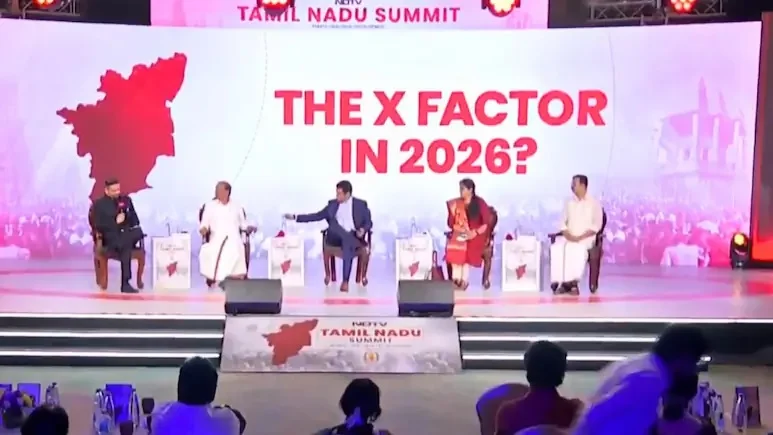
In a recent media interaction at the NDTV Tamil Nadu Summit, DMK leaders clearly articulated the party’s position, explaining the party’s policies and political landscape. According to that, good governance, clear ideology, and a strong vision will help the DMK alliance win overwhelmingly again with broad public support.
For the matter of fact, even Gurumurthy, considered BJP’s Rajguru, has said that winning the 2026 elections is not their goal. Their immediate goal is to strengthen and grow the party, i.e., capture the support base of the AIADMK.
However, in public debates and personal conversations, people are seen magnifying DMK’s shortcomings while downplaying its achievements.
People say that only through criticism can the flaws in governance in a democracy be eliminated. But if we look at whether they are criticizing the AIADMK or the BJP using the same criteria, it is not the ground reality. To another extent, they will say, “We will vote for the DMK alliance, but we will only focus on the allegations against it.”
If we see it as an overview, it may seem that criticism is the only way to correct shortcomings and improve governance. But in reality, what is revealed in them is a deeper mindset: a negative attitude towards DMK. In the words of writer Pothiyaverpan, “The Dravidian movement is allergic.” Only by understanding this from a mass psychological perspective can we understand the kind of counter fight the DMK is putting up.
‘Teflon Coating’ and Political Sanctity
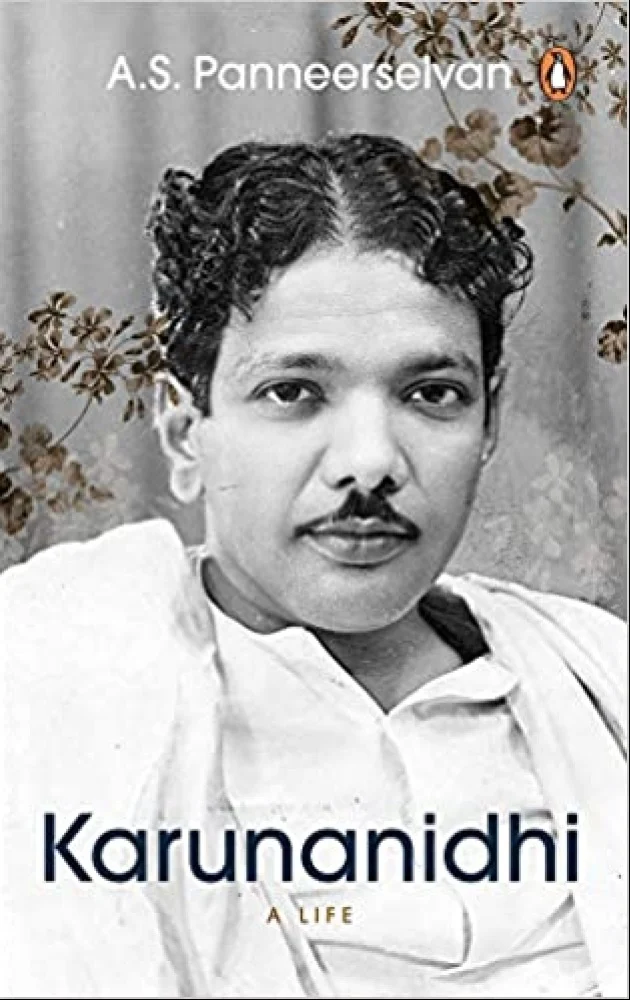
Journalist and researcher A.S. Panneerselvan, in his biography of Kalaignar, humorously noted that the DMK party does not have a non-stick Teflon coating.
That is, they give kitchen utensils a Teflon coating and sell them as non-stick, meaning that flour-based ingredients will not stick to them. Flour-based ingredients will stick to those utensils without the coating.
Like that, although there are allegations of corruption against all parties, the allegations are levelled only against DMK and Congress. They do not stick to either AIADMK or the BJP. That’s the Teflon coating. It is not that difficult to understand.
For example, some religious figures carry a sense of sanctity so strong that even if they are proven guilty of financial fraud or sexual crimes and punished, their devotees continue to believe in them and revere them, refusing to accept that they did wrong. That is what happens when something is considered sacred. Nothing can stain it.
This idea of sanctity has existed since early human social life. Concepts like God or divine authority became central to social cohesion, and rulers were seen as divine or acting on behalf of the divine. Priests and religious authorities became intermediaries between rulers and the divine.
When the printing press was invented in the 15th century, ideas based on rational thinking began to spread—the notion that a republic should be founded on inquiry and reason. We can say that the conflict between religious institutions and rational thinkers has shaped modern political thought.
This contradiction took many subtle forms. The reason is that even in religious faith, people-centered devotional movements opposing the dominance of the priestly class have always emerged. Similarly, in modern rationality, the contradiction between the concentration of power and the diffusion of power emerged and grew stronger.
It is in this context that the idea of sanctity spread from the notion of God to various centers and symbols. Its fundamental characteristic is: one must believe, one must have faith in something beyond questioning. The idea that everything is open to questioning, and that asking questions itself is rationalism, operates in direct opposition to this sanctity-based way of thinking.
Only when we fully understand this can we see how Periyar, the torchbearer of rationalism, sought to construct the values of the Indian Republic, and how the Dravidian movement, under the leadership of Anna and Kalaignar, in the footsteps of Periyar, has continued its journey as a rationalist movement to this day.
However, the mass psyche tends to believe in sanctity. Even when people support a rationalist movement, they often do not abandon sanctity-based thinking. This contradictory condition was described by the Italian Marxist thinker Antonio Gramsci as a characteristic of common sense. It would not be an exaggeration to say that this is precisely why the DMK continues to swim against the tide in mass politics even today.
Forms of Sanctity
When constructing an Indian national identity in opposition to colonial rule, sanctity was organized around the Vedas of the Aryans, later Vedanta, the Puranas, and the Brahmanical varna dharma. This is how it took shape. In all Indian languages, including Tamil, these Aryan narratives and symbols became firmly established.
In Indian culture, which included worship of many gods, whoever worshipped whichever deity was linked to Aryan mythological imagination. Even religions that did not accept the Vedas, such as Buddhism and Jainism, incorporated elements of Aryan sanctity.
Rationalist elements were reduced, and sanctity centered on icon and ritual worship grew. Since sanctity supported kings and empires, they naturally gave substantial patronage to the priestly classes, particularly Brahmins. At the same time, efforts continued to maintain and reinforce the hierarchical structure of varna dharma in society.
In a country with such a historical background, Gandhi envisioned a republic grounded in the values of ordinary people. He believed that for such a republic to be established, the masses must actively participate in politics. To encourage that participation, he thought that using sanctity would be effective. As a result, he himself was constructed as a Mahatma endowed with divine powers.
Professor Shahith Amin, in his Subaltern Studies collection, has written about how, during the Non-Cooperation Movement in Uttar Pradesh, stories about Gandhi’s divinity circulated in local Hindi newspapers. Tales such as “the house of one who criticized Gandhi caught fire,” “untimely deaths occurred,” and “those who worshipped Gandhi discovered hidden treasures” were recorded as “true events” in these stories.
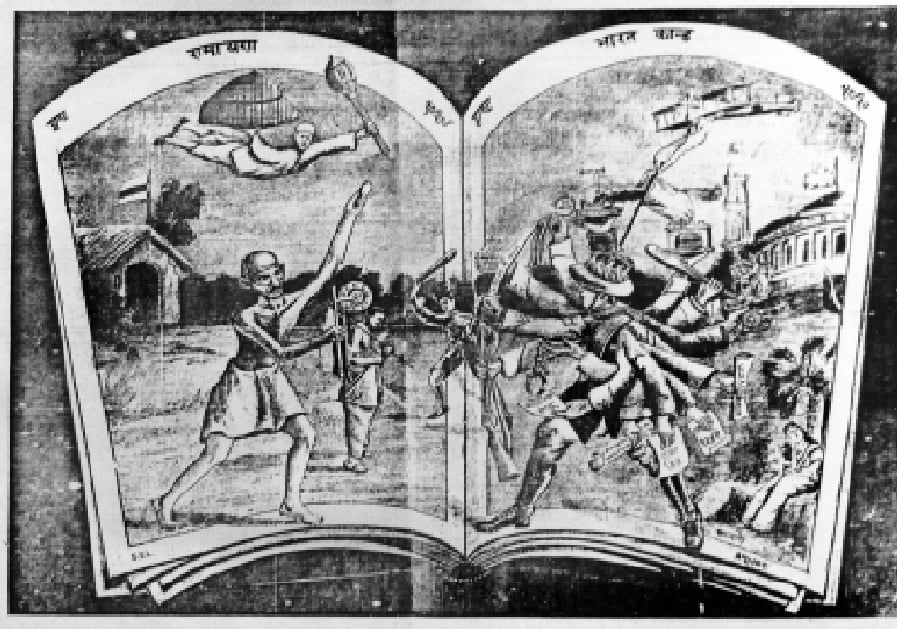
Although these stories were not written in Tamil to the same extent as in Hindi, Gandhi’s divinity and nationalism were widely disseminated in Tamil as well. The idea that the Aryans formed the foundation of Indian culture was also promoted by many.
Even those who thought that the discrimination and hierarchy of varna dharma were wrong believed that this was a distortion that had occurred in otherwise good culture, and that, if corrected, the sacredness of that culture could be restored.
The Fightback of the Dravidian Movement
Periyar initiated a great cultural revolution called the Self-Respect Movement, opposing the idea that Aryan culture is the foundation of India. With the support of rationalism, he resisted the superiority of Sanskrit as the divine language, the attempt to make Hindi the national language, Brahmanical ideological dominance, and the social authority entrenched in the caste system.
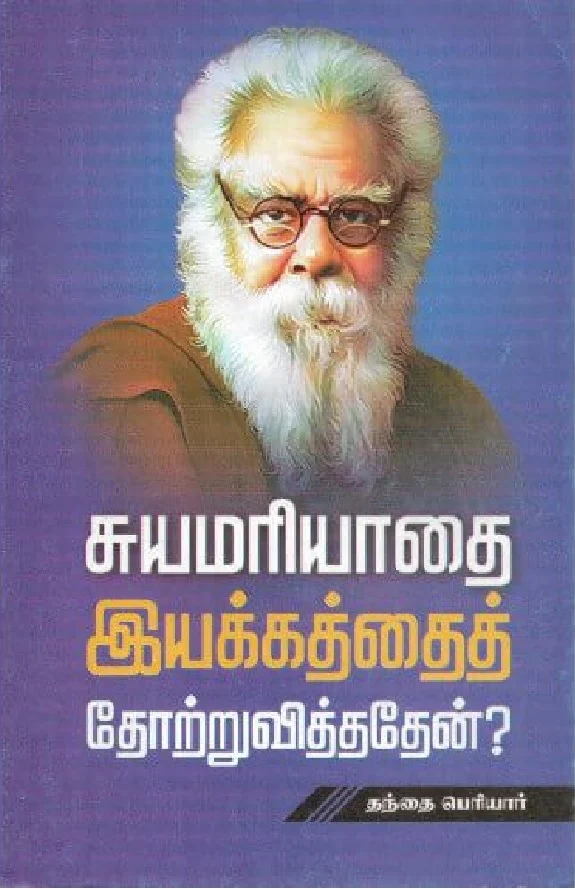
Using that rationalism as its support, the DMK led the massive historical fightback of organizing ordinary people politically and guiding them toward power.
Even though the DMK regarded the Tamil language as sacred and declared the Tamil Thaai Vaazhthu (Mother Tamil anthem) as the official song of Tamil Nadu, it never abandoned rationalism. That is why Dravidian movement leaders named their children after prominent rationalist and global political figures, including Ingersoll, Bradlaugh, Lincoln, Rousseau, and many others. Even Kalaignar named his son Stalin, after Joseph Stalin, who had defeated Hitler and preserved a socialist government during World War II.
The DMK did not adopt atheism as a policy. Instead, it treated belief in God as a personal aspect of life. Its ideology maintains that no blind faith should be followed in public life based on belief in God. To make this clear, Anna declared the saying of Thirumoolar, “One caste, one God,” as the party’s guiding principle. On this basis, DMK leaders assert that they act according to conscience and internal proof, not by invoking God’s name.
Sanctity and Rationalism
Organizing social life around sacred centers and symbols has been a political strategy spanning thousands of years. Those who follow it receive the protection of that sanctity, just like devotees continue to worship saints even after they are imprisoned.
However, those who oppose the hierarchy created by these sacred centers and promote rationalism in politics do not receive such protection. This is what it means to lack a “Teflon coating.” We can easily illustrate this with contemporary examples.
In Indian political history, the BJP has faced the maximum number of corruption allegations, yet the public rarely holds it against them. For example, in Karnataka, BJP leader Edyurappa was arrested in a corruption case and removed from the party. However, the BJP later reinstated him. He then bought off opposition MLAs and toppled the government.
Later, when Basavaraj Bommai became Chief Minister, corruption ran rampant. One contractor even wrote a letter and then committed suicide. Contractors openly demanded that ministers be allowed to take commissions up to a certain limit. Despite all this, the BJP appointed Edyurappa’s son as the state leader, even though the party claims to oppose dynastic politics.
Parties like the Congress, which speak of secularism and rationalism, do not receive such leniency. When corruption allegations were raised against Rajiv Gandhi, he lost his position because of public pressure. Yet, even after many years of investigation, the alleged crimes were never proven.
Later, the 2G spectrum scam allegations were leveled against the United Progressive Alliance government, which included DMK and Congress. Both at the central and state levels, government changed hands, but the crimes were never proven, and the Supreme Court criticized the investigating agencies.
However, even after the release of massive, detailed reports on Rafale corruption, election affidavit fraud, Adani stock market scandals, and road construction scams, these allegations do not stick to the BJP.
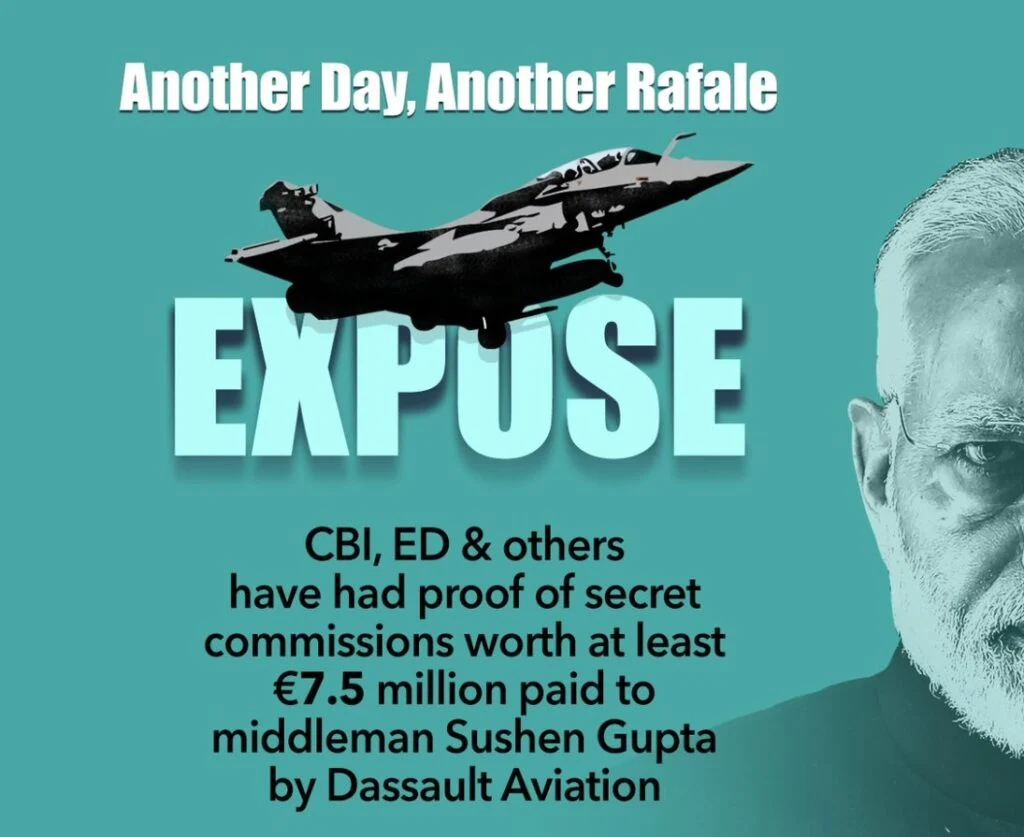
Moreover, the sanctity of BJP’s religious politics works in such a way that ministers who face serious corruption allegations are sanctified the moment they join the party. This practice is often referred to as “washing machine politics.”
For example, Ajit Pawar, the nationalist Congress leader in Maharashtra, faced a ₹25,000 crore corruption allegation filed by the Enforcement Directorate. The moment he joined the BJP alliance, he was appointed Deputy Chief Minister, and the corruption case was effectively swept under the rug. Last week, he tragically died in a plane crash, and immediately, the BJP appointed his wife, Sunetra Pawar, as Deputy Chief Minister.
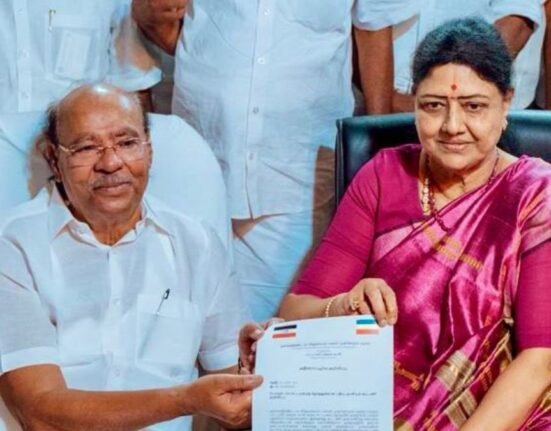
A different example involves T.T.V. Dhinakaran, the nephew of Sasikala, who lived with her as Jayalalithaa’s close relative. Even though the Mannargudi family did not hold any official government position, it exerted enormous influence. Sasikala, together with Jayalalithaa, had used their authority to amass wealth and was punished with imprisonment by the Supreme Court. T.T.V. Dhinakaran was also arrested for attempting to bribe the Election Commission.
By bringing all these individuals together to practice politics, the BJP, in the coming months, will accuse the DMK of corruption and dynastic politics, and run a loud, sensational campaign. That is when the power of sanctity will fully come into play.
However, a political narrative like this, one that simply shouts “DMK is an evil force” without explanation, would only be possible because of the DMK’s rationalist counter fight against sanctity.
For democracy to endure, rationalism must ultimately prevail.
Written by:
Rajan Kurai Krishnan
Professor, Ambedkar University, New Delhi
Contact: rajankurai@gmail.com
Translated by: Magizh