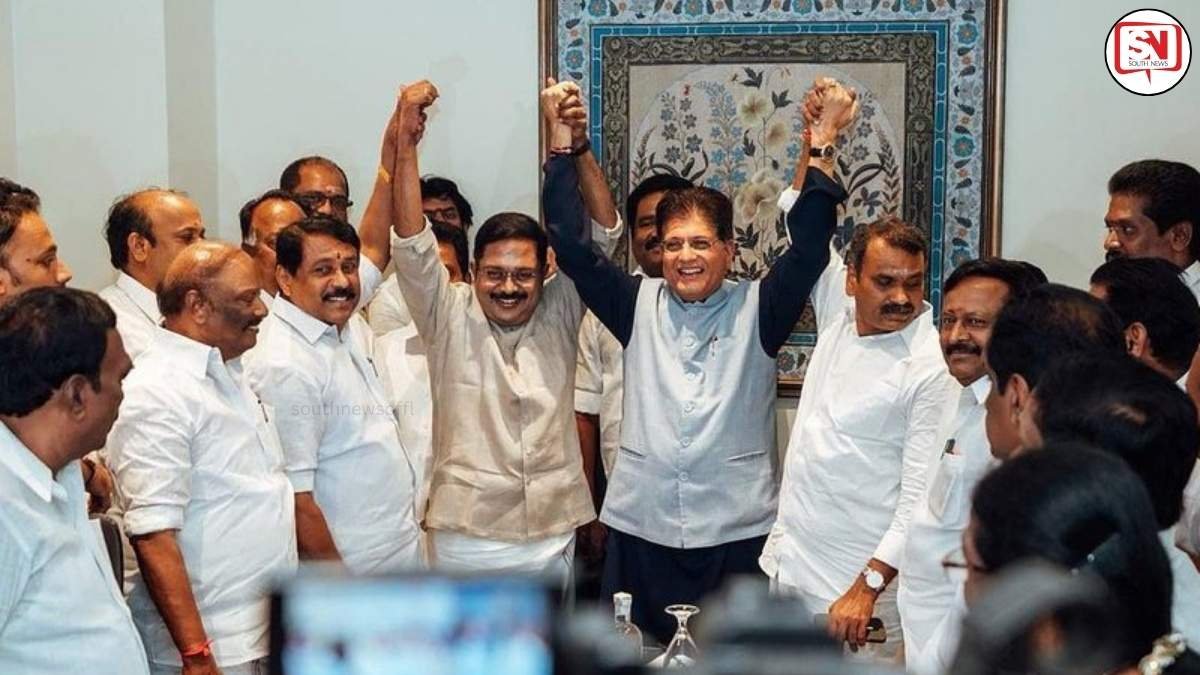
The political landscape of Tamil Nadu has once again been shaken by a surprising development, as T.T.V. Dhinakaran’s party, the Amma Makkal Munnetra Kazhagam (AMMK), has officially joined hands with the AIADMK alliance led by Edappadi K. Palaniswami (EPS). This move has triggered intense discussions, debates, and visible dissatisfaction among party cadres, especially considering the bitter past between Dhinakaran and EPS.
For years, T.T.V. Dhinakaran and Edappadi Palaniswami stood on opposite sides of Tamil Nadu politics. After the demise of former Chief Minister J. Jayalalithaa, the AIADMK witnessed one of its biggest internal power struggles. Dhinakaran, who positioned himself as the political heir of the Sasikala camp, openly challenged the leadership of EPS. The verbal attacks between both leaders were sharp, personal, and relentless. Press conferences, public meetings, and social media platforms became battlegrounds where accusations flew thick and fast.
Dhinakaran had repeatedly accused EPS of betraying the party’s core ideology and aligning with forces that weakened the AIADMK. He projected himself as a defender of Jayalalithaa’s legacy, while EPS countered by labeling Dhinakaran as a destabilizing force responsible for splitting votes and weakening the party’s electoral prospects. The rivalry reached a peak during elections, where both camps directly worked against each other, resulting in fractured vote banks and electoral setbacks.
Against this backdrop, Dhinakaran joining the EPS-led alliance has come as a shock to political observers and party cadres alike. Many grassroots-level workers who fiercely defended their leaders during years of conflict now find themselves confused and emotionally unsettled. Cadres who once raised slogans against each other are being asked to share the same stage and campaign together, a transition that is not easy to digest.
Within the AIADMK cadre base, there is growing concern over how Dhinakaran’s entry will impact internal unity. Some leaders believe that bringing AMMK into the fold could help consolidate anti-DMK votes and strengthen the alliance ahead of crucial elections. From a strategic standpoint, the move is being viewed as an attempt to minimize vote splitting, especially in southern districts where AMMK has a noticeable influence.
However, not all cadres are convinced. Many feel betrayed, questioning whether years of ideological battles and personal attacks can be brushed aside so easily. There is visible anger among long-time AIADMK workers who faced public criticism from Dhinakaran in the past. Similarly, AMMK supporters are struggling to accept an alliance with a leader they were trained to oppose fiercely.
Political analysts point out that alliances built purely on electoral arithmetic often face resistance at the grassroots level. Acceptance among cadres will depend on how the leadership communicates the reasons behind this alliance and whether clear power-sharing mechanisms are established. Without proper coordination and reassurance, internal dissatisfaction could weaken campaign efforts on the ground.
Despite the controversy, this alliance marks a significant turning point in Tamil Nadu politics. It highlights how political compulsions can override past rivalries when electoral survival is at stake. Whether this reunion strengthens the opposition or deepens internal cracks remains to be seen, but one thing is certain: cadres from both sides will need time, persuasion, and strong leadership direction to accept this sudden shift.
As Tamil Nadu moves closer to the next electoral battle, the EPS–Dhinakaran alliance will be closely watched—not just for its vote impact, but for how effectively it manages cadre sentiments shaped by years of confrontation.