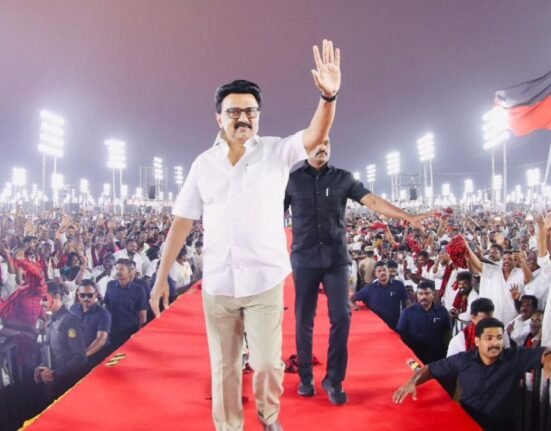

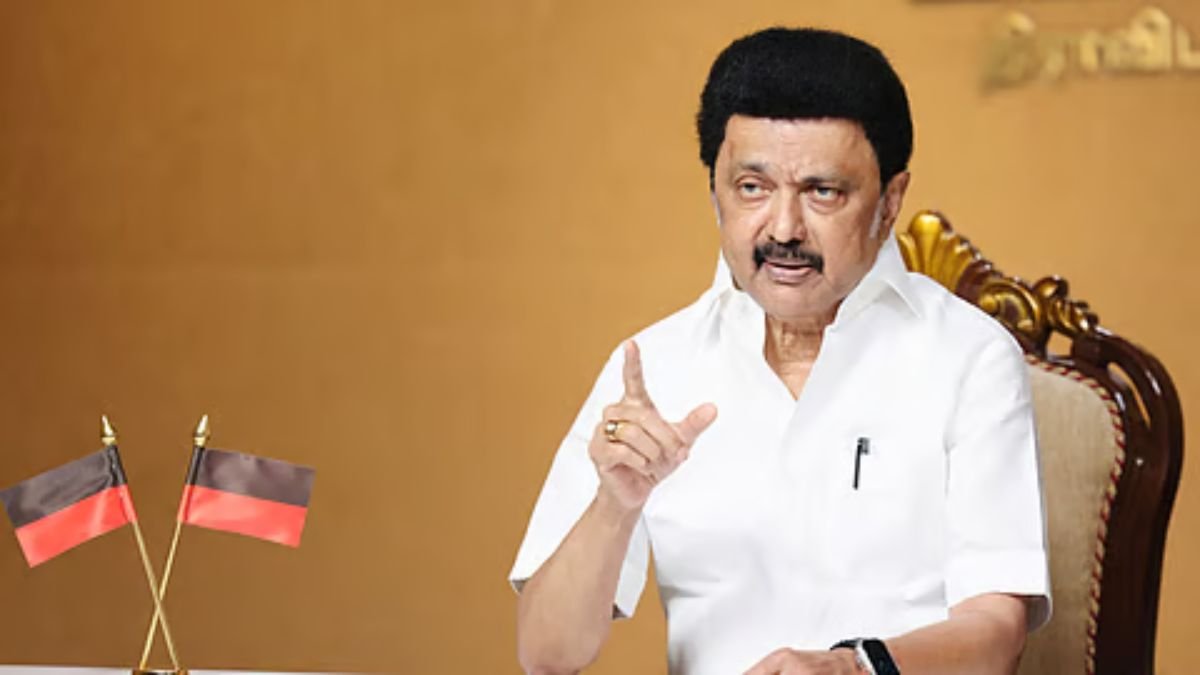
Chief Minister M. K. Stalin visited his Kolathur constituency to inaugurate a series of development projects, combining infrastructure delivery with a strong critique of the Union Budget’s allocation for Tamil Nadu.
The day’s agenda included the flagging-off of several high-impact civic and health initiatives such as Inauguration of the Lakeside Park at Retteri Junction, a new green space aimed at improving urban living standards and easing traffic bottlenecks in one of North Chennai’s key hubs. CM Stalin also opened a ₹1,174 crore Blood Purification and Rehabilitation Centre in Kolathur, envisioned as a state-of-the-art public health facility to serve thousands of residents and streamline advanced treatment accessibility.
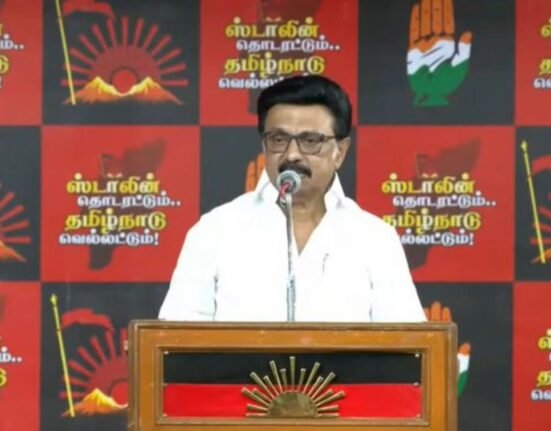
Addressing a gathering of officials, local leaders and residents, Mr Stalin presented these inaugurations as part of his government’s ongoing effort to bridge urban infrastructure gaps and strengthen essential services. He described the lakeside park as a “breath of fresh air” for residents and emphasised that the new health centre would be pivotal in elevating community wellbeing and reducing patient out-migration for specialised treatment.
However, his speech soon shifted from local governance to broader fiscal and political concerns. Mr Stalin was forthright in criticising the Union Budget 2026–27, stating that it had “consistently failed to recognise the developmental imperatives of Tamil Nadu.” He underscored that the State had received allocations that were disproportionately low relative to its population, industrial contributions and revenue generation, a point he said was noted with deep disappointment during recent budget discussions.
The Chief Minister reiterated his stance that greater fiscal federalism was essential for balanced national growth. “Our people deserve allocations that reflect their energy and contribution,” he said, pointing to infrastructure and social service needs across urban and rural regions alike.
On the political front, Mr Stalin also remarked on the state of electoral politics, asserting that he did not view any individual or party as an “enemy” in the political arena. Instead, he presented his approach as one anchored in democratic engagement and issue-based competition, a comment that seasoned observers interpreted as an appeal for civility in a charged national environment.
Locals present at the inaugurations welcomed the new facilities, with community leaders calling the health centre “transformational” and the lakeside park a “much-needed public space” in a rapidly urbanising corridor.
As Tamil Nadu prepares for a series of state elections in the coming year, the blend of tangible project delivery and strategic political messaging showcased in Mr Stalin’s Kolathur visit underlines the interplay of governance and electoral narrative in India’s vibrant federal polity.