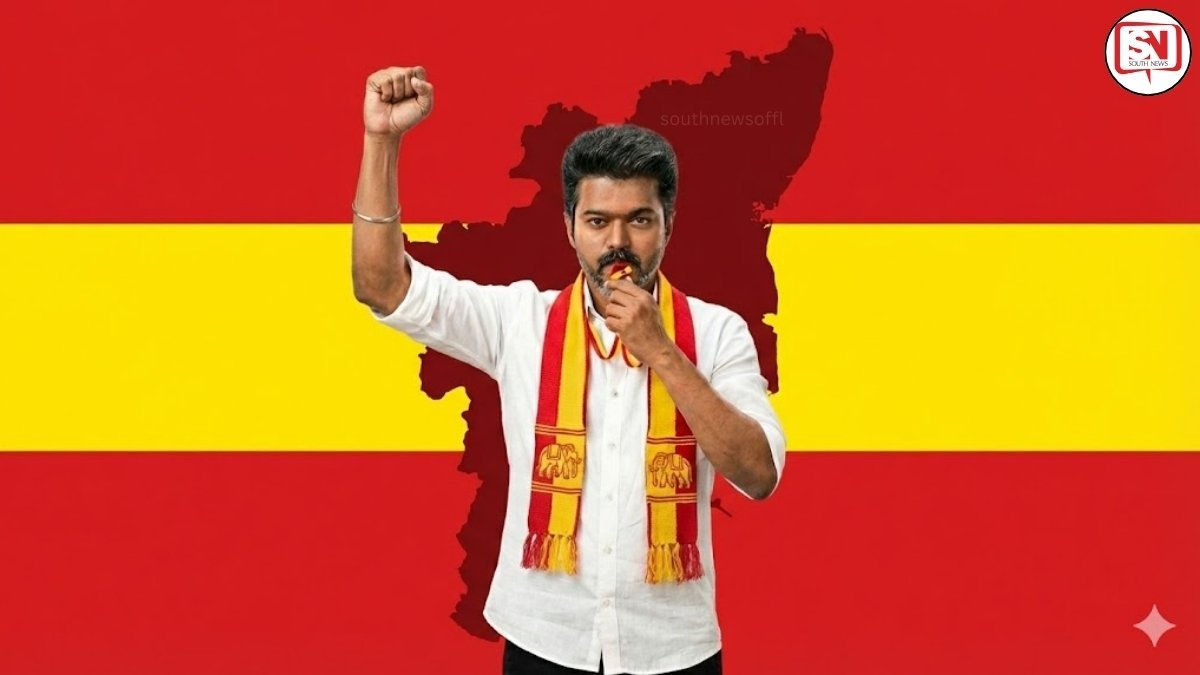
Tamil Nadu politics has entered a decisive new phase with the Election Commission officially allotting the whistle symbol to actor-turned-politician Vijay’s party, Tamilaga Vettri Kazhagam (TVK). The allotment of a common election symbol is not just a procedural milestone; it is a powerful political signal that Vijay’s party is being institutionally recognised and is now fully prepared to contest elections across the state under a single identity.
One of the striking aspects of this development is the smooth and controversy-free manner in which TVK secured the whistle symbol. In Tamil Nadu’s political history, new parties often face delays, objections, or legal hurdles during symbol allotment, especially when symbols resemble existing ones or clash with other parties’ claims. In TVK’s case, however, the process moved swiftly, raising discussions in political circles about the strategic planning behind the party’s registration and documentation.
Political observers point out that TVK followed a legally precise and disciplined approach, submitting all required documents, membership details, and compliance reports well in advance. This administrative clarity left little room for objections. While speculation exists about whether national political forces indirectly viewed Vijay’s entry as a counter-balance in Tamil Nadu politics, there is no official evidence of external influence. What is clear, however, is that TVK avoided the confusion and factional disputes that have weakened many new political outfits in the past.
The whistle symbol itself carries strong psychological and cultural resonance. In cinema and public rallies alike, Vijay’s whistle has long been associated with mass celebration, instant recognition, and emotional connect. Translating this cinematic symbolism into electoral politics gives TVK a branding advantage, especially among youth and first-time voters. A simple, easily identifiable symbol plays a crucial role in rural and semi-urban constituencies, where visual recognition often matters more than party names.
Vijay’s political impact is already being felt across existing vote banks. Analysts widely believe that Naam Tamilar Katchi (NTK), led by Seeman, could face erosion in its youth-centric and anti-establishment voter base. Vijay’s entry appeals to a similar demographic but carries the added weight of mass popularity, disciplined messaging, and broader acceptability beyond ideological rigidity.
At the same time, the AIADMK vote base, particularly among younger voters and urban middle-class supporters, could witness fragmentation. While AIADMK continues to rely on legacy leadership and traditional networks, TVK presents a fresh alternative unburdened by past governance controversies. Vijay’s carefully neutral stance—avoiding early alliance declarations—positions TVK as an independent force rather than a subsidiary player.
The most significant shift, however, is emerging in the DMK versus TVK narrative. Increasingly, political discourse suggests that the real contest in the coming years may not be a multi-cornered fight but a direct ideological and generational clash between the ruling DMK and Vijay’s TVK. DMK commands governance experience, administrative machinery, and ideological depth, while TVK represents emotional mobilization, youth energy, and cinematic mass appeal.
Vijay’s political messaging has so far focused on corruption-free governance, social justice, and people-centric administration—areas where he directly challenges the ruling establishment rather than opposition parties. This strategy subtly positions TVK as the primary alternative to DMK, bypassing traditional opposition hierarchies.
Importantly, Vijay has maintained discipline and silence on premature alliances, allowing speculation to fuel public curiosity while keeping TVK’s independent identity intact. This calculated approach strengthens the perception that TVK is preparing for a long-term political journey rather than a symbolic entry.
The whistle symbol allotment marks the transformation of Vijay from a political aspirant into a structured political contender. It enables TVK to contest elections across Tamil Nadu with clarity, consistency, and confidence. Whether this momentum translates into electoral success remains to be seen, but one thing is certain: Tamil Nadu politics will no longer remain predictable.
As the political field reshapes itself, the emerging storyline is clear—the coming battle lines are being drawn, and the spotlight is steadily moving toward a DMK versus TVK face-off, redefining the future of the state’s political landscape.