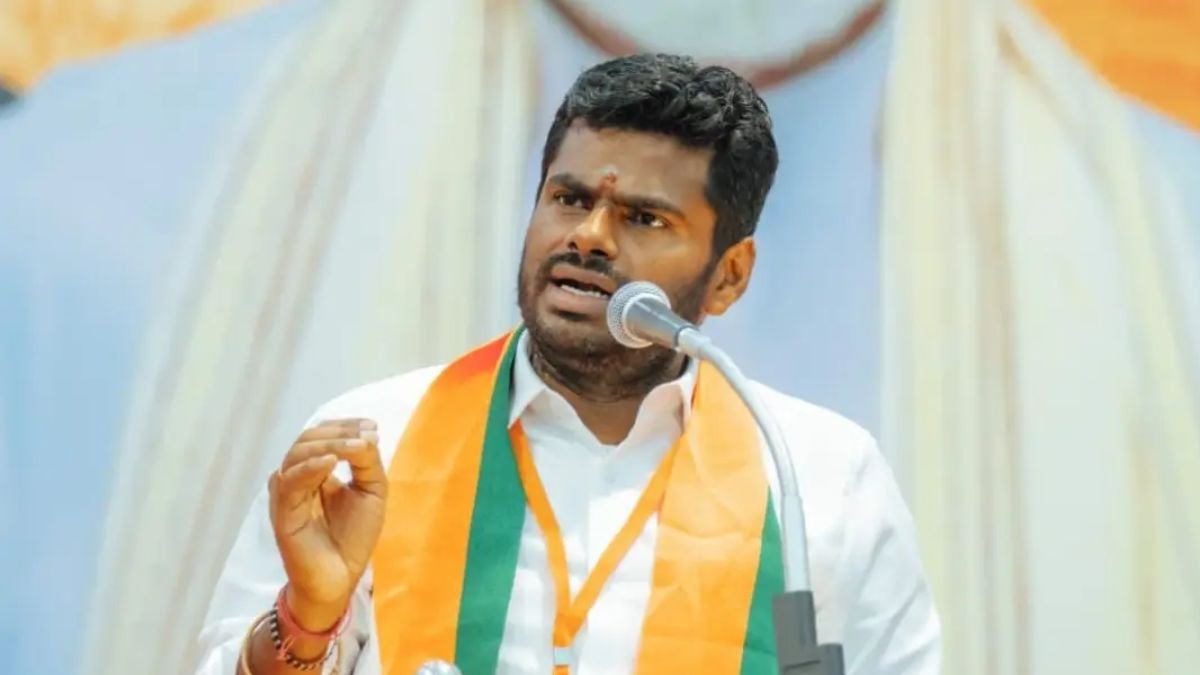
The decision by the Bharatiya Janata Party (BJP) to deny a ticket to former Tamil Nadu state president K. Annamalai for the 2026 Tamil Nadu Assembly elections has sparked widespread discussion, with the leader himself breaking his silence and clarifying the circumstances behind the move.
Addressing the controversy, K. Annamalai stated clearly that the decision not to contest was taken by him and not imposed by the party leadership. He emphasized that there was no disagreement or denial forced upon him, and that he had voluntarily stepped back from the electoral race.
He said, “I decided not to contest the elections. This is my personal decision.” He further clarified that his focus would remain on strengthening the party in Tamil Nadu rather than seeking an electoral position at this stage.
In his remarks, he dismissed reports suggesting internal conflict or side-lining, reiterating that he continues to work closely with the party leadership and remains committed to its long-term growth in the state.
Earlier, Senior BJP leader Piyush Goyal addressed the issue by stating that the decision was taken in consultation with K. Annamalai and aligned with the party’s broader strategy. He indicated that the leader’s organisational role was considered more critical for the elections.
Similarly, BJP MP Tejasvi Surya explained that the decision was not a denial in the conventional sense but a strategic choice. He noted that K. Annamalai remains one of the party’s most prominent faces in Tamil Nadu and would play a key role in campaigning and mobilising support across the state.
What BJP Risks by Not Fielding Annamalai
The absence of K. Annamalai from the contest carries potential implications for the BJP’s electoral prospects. As one of the party’s most recognisable leaders in Tamil Nadu, his direct participation could have provided a focal point for voter mobilisation in a specific constituency.
Reports highlight that by not fielding him, the party risks missing an opportunity to convert his personal popularity into a tangible electoral victory. Additionally, his absence from the ballot may affect localised momentum in constituencies where his candidature could have strengthened the party’s competitive position.
At the same time, the BJP appears to be balancing this risk against the potential advantage of deploying him as a statewide campaign leader, indicating a trade-off between constituency-level gains and broader organisational impact.